There is a little trick for rooting jasmine cuttings: the rooting rate is extremely high, and one month can turn them into a dozen pots.
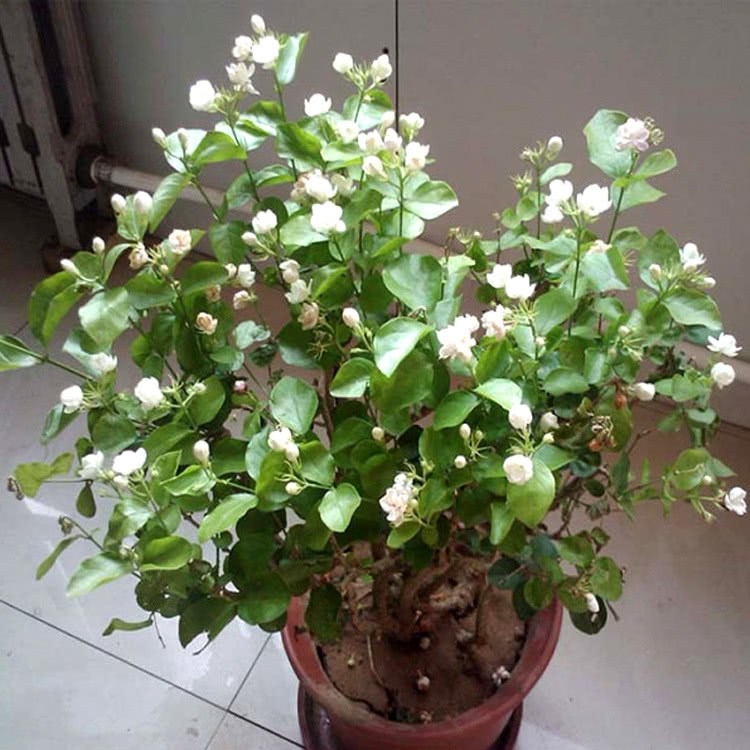
It is now the peak season for jasmine blooming. After the flowers finish, prune promptly. These pruned leftover branches are best used for cuttings. These branches all carry some nutrients, so the survival rate is high.
Cut these one-year-old semi-woody branches into small sections with two bud points, that is, two pairs of leaves.
Cut the bottom end of the branch into a slanted cut to increase the contact area with the soil, and the rooting rate will be somewhat higher.
Keep one leaf or two half-leaves on the branch for photosynthesis. If there are too many leaves, the nutrients will not be enough to supply its growth.
For the cutting medium, you can use river sand, vermiculite, or nutrient soil for cuttings.
After inserting the branch into the medium, put a plastic bag over the flowerpot to retain moisture and reduce leaf transpiration. Poke a few holes in the bag for photosynthesis. This is a little trick, and it can also be done when cutting other flowers.
Then just place it in a spot with scattered light. Every four or five days, uncover the plastic bag to ventilate. After about one month, the jasmine can take root.
Jasmine has a characteristic: cuttings first grow tender leaves, and only then produce roots. So we should not be in a hurry to take them out for transplanting. Wait about two months, and transplant after the root system has grown well.
The soil for transplanting should be loose, breathable, slightly acidic soil. You can use leaf mold, large-particle river sand, garden soil, and mix in one part pine needles. Of course, you can also use local materials; as long as it is loose, breathable, and fertile, it is fine.
Jasmine relatively likes fertilizer. Put some base fertilizer at the bottom of the transplanting soil, then fill the flowerpot one-third full with soil, place the rooted seedling inside, and gently add soil around it. Do not press with your hands, to prevent breaking the roots. After filling with soil, water thoroughly once so the roots and soil are tightly combined. Place it in a spot with scattered light and care for it for about a week. When new leaves clearly start to grow, it means the transplanting was successful.