What would happen if both livestock farmers and crop growers stopped farming?
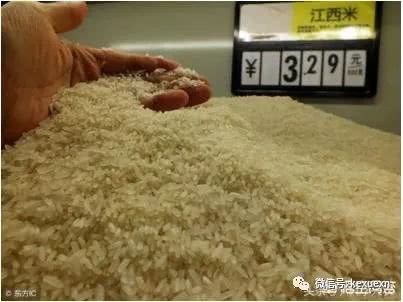
China has always advocated the concept of "national food security," proposing that the rice bowl of the Chinese people must be held firmly in our own hands. Whether food self-sufficiency can be achieved has arguably risen to the level of a national strategy, a matter of national security. Therefore, for a long time, the state has rolled out a series of policies for agriculture, and the annual No. 1 Central Document has placed agriculture at the top of the agenda.
But as mentioned above, if livestock farmers and crop growers all suffer losses and no one is willing to raise animals or work the land, leaving our rice bowl entirely to imports, then we may find ourselves at the mercy of others.
Take this year's China-US trade friction as an example. At the time, China planned to impose a 25% import tariff on US soybeans. Given that China imports 33 million tons of soybeans from the US each year, if we were to stop importing soybeans from the US, it would actually be difficult to find a replacement country. In other words, once a trade war truly breaks out, the Chinese people would have to eat high-priced soybeans for a long time, and other countries might even jack up grain prices on the spot. This is not fantasy, but something that genuinely exists. During the China-US trade friction in April, as China planned to cut back on US soybeans, Brazil was preparing to raise its soybean export prices.
China's development of agriculture is not only about meeting our own basic needs, but also about breaking free from others' constraints. Only with grain in hand can one remain calm at heart; sometimes money does not necessarily buy grain. Once such a situation arises, banknotes would be nothing more than waste paper.
The state provides strong support for agriculture every year, with industry giving back to agriculture, supporting farmers' enthusiasm for planting through policy, while the power of capital has also channeled more talent and resources into agriculture.
But it is undeniable that there are currently some cases of farmers exiting agriculture due to losses. However, we cannot generalize about these situations, since those suffering losses are still the minority. At present, the severe trend-following phenomenon in agriculture has also caused many farmers to face unsold agricultural products. From the national macro perspective, most agricultural practitioners can still make money from agriculture.
The state's strategy of setting a floor purchase price for agricultural products also helps reduce the probability of farmers suffering losses in the grain-growing process. Setting aside some natural and man-made disasters in cultivation, the floor purchase price greatly safeguards farmers' economic returns. For agriculture, the market is not as open as for industrial products, and protecting farmers' profits is also about safeguarding China's food security. This is especially true when facing situations like the soybean import problem in the US trade war against China, as it strengthens China's bargaining chips for countermeasures.
However, the final point to emphasize is that in a country like China that places such importance on national food security, a situation of complete reliance on imports will not arise. Moreover, the state has now proposed the construction concept of training new-type professional farmers to achieve agricultural professionalization, and it is believed that China's agriculture will see even stronger development in the future.
This is Science Thriving in Agriculture. Welcome to follow us and grow your knowledge together.