What will the grain price trend be next year? People are already asking before this year is even half over
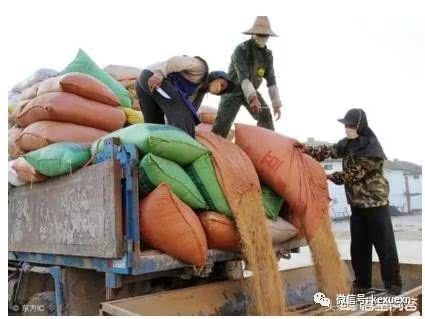
Will grain prices rise next year? This question is really too broad. Just considering grain alone, there are rice, wheat, corn, soybeans, sorghum, millet and many other kinds. So many grain varieties cannot be lumped together. I believe there will always be some that rise, but there will also be some that fall.
2018 has only just passed the halfway point, so it is still early to be talking about next year. Science Xingnong will give a rough analysis from a macro perspective, hoping it will be of some help to you.
From the overall policy trend, the pressure to destock grain is still considerable. In December 2017, Chen Xiwen, a director of an economic department under the Ministry of Agriculture and Rural Affairs, made a grand statement on the grain issue, saying that future grain prices should adopt a strategy of government subsidies plus market pricing, the so-called "market pricing, separation of price and subsidy," which means letting our country's grain prices return to market pricing and align with international standards. At the time, many media outlets predicted that the floor price purchasing policy for grain might be cancelled, but subsequently the floor prices for rice and wheat announced in January 2018 were only lowered. Now that 2018 wheat has already come to market, with the floor price lowered, this year's opening wheat price is also lackluster.
Judging from the statements of higher authorities, it is also highly likely that grain prices will return to the market in the future. Nowadays, corn and soybeans are gradually aligning with international grain prices, but looking at current grain prices, our country's grain prices are still considerably higher than international levels. If policies are further advanced and implemented next year, presumably grain prices may see another possibility of being lowered.
This is not alarmist talk, but is gradually becoming reality, and the benefits of aligning with international grain standards are also obvious. Because grain prices are high, agricultural product processing enterprises are forced to choose imported foreign grain. If domestic grain cannot be sold, the ones who ultimately get hurt are still domestic farmers.
Especially after our country joined the WTO, strengthening our role in international trade is also imperative. Trade barriers have not helped our country's agriculture achieve revival; instead, they have caused many agricultural product processing enterprises to import agricultural products on a large scale. Take soybeans, for example. Because domestic soybean prices are relatively high, most agricultural product processing enterprises continuously increase imports of foreign soybeans. And to this day, many soybean farmers cannot sell their soybeans.
What needs to be said here is that farmers should not be pessimistic, because while grain prices are being lowered, subsidy efforts will gradually increase. Our country's food security issue must still be kept in our own hands. The strategy of ensuring our farmers' enthusiasm for growing grain will not change, and the strategy of industry supporting agriculture has also been proposed for a long time. This is absolutely not an empty official phrase.
This is Science Xingnong. You are welcome to follow, and let us grow our knowledge together.