What to do if the Giant Taro (Alocasia) stops dripping water, and is it still safe to keep it despite being toxic?
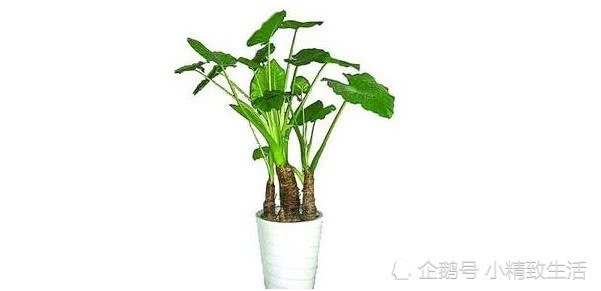
Giant Taro (Alocasia) is loved by most people because of its graceful form. At the same time, because of its ability to purify the air, it has become a top choice for indoor flowers. So what issues should be paid attention to during the daily care of Giant Taro? Next, Little Exquisite Life will learn together with you:
1. Because the place of origin of Giant Taro is the tropical rainforest and wild banana groves, Giant Taro very much likes heat and humidity. It grows very quickly in a hot and humid environment of 20°C-30°C, but if it is below 18°C, it will go dormant and stop growing.
2. Plants all need sunlight for photosynthesis, and Giant Taro is the same. But note that in summer, Giant Taro must not be exposed to direct sunlight. Under direct sunlight, Giant Taro is not so elegant and lush. However, it also must not be kept completely away from the sun, otherwise the leaf stalks will become very thin and very long. The most ideal is diffused light, that is, there is light but the sun does not shine directly. You can imagine the dappled light coming through blinds. In general, the more light there is, the shorter Giant Taro is; conversely, the taller it is. So you can adjust the light according to your own preferences to achieve your ideal height.
3. Giant Taro is not too picky about soil, but if the potting soil is very sticky and prone to waterlogging, and frequent watering is added on top of that, stem rot will occur. The most suitable is sandy soil that is breathable and drains well. There is a standard called "holds together when squeezed in the hand, falls apart when released."
4. When the air is humid and the potting soil has sufficient moisture, the leaves of Giant Taro will "drip water." But not dripping water does not necessarily mean that Giant Taro is short of water. The dripping phenomenon is merely a function by which it self-regulates the water in its body. Do not water Giant Taro too frequently; once a week is enough. You can use a spray bottle to frequently spray some water mist on its leaves and the surrounding air to increase air humidity, but also note that in some areas tap water has a relatively high alkali content, and when it is sprayed on the leaves and dries, unsightly white spots are very likely to appear.
5. I have always felt that there is no need to deliberately fertilize flowers grown at home. Usually, using some kitchen scraps to compost some liquid fertilizer and using it occasionally is enough. A detailed introduction to homemade flower fertilizer is in a previous article by Little Exquisite Life.
6. One reminder: the water dripped by Giant Taro and the sap of its tubers are toxic, but there is no need to shut Giant Taro out because of this. As long as you are careful not to eat it by mistake or get it on wounds or eyes, it is still very safe.
7. Giant Taro is also suitable for hydroponics. Hydroponic Giant Taro has a distinctive elegance. Regarding hydroponics, note that you should try not to let the tubers directly touch the water surface, and only let the fibrous roots go into the water, to prevent the tubers from rotting.
The above was organized and published by Little Exquisite Life. I hope it is helpful to everyone.