The most crucial tips for bonsai care: your bonsai tree will be fine even after decades of growing
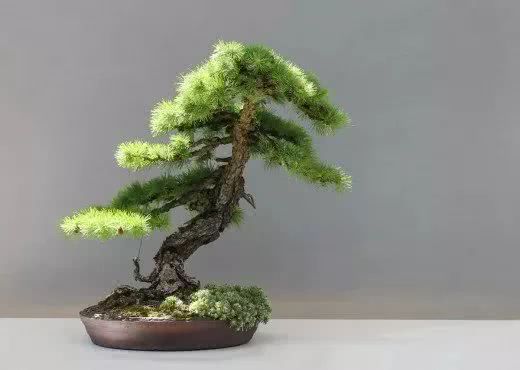
Bonsai is an extremely beautiful ornamental plant, and one or two pots of it are kept in many homes. It looks very unique and has very natural characteristics. As a rather special type of tree, the bonsai tree is very popular. Bonsai has a long history in our country, but today few people know how to grow it well.
If you are a beginner bonsai enthusiast, how should you take care of these unique plants? Here are a few basic principles for caring for and cultivating bonsai trees:
Point one: Light
When caring for a bonsai tree, you need to maintain more than 5-6 hours of direct light every day. Of course, this requirement varies slightly depending on the species of bonsai tree. Give direct light or scattered light depending on whether the bonsai tree likes light, but it must never be kept in a place that is excessively shaded.
At many gardening exhibitions we see bonsai trees placed in shaded indoor spots, but once the exhibition is over, these bonsai trees need to be moved to a sunny place; they can only be kept in shade for a short time.
In everyday care, bonsai trees need quite a lot of direct light every day. If your bonsai tree is kept in a place with little sunlight, you need to slightly increase the light. Maintaining long hours of sunlight can help the bonsai tree grow better.
However, you must not let the bonsai tree be exposed to blazing sun all at once. If you move it from a darker place to a strong direct light environment, you need to do it gradually.
Bonsai trees should also avoid too much artificial lighting, because this artificial light cannot provide the spectrum the bonsai tree needs.
Point two: Pay attention to watering
Caring for a bonsai tree requires regular watering. Generally, you wait until the soil 2-4 cm below the surface is dry before watering. Each time you water, water thoroughly. Avoid giving just a little water, and do not let the soil dry out completely.
When caring for a bonsai tree, you also need to maintain a certain temperature and humidity. Watering requires particular skill. For example, summer and winter are very different. When there is more sunlight, you need to increase the watering frequency; when the temperature drops and there is less sunlight, you need to reduce the watering frequency. Generally, you wait until the soil 2-4 cm below the surface is dry, then water thoroughly once.
Regularly check whether the soil is dry or moist, but avoid injuring the root system. The best time to water is in the morning. When the temperature is high in summer, you may even need to water in both the morning and the evening.
After the temperature drops in winter, water more than once a week. During the dormant season, too much water is very harmful to the growth of the bonsai.
If sunlight decreases, watering should be reduced; if the amount of sunlight increases, the watering frequency should be increased.
Point three: Soil selection
Cultivating a bonsai tree requires a specific potting soil. You can buy bonsai soil directly from a flower shop. Each type of bonsai tree needs a different soil for cultivation.
Cultivating a bonsai tree requires choosing a specific bonsai soil. Good potting soil can maintain better water retention and good drainage, avoid waterlogging in the soil, and also needs a certain fertility and an appropriate pH value, that is, the acidity and alkalinity of the soil, best kept between 6.5-7.5.
Bonsai trees also need to be repotted regularly. This depends on the growth condition of its root system. When moving a bonsai tree from one pot to another, you need to choose the right time. It is best to repot during the winter dormancy period. During dormancy, less energy is stored, so after repotting it can quickly resume growth.
Point four: Soil and repotting
When caring for a bonsai tree, you generally repot once every 1-5 years. If the usual care is fairly normal, this still varies by variety.
Some bonsai trees that grow relatively fast and are relatively young generally need repotting once every one or two years, while some older bonsai trees need repotting about once every five years.
Besides observing the new growth condition, you can also look at its leaves. If the bonsai tree keeps growing new leaves and the newly grown tender leaves turn pale yellow, that proves it needs repotting.
If small buds also appear on the lower branches of the bonsai tree, then when repotting you should properly prune the root system of the bonsai tree.
Point five: Fertilizing and proper pruning
Caring for a bonsai tree requires regular pruning to avoid excessively vigorous branches and leaves, and also to maintain a certain shape, so that it is more ornamental.
When caring for a bonsai tree, you must fertilize regularly, and use a dedicated bonsai fertilizer. If it is an indoor bonsai, then reduce the fertilizing frequency.
When caring for a bonsai tree, the fertilizing frequency is somewhat higher than for ordinary potted plants. Caring for a bonsai tree requires giving appropriate nitrogen, phosphorus and potassium fertilizer; it is best to buy a dedicated bonsai fertilizer. When fertilizing, you must choose to fertilize during the growing period and avoid fertilizing during the winter dormancy period.
In order to keep the bonsai tree in better condition, you must prune regularly. You can shape it into a good-looking form. Pruning should be done at the appropriate time, best when it has just stopped dormancy and resumed growth. The pruning tools must be sharp.
If the bonsai tree grows too tall, you need to pinch off the top. This can control its height and also maintain a good shape. As long as the bonsai tree is cared for properly, growing it for several decades is no problem.