Lupines can fertilize themselves and bloom for years when planted in the yard
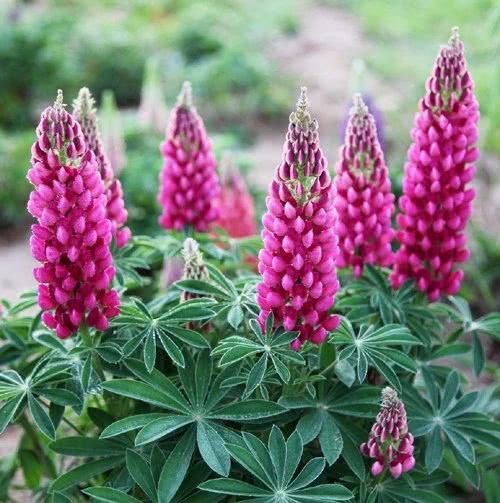
Lupine is actually Lupinus, a flowering plant that can maintain perennial growth. It is very suitable for planting in the yard, and I have even seen lupines grown in pots.
When lupine blooms, it is especially beautiful, and its adaptability to the environment is also quite good. It can even become a wild plant, growing especially easily in some places where the temperature is not high. In summer, it can grow everywhere and produce a sea of flowers.
Lupine is actually a legume plant. After its flowers are successfully pollinated, they produce seed pods that look just like bean pods. Lupine can be eaten as food, and its leaves can also be used to feed livestock; for example, common cattle and sheep can eat its leaves.
Lupine seeds can serve as food, but lupine yields less than other legumes, so few people plant it in the ground. Today lupine has become a very good ornamental plant, yet few people know that lupine beans have very high nutritional value, are very high in fiber, have strong antioxidant capacity, and are lower in calories than soybeans.
Lupine leaves grow in a peculiar way, somewhat like the leaves of Schefflera octophylla (umbrella tree), and look sturdy. If it is not blooming, it looks quite inconspicuous.
When its flowers open, they look especially brilliant. The whole flower cluster is conical, and each flower looks especially fresh. There are also many flower colors, including the common purple-blue, pink, white and red, as well as rarer apricot and mixed-color varieties.
Lupine blooms in spring and summer. Its flowering period is especially long and its ornamental value is especially good. Its flowers can generally be seen from May to August. If you plant some lupines in the yard, you can see charming bees and butterflies in spring and summer.
Lupine is actually a plant of cold regions. Winter cannot be too warm; it needs a relatively cold winter to grow well. In tropical regions it can only be cultivated as an annual plant.
When cultivating lupine, you must not use slightly acidic or neutral soil. Use slightly alkaline soil instead. Do not plant it together with plants that like slightly acidic soil, and even more importantly, do not use acidic fertilizer. Although it can also grow in neutral soil, it will grow very poorly.
When planting lupine, you can mix some plant ash or lime into the soil, which can increase the alkalinity of the soil. The soil is generally compost soil mixed with some manure and river sand to keep the soil well drained.
If you are a friend in a more southern region, then you must not choose to cultivate it when the temperature is relatively high. You can cultivate it after the temperature turns cold in autumn, so that you can see its flowers the following spring.
Lupine is especially suitable for propagation by sowing, because it is a legume plant and sprouts especially easily. After spring warms up, you can cultivate it. Before sowing and propagating, you can put the seeds in the lower part of the refrigerator for about one or two weeks, which can improve their germination. Before sowing, you should also soak the seeds in clean water for one night, and germination will be even easier.
In ordinary care, it needs more light, but avoid too high a growing temperature, especially in some dry and scorching environments. It is best to choose a shaded place for cultivation, and when the weather is hot, increase the frequency of watering.
When caring for lupine, put some soil on the soil surface as a covering. This can preserve moisture and avoid excessively high temperatures.
Another benefit of planting lupine is that it does not need frequent fertilization. If there is too much fertilizer, its branches and leaves will grow excessively and flowering will be affected. It is a legume plant and has very low requirements for soil fertility. It absorbs nitrogen from the soil and air by itself, which can prevent the soil from becoming poor, and the soil where lupine is cultivated will become more fertile.
When fertilizing, avoid giving nitrogen fertilizer. If you want to promote flowering, just give phosphorus fertilizer directly, but the amount must not be too much. If you want to promote continuous blooming in lupine, promptly remove the spent flowers after the flowers fade. This can promote a second round of flowering, preserve more nutrients, help promote root growth, and also allow it to bloom better the following year.
If you want to collect seeds, you cannot cut off the flowers. After its pods mature, you can collect them and store them in a cool place. Before sowing, likewise put them in the lower part of the refrigerator for a week, then soak them in water before sowing.
Lupine is a legume plant with especially good ornamental value. It can also be planted together with vegetables, is itself edible, and can also release nitrogen fertilizer for the vegetables. This is also why I recommend cultivating lupine.