Why does the United States vigorously develop export agriculture when it knows the grain export market is poor?
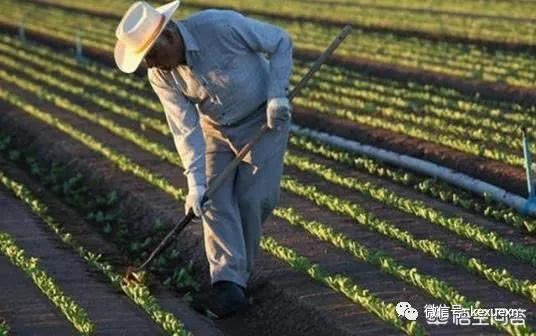
For agriculture as a whole, it seems that the economic benefits it brings are really very limited, but if we have a relatively clear understanding of American agriculture, then the reasons why the United States develops agriculture and exports agricultural products are self-evident. Below is an introduction to the situation of American agriculture.
When we generally mention the United States, we say it is a major industrial country, while China is a major agricultural country; but in terms of the actual situation, it may be somewhat the opposite: it would be more appropriate to say that the United States is a major agricultural country and China is a major industrial country.
The strength of American agriculture is shown in its high degree of mechanization, high degree of intensification, and high yields. For example, the United States has about 2.2 million farms, while the number of people engaged in agriculture is 2.13 million, which is equivalent to one person owning one farm, and the area of each farm is as high as 170 hectares. Note that this is hectares, not mu.
However, it should be pointed out that the farmers mentioned above are equivalent to professional farmers in our country, and of course there will also be other agricultural workers. In terms of agriculture, the number of jobs directly and indirectly driven can be multiplied. Seen this way, the importance of natural agriculture is self-evident. The United States has no reason not to develop it, and even though agricultural products are very cheap, because of its high degree of mechanization and intensification, production costs are also very low.
Where there is profit, someone will go into business, and this saying holds true anywhere, so in this regard, no one in the United States will give up agriculture.
In addition, let us look at the proportion of GDP occupied by agriculture. According to 2017 data, agriculture in the United States accounted for 1.2% of GDP, and the number of people employed in agriculture accounted for 1.45% of employment. Simply looking at the numbers does not give much of a concept, but by comparison, in the American sports sector alone, registered fitness participants number more than 50 million, and adding the number of sports professionals, the scope of impact is even greater. However, the output of the sports industry is only 3 times that of agriculture, while the output value of agriculture is equivalent to the GDP contributed by the United States, a country with a developed auto industry, over a whole year, which sufficiently shows the weight of American agriculture.
Moreover, the grain produced by the United States accounts for one-fifth of the world's total, and about 40% of the grain produced by the United States is exported to countries around the world, which of course also includes China. From this, it can also be seen that if the United States did not export grain, the world would probably face the possibility of a food crisis.
It can also be said that the efforts of countries around the world to develop agriculture and increase grain output are not only to satisfy their own countries' food needs, but also to supply the grain needed by other food-deficient countries in the world.
This is Science Promoting Agriculture. You are welcome to add a follow and learn together with us.