Can Blue Garlic Be Eaten? Here's Why
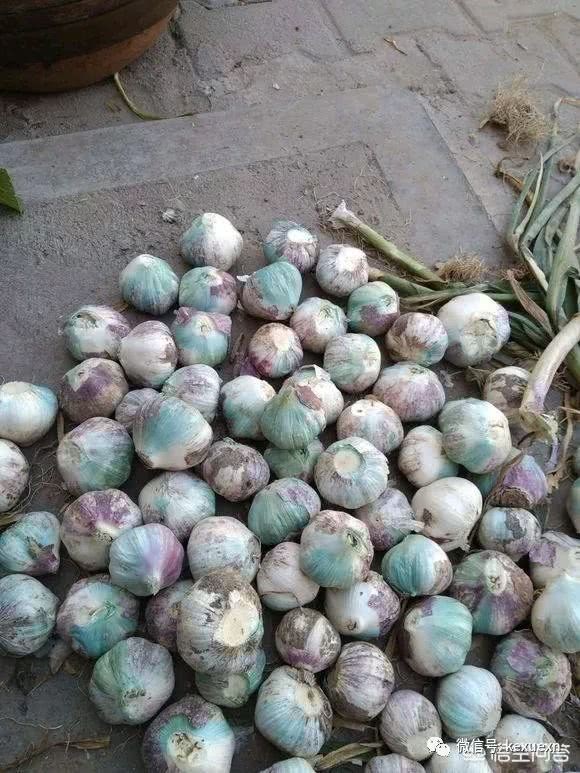
After harvesting garlic in rural areas, it must be kept away from light, with the garlic stalks used to shield the garlic, and only after two or three days is it exposed to light. If the harvested garlic is exposed to light directly, the bulbs will turn blue as shown in the picture below.
For experienced farmer friends, seeing the picture above should not feel unfamiliar, because this is truly a common sight in the fields. As for the mechanism behind garlic skin turning blue, I have not yet found an accurate explanation, so I will simply share my own view.
First of all, regarding garlic skin turning blue after sun exposure, this phenomenon occurs only when the garlic has just been harvested; at later stages, sun exposure will not cause the garlic to change color. Moreover, by touching the discolored bulbs, one can find that the garlic has not grown fuzz or become moldy in any way, but has merely changed color. In other words, this color change is induced by light.
There are many triggers for garlic turning green, such as low temperatures and white vinegar, but these color changes affect the garlic itself rather than the skin. This is also because garlic contains sulfur-based bioactive substances; under environmental stimulation, through a series of reactions, a range of garlic pigment precursor substances in the garlic then react and change color.
As for the garlic skin changing color, I believe this change involves a series of biochemical reactions. At this point, the content of bioactive substances in the skin is relatively high, and because garlic itself contains many sulfur-based color-changing substances, a series of enzymatic reactions triggered by sunlight at this stage also cause the color change. In the later stage of garlic maturity, after the skin gradually dehydrates, the bioactive substances in the skin gradually lose their activity, so naturally it no longer changes color.
It should be noted that this kind of discolored garlic does not affect the quality of the garlic, and the cloves can still be eaten.