How to water succulents? Learn it in 3 minutes
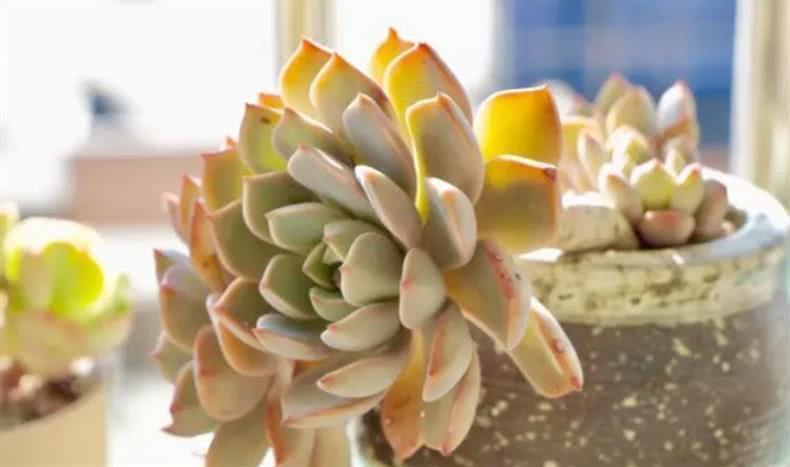
Everyone says watering succulents is hard, but once you grasp the basic principles, it really isn't that complicated. If you don't know how to water, take a look below and you'll learn it in 3 minutes!
For more great content, follow our WeChat official account: MMDRR888
Watering is a big issue. Beginners always ask, how often should I water? Once a week? Every twenty days? Once a month? No matter how many days the answer is, it's just an attempt to be lazy, because you can never discuss watering apart from the environment.
If you really don't know how to water your succulents, take a look below. Watering takes 3 years to master, but a seasoned expert can teach you in 3 minutes!
★ Basic principle: water thoroughly when the soil is completely dry. Watering takes three years to master; you can never discuss watering apart from the environment.
Generally, when watering succulents, you should water thoroughly. The degree of "thoroughly" means water flows out from the hole at the bottom of the pot. Then wait until the soil is completely dry before watering again. So you need to pay attention to the state of the soil, but the state of the soil cannot be seen directly, so there are two indirect ways to tell whether a succulent needs watering.
Weigh it by hand: after watering thoroughly, the soil is very heavy; when the soil is dry, it becomes lighter, but this feel is very subtle, so you still need to practice more. If you have an experimental spirit, you can weigh the whole pot before watering, weigh it again after watering, and when the weight drops back to what it was before watering, it's time to water.
Observe the leaves: with a healthy succulent, the leaves will become very plump some time after watering. When the outermost leaves become soft, it means the succulent is short of water. This is the most suitable time to water, and you can grow the succulent fatter and fatter.
No matter which method you use, you must carefully observe the state of the succulent, understand your own succulent's habits, and explore slowly, and you will grow it better and better.
★ 1. Watering in different situations
1. Succulents just potted, repotted, or propagated from cuttings - moist soil, no watering.
Listen up, this is important. When potting or repotting, roots are usually trimmed, and just like with cuttings, you need to wait for new roots to grow out. This process is root recovery or acclimatization. There are two things to pay attention to during root recovery:
First, when planting, the soil should be slightly moist, with just a bit of moisture, and definitely not too wet. Second, during root recovery, do not water and do not expose to direct sunlight; wait until new roots grow out before watering. Root recovery usually takes one to two weeks. A little moisture can stimulate the succulent to grow roots, while too much water will rot the part buried in the soil, and the succulent will die. So you must hold back and not water during root recovery and acclimatization. If you really can't resist, you can spray a little water on the succulent leaves with a spray bottle, just a little, and don't let water accumulate.
2. Pot material - good breathability
When choosing a pot, it is best to have a hole at the bottom and good breathability. Materials with good breathability: ceramic, purple clay, wood, cement, etc., where the soil dries quickly, require more frequent watering. Materials with poor breathability: porcelain, glass, metal, plastic, etc., where the soil dries slowly, require less frequent watering.
3. Particle ratio in the soil - good breathability and drainage, good water retention
Soil with a high particle ratio has good drainage and breathability, and relatively speaking requires more frequent watering. For details, please see: a thousand succulent growers have a thousand soil mix methods~
★ 2. Watering in different seasons and weather
1. Rainy days - welcome light rain, avoid continuous overcast rain
Many succulent growers worry about whether their succulents kept outdoors should be brought inside. Answer: no need. First, your succulents are kept outdoors, so don't think of them as so delicate; succulents that have weathered wind and rain will be stronger. Also, rainwater contains trace elements, which act as good fertilizer. Rainwater can also wash away dust.
However, if your succulent has always been kept indoors, don't suddenly take it outside to get rained on. You need to give the succulent time to adapt to the environment; sudden environmental changes are unbearable for both people and succulents. For succulents kept outdoors, occasional rain is good for body and mind, but in the south, continuous overcast rain in spring and summer means sitting in water, and over time the succulent roots cannot breathe and will rot. In this situation, you need to shelter them from the rain. During the plum rain season, air humidity is also high, so succulents kept indoors need good ventilation.
2. Summer - water in the morning and evening, more frequent watering
Summer temperatures are very high and evaporation is great, so watering frequency increases accordingly. In summer, it is best to water in the morning and evening when the weather is cool. If watering in the morning, be sure not to leave water droplets on the leaves; a drop of water on a leaf is a convex lens that will focus sunlight and burn the leaf.
Water taken directly from the tap should not be used immediately to water plants; let it sit for a while before watering. Freshly drawn water is usually very cold, while in summer the plant itself is relatively warm due to the environment. Suddenly watering with very cold water weakens the activity of the succulent roots and reduces their water absorption capacity.
3. Winter - cut off water outdoors, ventilate indoors
For those still keeping succulents outdoors in winter, reduce watering frequency or even cut off water, otherwise when the plant's water content is high and the temperature is too low, it may suffer frostbite. Succulents that have their water cut off will enter a dormant state, with leaves wrapping up, water content decreasing, and metabolism dropping to the lowest level, using this method to withstand extreme environments.
Generally, succulents should best be moved indoors below 5 degrees. Even the toughest succulents, when the temperature drops low enough to freeze, will suffer tissue frostbite that is hard to recover from. For those keeping succulents indoors in winter, also reduce watering frequency and pay attention to ventilation. Here I recommend not cutting off water completely, but watering less, yet not cutting it off, so it recovers more easily the next spring.
4. Spring and autumn - water thoroughly to wake them up, water thoroughly when dry
Some succulent growers cut off water for overwintering and summering. Cutting off water should be done gradually, watering less each time, with longer intervals, until no watering at all. Waking them up in spring and autumn should also slowly increase from less watering, with increasing frequency, and finally be sure to water thoroughly once to give the succulent a signal that it's "time to wake up." After that, you can water normally. Growing season: in March and April, September and October, succulents begin to root more easily and grow faster. At this time you can water with confidence without worrying about etiolation, though of course you still need to ensure sufficient sunlight.