Peak disease season for clivia in summer: take preventive and curative measures in advance to keep pests and diseases away
Clivia is deeply loved by many flower enthusiasts. Its plant shape is elegant and graceful, its leaves are verdant and upright, and its flowers are bright and beautiful. It can be enjoyed for both its foliage and its blooms, and it has very high ornamental value.
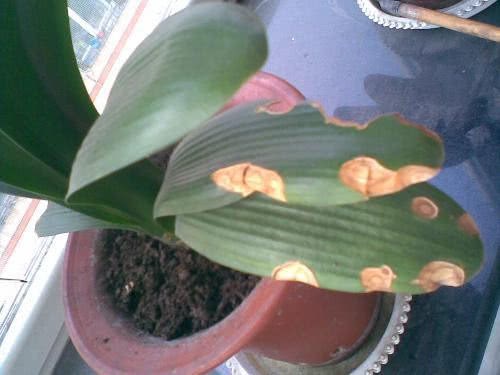
As summer arrives, clivia enters its peak disease season. With all kinds of pests and diseases, many flower enthusiasts' clivias have already shown various problems. The most common one is small round dead patches appearing on clivia leaves.
This situation is mainly caused by improper watering, temperature and humidity, and so on. As a result, leaf diseases such as leaf spot disease follow one after another, leaving the leaves riddled with holes and reducing their ornamental appeal.
Today Hua'er will introduce to everyone how to care for clivia by doing "1 prevention and 2 treatments" well, keeping the leaves green and upright and making the flowers bloom large and bright.
1 prevention: About every ten days, spray its leaves with a 0.1% potassium permanganate solution for protection. Spray both the front and back evenly. The next day, unbind the leaves by spraying them with clean water.
Some bamboo charcoal can be buried around the edge of the potting soil. Be careful that the roots do not directly touch the bamboo charcoal. This can effectively prevent some pathogens and also prevent clivia root rot.
2 treatments:
1. Deal with spotted leaves promptly
Spotted leaves must be dealt with promptly, otherwise they can easily spread. You can directly use sterilized scissors to cut off the spotted leaves, keeping only the healthy parts. If the area is relatively large, cut off the entire leaf.
2. Control watering
A large part of the reason spotted leaves appear is watering too frequently. In a high-temperature, high-humidity environment, clivia is very prone to root rot, and pests and diseases are also very active.
Move it to a well-ventilated place, then strictly control watering, and consistently follow the principle of "water when dry, do not water when not dry, and water thoroughly when watering." Try not to spray water onto the leaves, otherwise the water will flow along the leaves to the leaf tips and accumulate there, causing the leaves to rot. You can spray some water vapor around it to increase humidity and lower the temperature.
That is all for sharing clivia care. If flower enthusiasts have other additions, you can share them with everyone in the comment section below. If you want to learn more about flower growing, you can follow Huajianke!