Succulent leaves turning translucent and slowly turning to mush: what to do? If you don't prevent it now, you'll be left with nothing but the pot
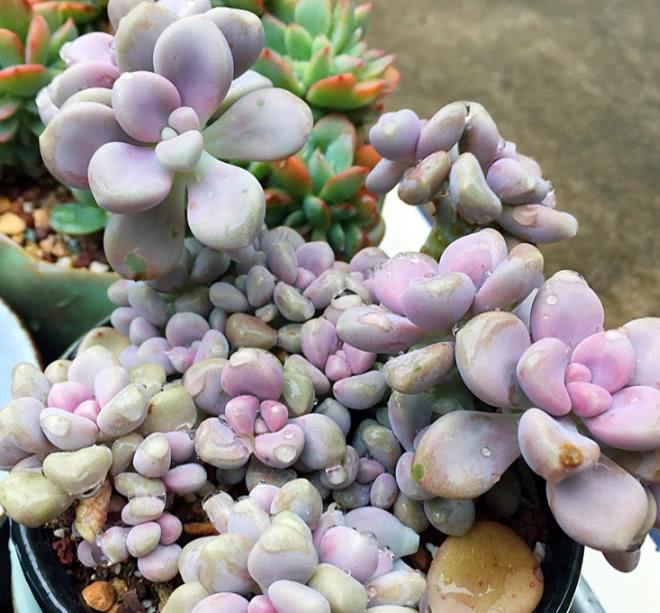
When the tissue of a succulent's leaves or fleshy stems dies and turns translucent as if it were about to dissolve into water, this is what we call succulent waterlogging, also known in some regions as "jellyification." The consequences of succulent waterlogging range from partial leaf or tissue rot and drying to the death of the entire plant, showing just how harmful succulent waterlogging can be. After a succulent plant waterlogs, at best some leaves or tissue rot and dry up, and in severe cases the whole plant dies.
In extreme environments, such as when summer is excessively hot and stuffy or winter is excessively cold, succulents may also show waterlogging (this actually cannot be counted under the situation discussed in this article), and generally they cannot be saved back either. This has little to do with overwatering; too cold or too hot and they simply cannot hold out, but if water is controlled, they can endure higher or lower temperatures.
If a succulent is about to turn to mush, it is inseparable from the extra water we usually give it. Succulents themselves are not afraid of lacking water; the environment in which we currently grow succulents is already fairly humid compared with their natural growing environment, yet many hobbyists worried that their succulents are short of water water them frequently, causing the succulents to absorb too much water. Too much water in a succulent affects its own metabolic habits, causing the plant to close its stomata during the day; at this point the succulent relies mainly on anaerobic respiration, which causes waterlogging. In addition, too much water easily causes the succulent under high-temperature conditions to expand with heat and contract with cold, rupturing the cell walls, which also produces succulent waterlogging.
Because of the Crassulacean acid metabolism of succulents, the stomata close during the day; when a succulent absorbs too much water, under high temperature it expands with heat and contracts with cold, bursting the cell walls and causing the leaves to turn to mush. This may be the truth; if you carefully recall those succulents that suddenly turned to mush and dropped leaves, they were basically all those with rather plump leaves, and usually there had been watering beforehand. As for those succulents whose leaves are normally a bit shriveled, it is extremely difficult for leaf waterlogging and dropping to occur, and even if you water them no matter how much, the possibility of root and stem rot or black rot at the leaf center is greater than waterlogging and leaf drop.
The succulents prone to leaf drop after watering are generally those with rather thick, fleshy leaves, such as the succulent plants Sedum adolphii 'Golden Glow' (Huangli), Sedum pachyphyllum (Yinvxin), Sedum rubrotinctum (Hongzhiyu), and Graptopetalum mendozae (Wanye Jiqiuli). When a succulent waterlogs, do not panic and think it is beyond saving; find a good method and you can rescue your succulent. First, we must remove and discard the waterlogged leaves, and perform emergency beheading treatment on the parts of the branches and stems that have already waterlogged and black-rotted. We must genuinely ensure that the tools used for treatment are clean and sterile, and after use the tools must be sterilized to avoid infecting other healthy succulents; if necessary, a antibacterial agent can also be sprayed on the wounds and the plant placed in a cool, shaded spot to dry naturally.
In everyday care of succulent plants, do not let them grow in a relatively humid environment for a long time; you can try not watering until dry. As for how to prevent succulent leaves from turning to mush, simply put: water less and ventilate more. The most common cause of succulent plant waterlogging is overwatering, or water accumulation damaging the roots. There are various other causes that can lead to succulent plant waterlogging, such as strong sunlight scorching, pests and diseases, low-temperature frostbite, or mechanical injury, etc.
This is a gathering place for succulent plant enthusiasts, sharing succulent care tips; you are welcome to follow and exchange ideas.