How to grow orchids so they send out more shoots and bloom more
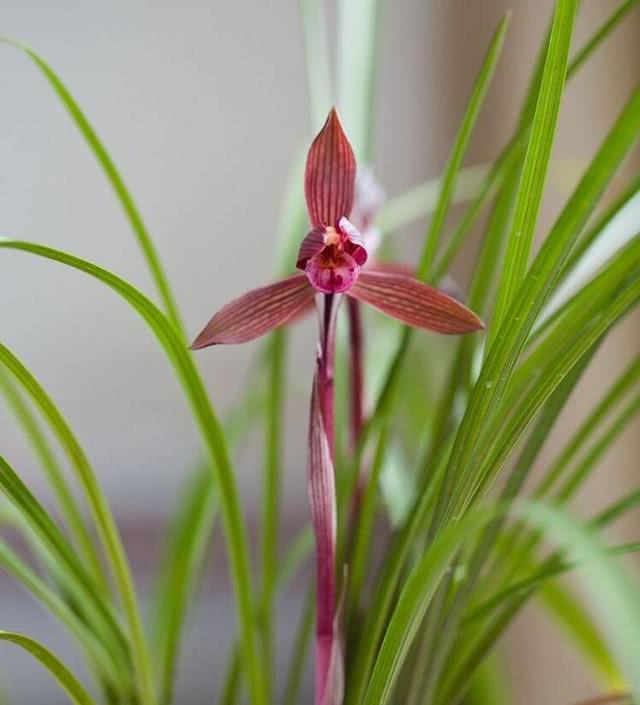
After May each year, temperatures rise, light becomes intense, and orchid plants grow rapidly. When the temperature is above 25°C, it is unfavorable for the growth and shoot production of orchid plants. To get more shoots, you should keep the growing temperature for orchid plants between 15-25°C. Above this temperature, pay attention to shading, humidifying and ventilation. For shading, generally use double-layer shade netting; for humidifying, generally use a water curtain; for ventilation, generally use exhaust fans. Friends growing orchids on a balcony can place the orchid pots on a north-facing balcony, in a place where sunlight cannot shine directly. Direct sunlight easily causes physiological diseases, scorched tips, yellow leaves, etc. At least after 11 o'clock, it should be a place without direct sunlight, and attention should be paid to ventilation. After more than 20 days, the sprouting rate will increase greatly, and the number of sprouts will also increase.
After September, orchid plants should receive 4 hours of light every day so that the orchid seedlings can grow vigorously and autumn shoots will emerge. As the saying goes, "more sun means more flowers, more shade means more shoots." After September, the temperature is still quite high and the light is still very strong, so you should also be careful not to let sunlight refract onto them. Of course, in winter and spring, do the opposite: strengthen sunlight and pay attention to cold protection, so that orchids can grow robustly. Facts have already proven that a north-facing balcony with good ventilation can not only grow orchids well but also produce more shoots, though indeed very few flower spikes are produced.
Some orchid growers say that "poor light makes leaves soft and thin." There is no scientific basis for this. First, there will be differences between varieties, and then there will also be regional differences. For example, the Cymbidium goeringii in the Yunnan-Guizhou region has softer leaves than the Cymbidium goeringii in the Jiangsu-Zhejiang area, and the leaves of Cymbidium goeringii are softer than those of Cymbidium faberi. The main reason for soft and thin leaves in the same region and the same variety is long-term insufficient humidity in summer and autumn. In fact, it is just that simple; it is just that expert orchid growers are unwilling to admit this fact. In fact, if orchids do not receive direct sunlight in summer, the more they grow, the better. After September, receiving 4 hours of sunlight, whether in the morning or afternoon, does not matter. When the flowering period arrives, varieties that bloom easily, such as Cymbidium ensifolium, will produce a frightening number of flower spikes, and you will still have to spend some time removing some flower spikes so as not to affect the next year's shoot production.
If an orchid plant is a weak seedling, it will be difficult for it to send out shoots, but more shade is more conducive to it growing new roots (but the temperature and humidity for the orchid must be ensured). Shading for orchid plants is generally around 70%. If a weak seedling grows new roots, it will naturally be able to send out new shoots. It is best to use granular potting medium with suitable temperature properties for planting, which can effectively ensure root growth and avoid root rot caused by water accumulation. Everyone knows how to handle old pseudobulbs in a way that helps them send out new shoots, so I will not ramble on about that here. In fact, it is all the same principle: shade, humidity, temperature and ventilation, none of the four can be missing. Author: Huang Xinlin. I publish orchid knowledge and pictures every day, taking you to understand orchids in depth and teaching you to grow orchids easily. If there is anything about orchids you do not understand, you can ask me at any time or leave a message below. If my knowledge has helped you, I hope you can give me a like or repost it to help more people!