Double-flowered bindweed: from harmful weed to cultivated ornamental flower
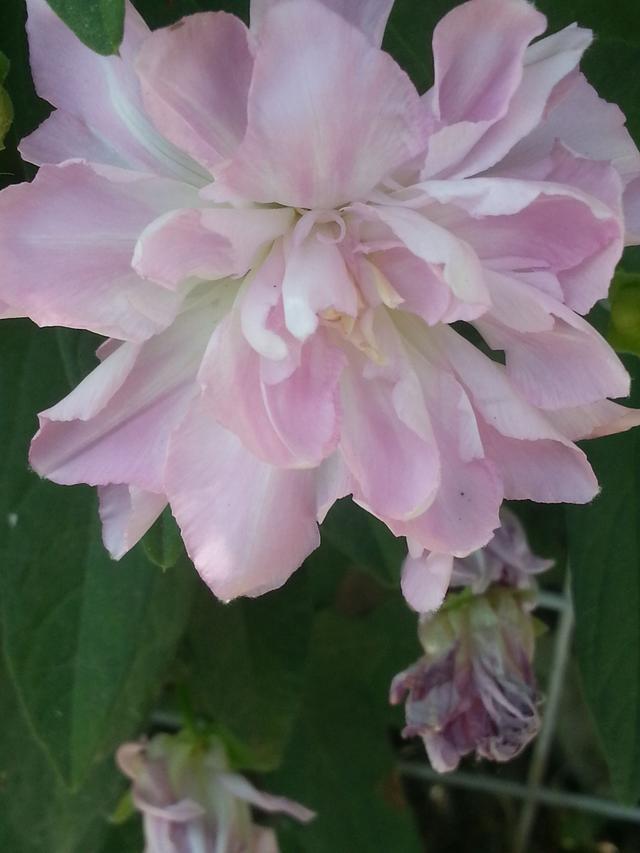
Bindweed is also called small convolvulus, mian gen teng, and in my hometown it is called fuzi miao. It is a perennial herbaceous plant in the Convolvulaceae family, similar to the morning glory, but not the same species. Most of what we usually see are single-flowered small pink blooms; double-flowered varieties are uncommon.
Wild bindweed spreads rapidly through underground stems and causes relatively serious harm to farmland; for crops it is truly a malignant weed. The plant grows rampantly, mainly causing harm to wheat, cotton, beans, sweet potato, corn, vegetables and fruit trees.
As for double-flowered bindweed, some people like to cultivate it as a flowering plant, planting it beside fences; in early summer, when the flowers bloom in profusion, it also adds a touch of wild charm.
Some also grow it in pots and train it on frames into shapes, either a pagoda or tree branches, letting the plant's stems and vines twine and grow along them, which also makes a fine sight.
Bindweed retains its wild nature; although it prefers a mild and humid climate for growth, it can also survive and grow in harsh environments. The plant can grow and bloom on sandy, gravelly-sandy and gravelly soils.
Because bindweed is originally a wild species, its reproductive capacity is extremely strong. Its underground rhizomes can carry out asexual reproduction; the stems are brittle and break easily, and as long as they carry a bud eye, they can sprout and grow into a separate plant, just like an earthworm, able to regenerate from a broken segment.
After bindweed seeds mature in August, the outer shell bursts open at the slightest touch, and the seeds scatter into the soil. They sprout and grow in March or April of spring, bloom in May of summer, and can continue until around September, before the first frost.
According to relevant sources, both the rhizome and the flowers of bindweed can be used as medicine. They have a certain curative effect on conditions such as spleen deficiency with indigestion, irregular menstruation, leukorrhea and scarce breast milk. Please note that one must never use it as medicine on one's own, because bindweed is one of the toxic plants recorded in the Chinese plant atlas database; its rhizome is toxic and contains alkaloids.