The construction of themed fruit orchards requires the adoption of new orchard cultivation models and new technologies
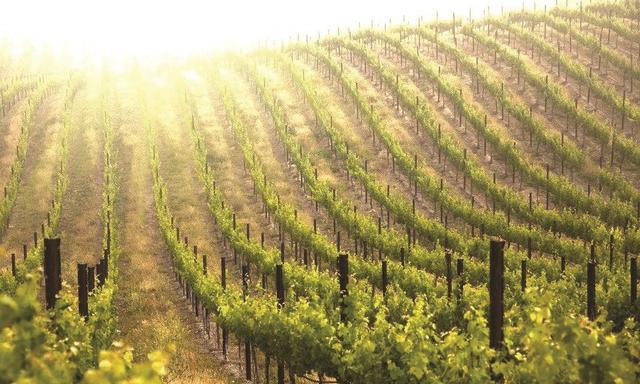
Requirements for the construction of themed fruit orchards: new orchard cultivation models and new technologies
Be the only one to have what others do not, and be better than others in what they do have. To make a favored industry bigger and stronger, one needs the philosophy of being first in the field; and the test criteria are reflected in lowering costs, superior quality, ecological cycling, and increasing benefits. Therefore, an orchard that has a certain influence and certain distinctive features within a certain region and can create higher benefits for people will always win everyone's praise. It is worth drawing on the construction experience of the themed fruit orchards in Shouguang City, Shandong Province.
1 Requirements for the construction of themed fruit orchards
1.1 Innovativeness
Be the only one to have what others do not, and be better than others in what they do have, forming the leading and influential status of being "first." For example, the "vegetable-style cultivation method for grape greenhouses" in Shouguang Town, Shandong, is an innovative model of grape cultivation technology and has obtained an invention patent from the National Intellectual Property Administration.
1.2 Advanced and practical technology
Orchard management technology should be advanced and practical. For example, in the research and application of the lean-over fruit tree technique, the trunks are artificially pulled toward a uniform 70 degree slant and fixed, so that the whole row of trees forms a slanted "windbreak tree wall," and then through supporting technical management, early fruiting, high yield, stable yield, and high quality of peach trees are achieved.
1.3 Good economic benefits
The vegetable-style cultivation technique for grape greenhouses draws on the vegetable cultivation model of greenhouses, carries out dense planting, and is matched with corresponding management measures, keeping the annual grape yield at around 4000 kg. Generally, normal forcing cultivation in a solar greenhouse can achieve marketing in May to June. At present, grape growers in the Houzhen Park in Shouguang City have a per-mu income of more than 50,000 yuan.
2 Optimizing the basic conditions for the construction of themed fruit orchards
2.1 Straw green manuring to optimize soil fertility
Only through the decomposition of organic matter by microorganisms do soil gas and heat arise. Creating fertilizer, water, gas, and heat is the comprehensive soil fertility at the time of fruit tree planting. That is to say, if in the selected orchard construction area, one can plant crops with a large straw yield one year in advance, such as corn, but the purpose is not to harvest the corn (of course, depending on the situation), but rather to adopt green manuring technology to mechanically crush all the straw and return it to the field. In this way, after green manuring twice a year, fruit trees are then planted. Compared with plots with poor soil foundation where green manuring is not carried out, this gives an advantage in fertility and changes the poor habit of digging holes and planting small seedlings on originally infertile flat ground. Of course, for fruit growers with the means, if before fruit tree planting they can recover and backfill straw of various crops (without the need for straw green manuring), the orchard soil fertility will be even better.
2.2 Intensive cultivation of large fruit tree saplings
Intensively cultivating purchased ordinary fruit saplings (generally single-stemmed) into the required large saplings (with branches formed) is a technical measure adapted to the situation that saves time, land, and cost, and leads to earlier production. For example, if developing a 20-mu orchard with a determined plant and row spacing of 1 m x 4 m, then 166 trees are planted per mu, and a total of 3320 trees are planted on 20 mu. If the purchased conventional saplings are pre-cultivated at a plant and row spacing of 0.4 m x 0.5 m, then only 1 mu of land is needed to accommodate all the saplings. In other words, it is entirely possible to plant the fruit tree saplings purchased for 20 mu on 1 mu of land and continue cultivating them into large saplings, while using the remaining 19 mu for soil improvement, straw green manuring, and fertility building (or conventional planting of other crops). Of course, if this plan is adopted, then the fruit tree saplings on the 1 mu must be managed according to the standards for large saplings, so that after being moved out and planted, they form an economic yield within 2 to 3 years, at least 1 to 2 years earlier than the original conventional planting model, because the intensive management of saplings on 1 mu is always more standardized and easier than the conventional planting of saplings on 20 mu. Moreover, the 19 mu of orchard land after improvement and fertility building will be more conducive to the future growth of the fruit trees.
3 Four prototype themed fruit orchard construction reference models
3.1 Model and technology of a themed orchard for high spindle cultivation of dwarfing-rootstock apples on saline-alkali land
The purpose is to enable newly built orchards to reduce overall labor costs, adapt to fruit tree development in larger park bases, and maximize economic benefits. The state-owned Shouguang Qingshuipo Farm has already developed 100 mu of dwarfing-rootstock apples on saline-alkali land through technological innovation. In the cultivation of dwarfing-rootstock apple trees, the branch classification consists only of the trunk and branch groups, and concrete columns, wire, and bamboo poles form a hedgerow-like structure that serves as auxiliary framework. In fact, the tree row is a fruiting wall. This achieves maximization of per-mu yield and per-mu benefit (Figure 1). The tree framework is actually completed through concrete columns, wire, and bamboo poles. In general, the recommended plant and row spacing is (1 to 1.5) m x (3.5 to 4) m, tree height 3.2 to 3.5 m, with one 3.5 m high concrete column erected every 8 to 10 m along the tree row, 3 to 4 horizontal wires fixed from bottom to top on the concrete columns in each row, and a bamboo pole 4 to 5 cm in diameter erected beside each tree, with the bamboo pole firmly tied to the 3 to 4 wires, and the trunk and branch groups fixed to the wires and bamboo poles according to different requirements. The shaping of the fruit trees is required to achieve a high-yielding tree form by the simplest method that saves the most biological yield. It conforms to the principle of not wasting biological yield, but the drooping of branch groups and the early branches that form fruiting are achieved by branch bending. Generally, an opening angle of about 110 degrees is required, ultimately forming a tree body in which one trunk grows vertically and upright perpendicular to the ground, and all the branch groups borne on it all droop. When the thickness of a branch group exceeds 1/3 of the thickness of the trunk at the point of attachment, it is kept as a slanted stub and removed, and then the next branch group is grown and cultivated on the stub. There are no longer the numerous orders in which main branches grow on the trunk, side branches grow on the main branches, and branch groups grow on the side branches. Instead, the 3.2 to 3.5 m high trunk bears 25 to 30 drooping fruiting branch groups, and the shortcoming of low yield per tree is solved by increasing the number of trees planted per mu. It is suitable for mechanization and integrated water and fertilizer operation, realizing the shift from planar fruiting of the old tree form to seeking yield in the air after tree height increases, and ultimately achieving the goals of easy cultivation, high yield, and good quality.
Figure 1 High spindle cultivation of dwarfing-rootstock apples
3.2 Model and technology of a themed orchard for vegetable-style cultivation of facility grapes
In response to continuous cropping obstacles in vegetables after many years of vegetable cultivation in greenhouse facilities, this difficult problem needs to be solved by methods such as fallowing, soil testing and formulated fertilization, and crop rotation. In production practice, crop rotation is a measure that effectively uses the greenhouse structure and suits rural realities. Under such a concept, when old greenhouses are put to new use, the vegetable-style greenhouse cultivation method for grapes can be used to cultivate grapes (Figure 2). Of course, newly built greenhouses can also use this method to plant grapes directly. Houzhen in Shouguang City has already developed a concentrated area of 2300 mu. The core of the technology is grape plant and row spacing of (0.35 to 0.4) m x 0.5 m x 1 m (with wide and narrow rows) or (0.35 to 0.4) m x 0.9 m, with 2300 to 2000 trees planted per mu, basically a density similar to that for planting vegetables. Generally speaking, between years, the canes sent out from the upper part of the mother cane are used as fruiting canes (leaf-to-fruit ratio 10:1) to form yield, and the canes sent out from the lower part are used as reserve canes and cultivated into the fruiting mother canes for the next year. In greenhouse cultivation, after the fruit is harvested, the mother canes and fruiting canes are removed in June, and the reserve canes sent out from the lower part are cultivated by late autumn into the fruiting mother canes for the next year, year after year, and so on. Combined with other measures such as pinching and shoot removal, it is just like managing vegetables in both concept and technique. When there is an ideal new variety, by cleft grafting in February when the reserve canes sent out from the lower mother canes of the grapes in the greenhouse are semi-lignified, healing takes only half a month, and by June, when the old canes are removed and the new ones are kept to cultivate next year's mother canes, the grape variety has already been changed, which is much easier than changing vegetable varieties. The annual per-mu yield is generally maintained at around 4000 kg. Generally, greenhouse-cultivated varieties under normal forcing cultivation management in solar greenhouses can all achieve marketing in May to June. At present, grape growers in the Houzhen Park have a per-mu income of more than 50,000 yuan. Ultimately, not only can old vegetable greenhouses be used to grow grapes, but this has also driven the development of many new greenhouse areas for growing grapes. It is an intensive and efficient new grape cultivation model and new technology with low investment, light labor intensity, and acceptance by ordinary people (suitable for forcing and delayed cultivation of facility grapes).
Figure 2 Vegetable-style cultivation of grapes in a solar greenhouse
3.3 Model and technology of a themed orchard for the lean-over cultivation of fruit trees
This is an innovative technology in fruit tree cultivation, called the lean-over cultivation technology for peach trees (Figure 3). In fact, in people's impressions, fruit trees stand upright when planted, no different from other trees we usually plant. But when the peach tree is about 2 m tall and in July, ropes are used to pull the trunk in a uniform direction to about 70 degrees from the ground and fix it, making the whole row of trees look like a "windbreak" or a slanted "wall." Then, through supporting technical management, early fruiting, high yield, stable yield, and high quality of the peach trees are achieved, so it looks like "normal peach trees planted at a slant." The Shouguang Lean-Over Fruit Tree Research Institute holds a fixed technical exchange day on the 8th of each month. The technical points are: generally, open-field peach cultivation requires a plant and row spacing of 1 m x (2 to 3) m, with 222 to 333 trees planted per mu, leaning southward when rows run east-west and leaning westward when rows run north-south. Fruiting branch groups are borne directly on the slanted trunk, with no large main branches or side branches. The thickness of a branch group does not exceed 1/3 of the thickness of the trunk at the point of attachment; when it exceeds this, a slanted stub is kept and it is thinned out, and no branches on the upper side or lower side of the branch are kept. Branch group cultivation relies on techniques such as branch bending, branch stroking, leaving branches unpruned, thinning, and renewal pruning. It suits the situation in China where soil organic matter is relatively low, but it can make trees grow strong without being excessively vigorous, and there is no need to spend great effort in the future solving the shaping problem of orchard canopy closure. Combined with other management measures similar to those for other peach trees, it achieves early fruiting, quick returns, and high yield, and is deeply liked by fruit tree cultivation enthusiasts (it is likewise suitable for facility peach cultivation; in recent years, open-field peach cultivation has extended to a Y-shaped peach tree cultivation method) [Jishan Huayao].
Figure 3 Lean-over cultivation of fruit trees
3.4 Model and technology of a themed orchard for vertical trunk-and-branch cultivation of standard-rootstock apples (Figure 4)
This is another innovative model of fruit tree cultivation, suitable for operation by individual growers with a relatively small cultivation area, and is called the vertical trunk-and-branch cultivation technology for standard-rootstock apples. The reason and premise for the innovation are that dense planting cultivation of standard-rootstock fruit trees will require consideration of canopy closure orchard renovation in the future, while the introduction of dense planting cultivation of foreign dwarfing-rootstock fruit trees requires trellises, and China's low soil organic matter content also requires matching heavy watering and heavy fertilization, which increases early-stage costs. So how can one suit the soil conditions, allow the trees to grow strong, and still avoid canopy closure? Therefore, a pagoda-shaped fruit tree cultivation model was innovatively practiced, and there has already been a 15-year cultivation demonstration in Fanglv Village, Shangkou Town, Shouguang City. The operation method is that in conventional cultivation of standard-rootstock fruit trees, the trunk is headed in spring at a height of 0.7 m, the second bud below the cut is removed, and the shoots sent out are cultivated into 4 to 6 first-layer main branches. In autumn, branch bending is used to make all the main branches sent out perpendicular to the trunk. In the second spring, from the first layer of main branches upward, 0.5 m is left and the trunk is cut again, the second bud below the cut is removed, and in this range 4 to 5 second-layer main branches perpendicular to the trunk are cultivated. Using this method over a total of 6 years, 22 to 25 main branches are cultivated in six layers, one layer every 0.5 m, and all main branches are borne vertically on the trunk. The shoots sent out on the main branches are cultivated into branch groups through techniques such as branch twisting, branch stroking, branch bending, and thinning, and only fruiting branch groups are borne on the main branches. The thickness of a main branch does not exceed 1/3 of the thickness of the trunk at the point of attachment. Ultimately, although these are standard-rootstock fruit trees with a plant and row spacing of 2 m x 4 m and 83 trees planted per mu, each tree is like a pagoda, with many main branches but in layers, well arranged and not easily forming canopy closure. It is a representative model of finely managed orchards. During the full fruiting period, the annual per-mu yield of the trees is controlled at around 7500 kg. It looks just like a pagoda with obvious horizontal layering. The method is simple, the investment is low, it is easy to understand, and its use is practical.
Figure 4 Vertical trunk-and-branch cultivation of standard-rootstock apples
4 The themed orchard must embody the theme model and its role
First, the soul of the themed orchard must be determined and grasped. This is not representativeness but innovativeness. The specific role of building a fruit-themed orchard is that the technology must be easy to use, the cost must be low, and the ultimate benefit must be high, and with the strength of business departments and publicity media, it should form a large-scale demonstration influence and driving effect within the region, continuously increase the gold content of the regional industry, and create maximum wealth in the process of continuously strengthening the theme promotion model.