Put this in the bottom of your succulent pots for breathability and water retention, and they will grow plump with ease
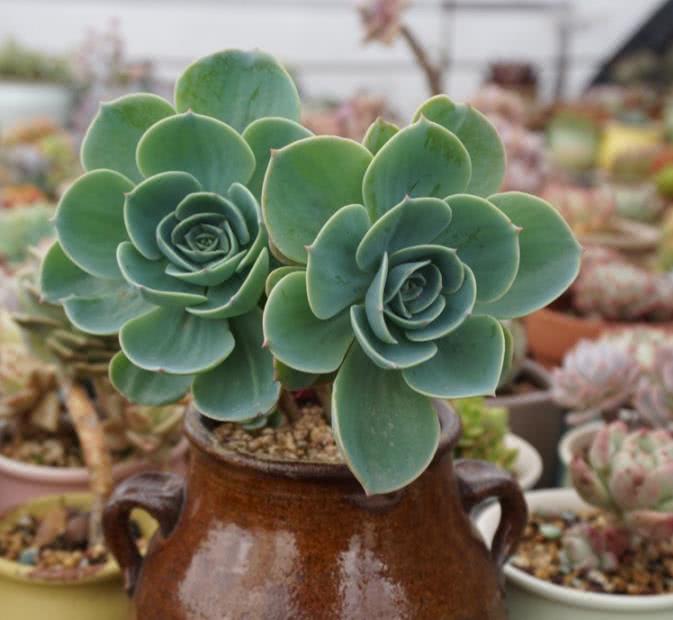
Sawdust can be used to grow flowers, but it depends on the specific situation. For example, for cuttings, sawdust can play a role in moisture retention and breathability. For example, when used in growing Phalaenopsis orchids, it can produce an effect similar to sphagnum moss. But if it is a potted flowering plant, then directly using sawdust to grow flowers is not advisable, as it can easily suffocate the plant's roots, especially when the weather is hot. We need to process it further and use it mixed with a certain proportion of soil.
Since most succulents grow in tropical desert regions, where the soil is poor (mostly gravel and coarse sand) with only a small amount of soil and organic matter, such soil is highly breathable and also has strong water permeability. If there is too much breathability and water, root rot is easy. Succulents do not need much water to survive for a long time, so when planting we should try our best to use a growing medium as close as possible to their original wild growing conditions, and sawdust is a good choice.
For succulents, sawdust has the effect of loosening the soil, improving breathability and retaining water. It also has a heat-preserving effect and has a relatively good effect on the growth of plant roots. However, fresh sawdust cannot be used directly to grow flowers. It needs to be decomposed before it can be mixed into the soil. Put the sawdust in a thick plastic bag, add an appropriate amount of clean water, seal it, and put it in the sun for one to two months. Generally, when the color turns black, it is fully decomposed.
Sawdust must be decomposed before use. Simply put, sprinkle water on the sawdust, put it in a plastic bag, tie it tightly, and then put it in the sun (to speed up decomposition). Once it turns black, take it out and use it. The reason for using decomposed sawdust is that during the decomposition process it releases heat, which would burn the plant's roots. If it is used purely to improve soil compaction, retain moisture, hold water and so on, a small amount of sawdust can be mixed in and it does not need to be composted.
If sawdust is mixed with soil to become potting soil, then it needs to be composted and rotted to increase humus. The method is simple: put it in a woven bag, add a little chicken manure water and pour it in, or add a little compound fertilizer or a little urea dissolved in water and pour it in. Note that it needs to be kept moist frequently. Throw it outdoors, and after about one year or more it can be used. To use it, mix fresh sawdust with the composted sawdust and soil, and it is ready to use.
Summer is a season that succulents have a relatively hard time getting through. During this period, humidity is higher and there is more moisture in the air, and succulents can survive just on the moisture in the air. Watering can be controlled. But if the plant is too small in size, 3 months without water will also make it dry up, so you can judge by the condition of the leaves and choose a cool night to replenish water. Succulents placed in a room need attention to ventilation. Please try not to place them in a sealed room. If the room has air conditioning, it is not a big problem, but air conditioning will also put pressure on the plants. Try not to place them directly facing the air conditioning vent.
This is a gathering place for succulent lovers, sharing succulent care tips. Welcome to follow and exchange ideas.