Causes of Low Fruit Set in Soft-Seeded Pomegranate in Qianxi County and Control Measures
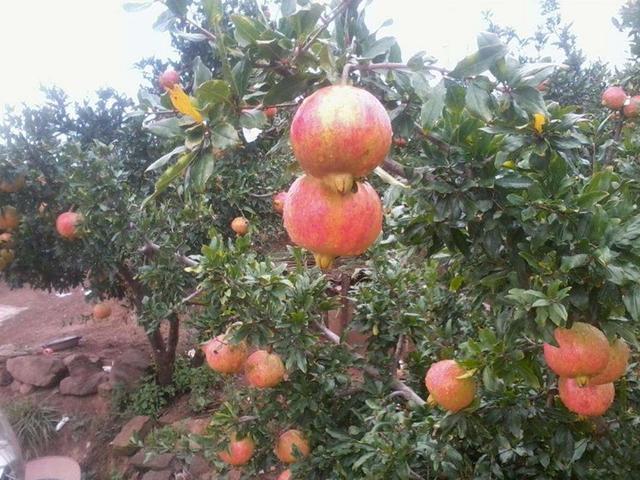
Causes of Low Fruit Set in Soft-Seeded Pomegranate in Qianxi County, Southern China, and Control Measures
1 Current Development Status of Soft-Seeded Pomegranate in Qianxi County
In early 2008, the Longxing Ecological Farmers' Planting Professional Cooperative of Zhongping Town, Qianxi County, Guizhou Province, introduced 100,000 Tunisian soft-seeded pomegranate plants from Wuhan, Hubei, for trial planting in Guanzhai Village, Zhongping Town, and the plants began to bear fruit in 2010. After nearly 5 years of observation and comparison, under the influence of the climate, soil and other environmental conditions of Qianxi County, this variety produced fruit of excellent quality, with fruit color and flavor distinct from products of other growing areas, and was highly praised by consumers. In early 2013, Qianxi County named its fresh fruit Shuixi Ruby Soft-Seeded Pomegranate, registered the trademark, and developed the Shuixi Ruby Soft-Seeded Pomegranate as an important fruit tree variety for targeted poverty alleviation [1]. By the spring of 2017, the county had planted 3,836.8 hm2 of Shuixi Ruby Soft-Seeded Pomegranate, of which 126.7 hm2 planted from 2008 to 2012 had entered the full fruiting stage, and 3,510.7 hm2 planted from 2013 to 2015 had entered or would soon enter the full fruiting stage.
Due to low sunshine hours, abundant rainfall and other reasons, soft-seeded pomegranate in Qianxi County shows vigorous vegetative growth, with large shoot and leaf growth and strong vigor, but a low proportion of well-developed complete flowers and a low fruit set rate. The phenomenon of flowering without fruiting is relatively serious, which has greatly affected growers' enthusiasm for developing soft-seeded pomegranate. Solving this problem is the key to promoting the sustainable development of the soft-seeded pomegranate industry in Qianxi County.
2 Causes of Flowering Without Fruiting and Low Fruit Set in Soft-Seeded Pomegranate in Qianxi County
2.1 Low Light and Abundant Rainfall The soft-seeded pomegranate is a light-loving plant. Hot and dry weather favors flower bud differentiation and a high proportion of complete flowers. However, insufficient light and rainy, overcast weather cause excessive vegetative growth of the plant, leading to a serious imbalance between vegetative growth and reproductive growth. The pistils of pomegranate flowers degenerate, and the proportion of well-developed complete flowers is extremely low, with these flowers dropping immediately after blooming. This phenomenon is especially prominent in the first flush of flowers. The effective flowering period (first and second flushes) of soft-seeded pomegranate in Qianxi County runs from early May to early to mid-June. During this period, Qianxi County typically experiences low temperatures and frequent rain. Continuous low-temperature rainy weather reduces insect activity, affecting pomegranate pollination. At the same time, rainwater enters the flowers, and pollen is affected by rainwater so that normal pollination and fertilization cannot occur, or pollination and fertilization are incomplete, resulting in massive flower and fruit drop.
2.2 Extensive Management Because most young and middle-aged rural laborers have gone out to work, the rural labor force remaining at home consists mainly of women, the frail and sick, and older men. This unreasonable labor structure has hindered the development of the pomegranate industry to a certain extent. (1) The quality of the labor force working in agriculture at home is low, and there is a lack of awareness of science and technology. Although the government has carried out pomegranate cultivation technology training in relevant townships (towns) for industry development, due to the low quality of the labor force, trainees cannot understand the training content. Cultivation techniques that improve pomegranate fruit set, such as branch bending, girdling, removal of sprouts, flower and fruit thinning, fertilization, and pest and disease control, are not applied in production practice, and the pomegranates planted by farmers are still simply planted without management. (2) A large number of rural laborers going out to work increases the cost of rural labor input. To save costs, pomegranate planting enterprises, cooperatives and large growers can only adopt extensive management and operation models [Jishan Huayao].
3 Measures to Improve Fruit Set of Soft-Seeded Pomegranate in Qianxi County
3.1 Matching Trees to the Site Select pomegranate planting plots with sandy loam or loam soil and sufficient light.
3.2 Artificial Rain Shelter During the Flowering PeriodWhen there is a lot of rainfall during the flowering period, cover the trees with white agricultural film to prevent rainwater from entering the flowers.
3.3 Artificial Pollination Use artificial pollination to reduce the problem of failure or incomplete pollination and fertilization caused by low insect activity during the rainy season.
3.4 Reasonable Pruning
3.4.1 Branch BendingBend the main branches, lateral branches and fruiting branches of the pomegranate into a horizontal or slanting position for the following reasons [Jishan Huayao]: (1) to control vegetative growth and promote reproductive growth of the pomegranate; (2) after the branches are bent into a horizontal or slanting position, the pomegranate flowers also become inclined, which can prevent large amounts of rainwater from entering the flowers and affecting pollination and fertilization.
3.4.2 GirdlingFor vigorous trees, vigorous branches and trees that do not flower and fruit on schedule, carry out girdling in May (to control vegetative growth and improve fruit set) and July (to promote flower bud differentiation), with a girdling width of 1/10 of the trunk circumference. Immediately after girdling, wrap the wound with old newspaper.
3.4.3 Root CuttingFor vigorous trees, when they are flowering, open a ditch at the base of the tree to cut the roots, so as to control vegetative growth and promote reproductive growth.
3.4.4 Removal of Sprouts and Thinning of Branches Promptly remove sprouts from the root crown and trunk, and remove water sprouts, thin weak branches and densely growing branches as early as possible.
3.5 Reasonable FertilizationIn view of the abundant rainfall and vigorous vegetative growth of soft-seeded pomegranate in Qianxi County, fertilization should be based mainly on fully decomposed organic fertilizer and phosphorus and potassium fertilizers, supplemented with foliar fertilizer, and the amount of nitrogen fertilizer should be reduced. Apply base fertilizer in September to October, no later than November, mainly organic fertilizer, with an appropriate amount of potassium sulfate compound fertilizer added. Apply sprouting fertilizer before sprouting, using organic fertilizer; apply pre-flowering fertilizer before flowering, using compound fertilizer with relatively high phosphorus content; apply foliar fertilizer by spraying 0.3% to 0.5% monopotassium phosphate at the early flowering stage and 0.2% to 0.3% borax solution at the full flowering stage.
3.6 Flower and Fruit ThinningAfter buds appear and complete flowers and incomplete flowers can be distinguished, thin incomplete flowers once every 7 to 10 d, and promptly thin the third flush of flowers and flowers after the third flush. Thin fruits after the physiological fruit drop ends, leaving one or two fruits per inflorescence, and thin deformed fruits and diseased fruits during the young fruit stage.