Spider Plant Care Guide: How to Grow This Pot of Air Filter
"Air Filter" Spider Plant Care Guide
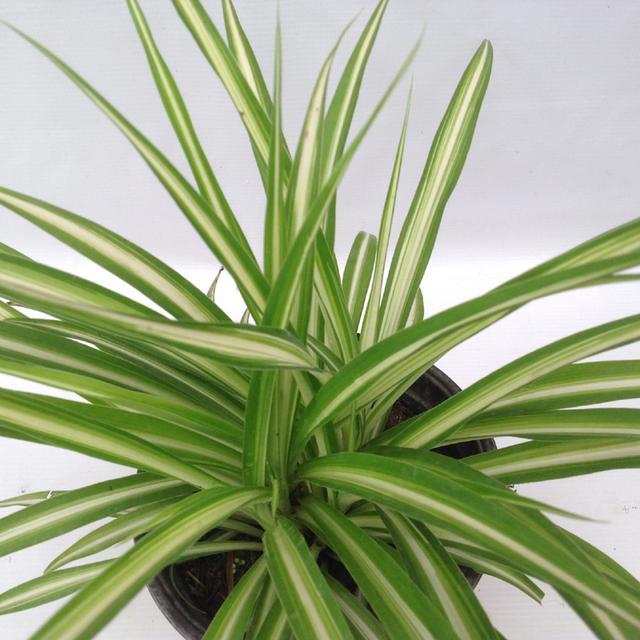
Spider plant is also known as ribbon plant, hook orchid, cinnamon orchid, hanging bamboo orchid, and crane orchid. Common varieties include variegated spider plant, golden-centered spider plant, silver-centered spider plant, broadleaf spider plant, milky white spider plant, and more. Spider plant has thick, fleshy fibrous roots that cluster in cylindrical form; its leaves are mostly linear and linear-lanceolate, narrow and long with a supple feel to the touch. The image shows a potted spider plant.
1. Environmental Benefits
Placing a pot of spider plant indoors can absorb harmful gases such as carbon monoxide, carbon dioxide, sulfur dioxide, and nitrogen oxides, acting as an air filter.
2. Care Guide
(1) Soil Selection. Potted spider plant soil can be made from a mix of leaf mold, peat soil, garden soil, and river sand. The potting soil should be replaced every 2-3 years.
(2) Light. Spider plant prefers a warm, humid, semi-shaded environment.
(3) Temperature. The most suitable room temperature for potted spider plant growth is 10-24°C, and the overwintering temperature should not be below 12°C [Jishan Huayao].
(4) Watering. Spider plant prefers a humid environment. During routine care, keep the potting soil moist. In summer, water generously. Around midday and in the evening, frequently spray the leaves to increase the air humidity around the plant.
(5) Fertilizing. During routine care, nitrogen fertilizer is preferred, applied once every half month during the growing season.
(6) Propagation. Spider plant is generally propagated by division and water culture.
① Division method. Select well-growing new plantlets on the stolons, peel them off with a sharp tool, and plant them in a prepared substrate.
② Water culture method. Select healthy stems, first cut off old leaves and roots, and place them in a container filled with clean water.
(7) Pruning. When spider plant wilts due to lack of water, simply prune off the dried parts. When the branches and leaves grow too long, cut them back. When the stolons turn yellow, cut them off.
(8) Placement. Spider plant is generally suitable for placement in the living room, bedroom, kitchen, and similar locations.