Detailed Guide to Hydroponics and Care for Phalaenopsis Orchids
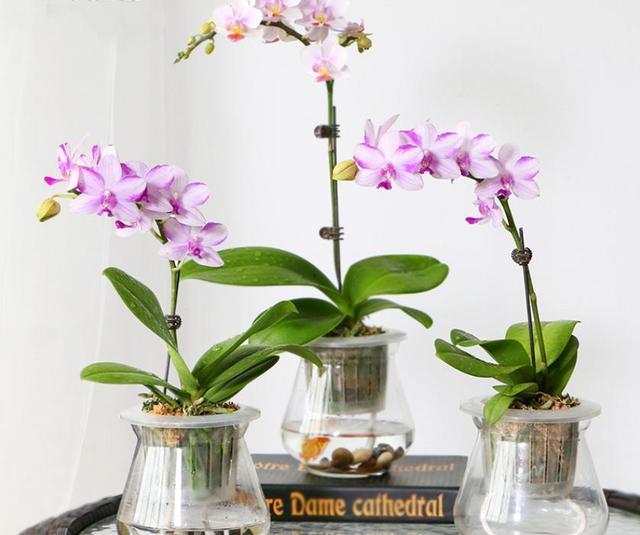
How to grow and care for Phalaenopsis orchids hydroponically?
Phalaenopsis belongs to the genus Phalaenopsis in the orchid family (Orchidaceae) and is native to subtropical rainforest regions. In recent years, Phalaenopsis has been widely propagated in large numbers through tissue culture, and it has become a popular Lunar New Year flower in mainland China, especially in South China.
1. Hydroponic method
(1) Select a mature potted Phalaenopsis plant that has already developed flower buds, rinse the root medium off with clean water, remove dead roots, pick off rotten leaves, and plant it in a transparent container. Add clean water just enough to submerge 1/3 -1/2 of the root system,
(2) Be extra careful during handling, as the root tips of Phalaenopsis are quite sensitive and must not be touched or damaged. Do not add hard solid medium either, so as to avoid bruising the roots when changing the water, which would affect survival.
(3) In the early growth stage of hydroponic Phalaenopsis, change the clean water once every 2-3 days. Because the roots of Phalaenopsis are aerial roots, as long as the root system is not entirely submerged in water, it will quickly adapt to hydroponic cultivation. The photo shows a hydroponic Phalaenopsis.
2. Care guide
(1) Light and temperature In summer, place the Phalaenopsis in a cool, well-ventilated spot, avoid direct strong sunlight, and mist the leaves often to maintain humidity. In winter and early spring, it can receive sunlight, and fluorescent lamps can also be used to supplement insufficient sunlight. If the temperature is below 15°C, the roots of Phalaenopsis stop absorbing water, causing physiological water deficiency in the plant, and the old leaves turn yellow and drop; if the temperature is below 10°C, it will suffer cold damage. Phalaenopsis is very sensitive to temperature [Jishan Huayao].
(2) Fertilization When the hydroponic Phalaenopsis grows new roots, move it to a sunny spot and add nutrient solution, changing the nutrient solution once every 3-5 weeks. Before or after flowering, spray the leaves with a dilute 0.1% potassium dihydrogen phosphate solution, which can promote flowering and the sprouting of new roots and new leaves.
(3) Pest and disease control In a long-term humid environment, Phalaenopsis plants are prone to mold infection. When this is noticed, simply improve its growing environment immediately.