Analysis of the Development Advantages and Countermeasures of the Evodia rutaecarpa Industry in Zijin County
Development Advantages and Countermeasures of the Evodia rutaecarpa Industry in Zijin County
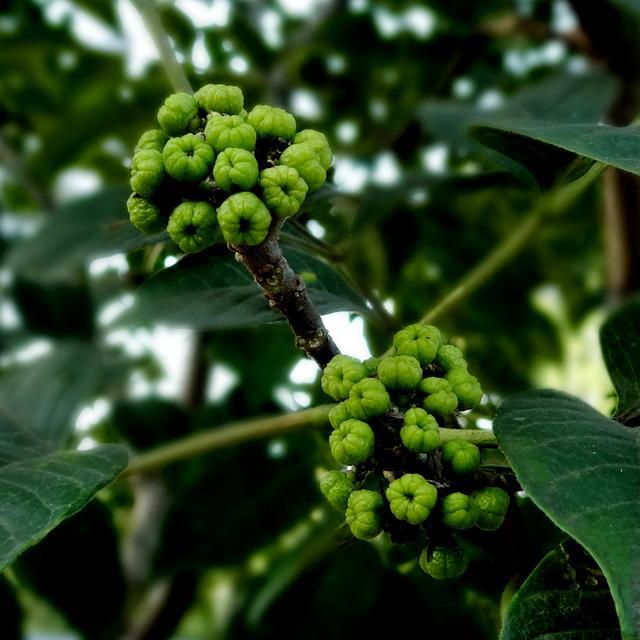
Evodia rutaecarpa (scientific name Tetradium ruticarpum, formerly Euodia ruticarpa), also known as wu yu, cha la, qi la zi, chou la zi shu, zuo li chun you zi and mi la zi, etc. It is usually divided into large-flowered Evodia rutaecarpa, medium-flowered Evodia rutaecarpa and small-flowered Evodia rutaecarpa and several other common Chinese medicinal herbs. Its nature is hot and its taste bitter and cold; it has the effects of dispersing heat and relieving pain, and lowering rebellious qi and stopping vomiting, and is used to treat symptoms such as headache or stomach duct pain caused by deficiency-cold of the liver and stomach and upward rebellion of yin turbidity. Since 2012, Zijin County, Guangdong Province has been cultivating Evodia rutaecarpa on a large scale, and the author has always participated in the construction and research of the base. Now, based on the county conditions and forest conditions of Zijin County, development countermeasures are proposed for the reference of peers.
1 Natural Overview
Zijin County is located in the east-central part of Guangdong Province, on the east bank of the middle reaches of the Dongjiang River, at 114° 38′-115° 29′ east longitude and 23° 10′-23° 47′ north latitude. Zijin County borders Wuhua County, Luhe County and Haifeng County to the east, faces Boluo County across the river to the west, connects with Huicheng District of Huizhou City to the south, and is adjacent to Heyuan City to the north. Zijin County is mountainous and hilly, with the terrain sloping from the center toward the east and west; the mountains are mainly distributed in the southeast and north, with high mountains and deep valleys, complex terrain and relatively steep mountain slopes, while the hills are mainly distributed in the central and western parts, with relatively flat terrain. Zijin County has a south subtropical monsoon climate, with a mild climate, abundant sunshine, ample rainfall, long summers and short winters. The average annual temperature in the area is 20.0-20.9 °C, and the average annual rainfall is 1 700-1 900 mm, with distinct dry and wet seasons. The soil-forming parent rock is granite, and the regional soils are mainly red soil, followed by lateritic red soil [Jishan Huayao].
2 Current Status of Evodia rutaecarpa Cultivation in Zijin County
Zijin County has a historical tradition of cultivating Evodia rutaecarpa. Long ago, Evodia rutaecarpa was scattered in Zijin County, mainly planted in vegetable gardens, beside houses and beside villages, and in the era of self-supply and self-sufficiency, it was needed for medicinal purposes. At present, Zijin County has a total large-scale cultivation area of Evodia rutaecarpa of 30.00 hm2, among which Longwo Town has a large-scale cultivation area of 10.00 hm2, Zicheng Town has a large-scale cultivation area of 6.67 hm2, and Yirong Town has a large-scale cultivation area of 13.33 hm2. They are growing well and the benefits are considerable.
3 Development Advantages of the Evodia rutaecarpa Industry in Zijin County
3.1 Land Resources for Cultivating Evodia rutaecarpaZijin County has a forestry land area of 28.200 million hm2, accounting for 80% of Zijin County's land area, including 13.982 million hm2 of ecological public welfare forest and 14.218 million hm2 of commercial forest, making it the second largest forestry county in Guangdong Province. Evodia rutaecarpa has no strict soil requirements and can generally grow in mountain slopes, plains, slightly saline or slightly acidic soils, and both temperature and rainfall are suitable for the growth of Evodia rutaecarpa. Therefore, according to the principle of matching trees to sites, Zijin County has abundant land resources for cultivating Evodia rutaecarpa.
3.2 Considerable Profit from Cultivating Evodia rutaecarpaAccording to the survey, the cost of cultivating Evodia rutaecarpa is shown in Table 1 (the full production period can be reached in 4 a). In the 4th year of Evodia rutaecarpa cultivation, each plant can produce 1 kg of Evodia rutaecarpa fruit. Calculated at 111 plants/667 m2 (plant-row spacing 2 m×3 m), 667 m2 can produce 1×111=111 kg of Evodia rutaecarpa fruit. At present, the market price of Evodia rutaecarpa is 404 yuan/kg, so the output value of Evodia rutaecarpa in 4 a=111 kg×404 yuan/kg=44 844 yuan. The gross profit of Evodia rutaecarpa in 4 a=44 844 yuan-3 260 yuan=41 584 yuan. After that, only tending costs and other management fees are needed each year, that is, about 4 000 yuan/667 m2, and the annual profit per 667 m2 can reach more than 40 000 yuan.
Table 1 Statistics of Cultivation Costs per 667 m2 of Evodia rutaecarpa yuan
In summary, Zijin County has a long history of cultivating Evodia rutaecarpa, abundant land resources and considerable profits. Therefore, the development prospects of the Evodia rutaecarpa cultivation base in Zijin County are broad.
4 Development Countermeasures for the Evodia rutaecarpa Industry in Zijin County
4.1 Strengthen Publicity and Raise Awareness The county and town forestry authorities and poverty alleviation offices should strengthen publicity on the ecological, economic and social benefits of cultivating Evodia rutaecarpa, create a good atmosphere for Evodia rutaecarpa cultivation, and guide forest farmers and the public to consciously participate in the construction of the Evodia rutaecarpa base. The purpose and significance of cultivating Evodia rutaecarpa can be publicized by distributing brochures, holding meetings, hanging billboards and posting publicity slogans.
4.2 Scientific Planning and Strengthened Guidance The forestry authorities should designate specialized personnel to take charge, and according to the principle of matching trees to sites, investigate the forest land throughout the county and guide Evodia rutaecarpa growers or enterprises to choose forest land suitable for cultivating Evodia rutaecarpa. At the same time, technical training and on-site guidance for forest farmers should be strengthened. First, when preparing land for afforestation, loam or sandy loam with good drainage is best; low-lying waterlogged land is not suitable for planting. The plant-row spacing is 2 m×3 m, and the planting holes are 50 cm×50 cm×40 cm. Apply 200-300 k of farmyard manure per hole as base fertilizer, then deeply turn and sun-expose for several days before covering with soil. The planting time is chosen around Arbor Day, and planting is carried out after rainwater has thoroughly soaked the hole soil. Second, propagation can use methods such as root cuttings, branch cuttings or tiller propagation. In addition, field management should be strengthened. After planting, water promptly during drought, and pay attention to loosening the soil and weeding. At the same time, pest and disease control at each growth stage of Evodia rutaecarpa should be carried out well, mainly including sooty mold, rust disease, brown longhorn beetle and citrus swallowtail butterfly.
4.3 Industrial Support and Demonstration-Driven Development Capable enterprises can adopt the "company+farmer+company" form to develop the Evodia rutaecarpa cultivation industry. The company can provide farmers with seedlings, fertilizers and technology, etc., while farmers invest labor and forest land, and develop the Evodia rutaecarpa industry under the guidance of the company. Products are recovered at market prices, and the company only charges a management fee. Through the company's demonstration-driven role, the large-scale development of the Evodia rutaecarpa base can be achieved.
4.4 Seek Funding and Increase Support In order to develop the Evodia rutaecarpa base, party committees and governments at all levels allocate a certain amount of funds each year for the development of the Evodia rutaecarpa cultivation industry. Forestry authorities can seek central financial afforestation subsidies and under-forest cultivation support funds or preferential agricultural interest-subsidized loans for forest farmers or enterprises. Poverty alleviation offices at all levels can support Evodia rutaecarpa as an industry for the broad masses to escape poverty and strive for prosperity, actively seek funds, thereby promoting the development of the base and driving mountain-area people to escape poverty and strive for prosperity.
In short, through research on the Evodia rutaecarpa cultivation situation in Zijin County, it was found that Evodia rutaecarpa cultivation has broad prospects and is a tree for escaping poverty and becoming wealthy in mountainous areas. Therefore, measures such as strengthening publicity, raising awareness, scientific planning, strengthening guidance, industrial support, demonstration-driven development, seeking funds and increasing support should be adopted to advance the development of the Evodia rutaecarpa industry.