Drop the bulbs into the soil and they'll survive; flowers bloom all over through the whole summer
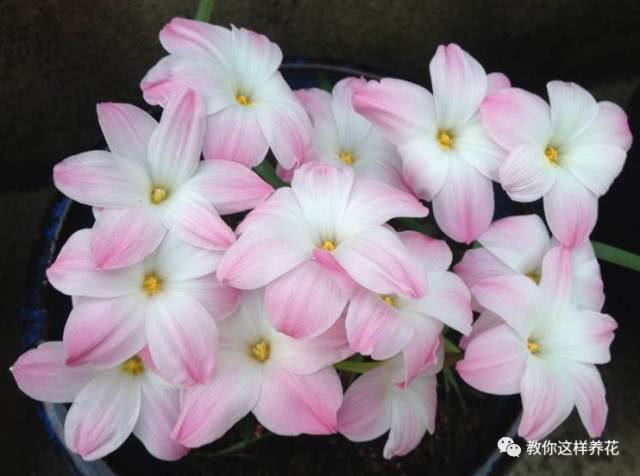
Rain lily (Zephyranthes) is a plant under the genus Zephyranthes in the amaryllis family (Amaryllidaceae), and is the collective name for two plants: Zephyranthes candida and Zephyranthes grandiflora. Because it often bursts suddenly into bloom after heavy rain in spring and summer, it is called rain lily, with vivid colors including pink, deep peach red, yellow, and white. It suddenly opens in whole patches every summer, every bulb blooms, and the clustered flower masses shine brilliantly under the bright sun, endlessly charming and loved by all who see them.
“
Rain lily"
Rain lilies have many varieties too. Here are a few of the more popular ones for you; after seeing them, I'm sure you'll be hooked.
Pang Lili, Pang Lili is the most popular rain lily, pink and plump, delicate and adorable
(Rain Lily Tieba, love)
Throbbing Heart, makes your heart skip a beat
(Rain Lily Tieba,)
Singapore
(Rain Lily Tieba,)
Oriental Pearl
(Rain Lily Tieba,)
Red Jade benidama
(Rain Lily Tieba,)
Summer chill
(Rain Lily Tieba,)
Ballet Dancer
(Rain Lily Tieba,)
Z. King"s Ransom
(Rain Lily Tieba,)
Little Peach Red
(Rain Lily Tieba,)
Aperitif
Miss
Rain lilies are inconspicuous, but when they bloom they are truly beautiful!
For growing rain lilies, fertile sandy loam is best as the soil, and full sunlight is required; in shaded places they do not easily produce offsets and do not easily bloom. Fertilize once every 2-3 months, increasing phosphorus and potassium fertilizer proportionally, which can promote bulb enlargement and good flowering. When the plants become crowded in clumps, they must be forcibly divided. They are robust by nature, drought-tolerant and resistant to high temperatures, and easy to grow; the suitable growing temperature is 22-30°C.
During the flowering period, do not water every day. You can let them dry out for a period, then water heavily, which can induce rain lilies to send up flower stalks. Generally they only need the natural moisture of rain, and after wind and rain in the heat of summer, they will open beautiful, brilliant flowers.
Rain lilies can be sown in spring, summer, or autumn, and also in winter if there is heating; sow as soon as harvested, and the fresher the seeds, the higher the germination rate. For most flower colors, the germination rate of rain lily seeds below 20 degrees is basically zero, so gardeners must consider the temperature issue when sowing.
For sowing, you can use the water-float method: put the seeds into water and change the water once a day or every 2-3 days; after about 4-5 days they grow roots, then plant them into soil with the roots facing down and cover with 2-3 mm of soil. For watering, it is best to use the bottom-soaking method to prevent them from being washed away.
(Rain Lily Tieba,)
Rain lilies can also be planted as bulbs, which can be done throughout the year, but spring is best. Dig up the bulbs, being careful not to damage them, cut off the upper leaves and flower stems, keep the bulbs intact, plant 3-5 bulbs per spot, and water to maintain appropriate moisture; they are extremely easy to establish.
Rain lily bulbs
(Rain Lily Tieba,)
What kind of rain lily do you have?
Tell everyone in the comment section below~
Show it to gardeners who need it!