Hibiscus can bloom all year round, so why do some people still dislike it?
A gardening friend asked me to recommend some plants suitable for planting in summer, so of course I introduced some herbaceous flowers like moss rose, Madagascar periwinkle, and plumbago.
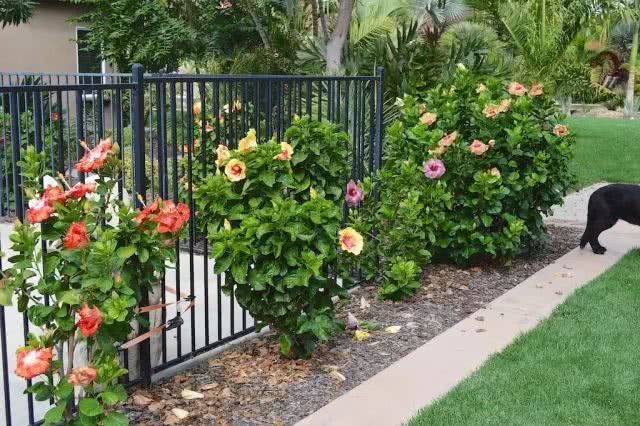
(Hibiscus in front of the courtyard)
When I got to the woody hibiscus, he did not like it, thinking that the "sang" in "fusang" (hibiscus) sounds the same as "sang" (mourning), and even slandered it as a dead man's flower. I have no idea where he heard that. Never mind, anyway, hibiscus is my absolute favorite, and I do not care what others say.
I. The growing environment for hibiscus
In tropical and subtropical regions that are warm all year round, hibiscus planted in the ground can be seen everywhere, and the varieties are becoming more and more diverse. Because the environment is warm and humid, plus plenty of sunlight, they grow very well. These hibiscus can also maintain a state of blooming all year round, with particularly brilliant flower colors and particularly large blooms.
The planting environment is best facing south, so that there is more sunlight every day. Keep moisture sufficient, and it can maintain good growth.
II. How to grow it so it blooms more?
Hibiscus is a flower native to our country and can be seen everywhere in the more southern regions. It likes a warm and humid environment, and with relatively sufficient heat and slightly acidic soil, it can keep blooming all year round.
However, many new varieties have now been bred, and their cold tolerance has also become higher, making them suitable for container growing as well. When growing them in the north, pay attention to keeping the soil slightly acidic, and in winter be sure to move them indoors for care, while also providing sufficient scattered light.
1
Suitable soil
Some friends fail at growing potted hibiscus because they did not use slightly acidic soil, or the soil was not fertile and loose enough, and in some cases the soil drainage was poor.
If a potted hibiscus has yellow leaves and does not bloom because the soil is alkaline, you can water it with ferrous sulfate to improve this. Add an appropriate amount of fully decomposed organic fertilizer to the bottom of the pot and mix in an appropriate amount of compost soil, and the soil structure can be greatly improved.
2
Suitable fertilizer, water, and light
When caring for hibiscus, be sure to give it sufficient light, at least more than 8 hours of sunlight per day. When moving it indoors in winter, also place it on a windowsill to get light.
In addition to maintaining sufficient light, you also need to keep moisture sufficient. In summer, water consumption is very high, so keep the potting soil slightly moist. If the growing environment has sufficient light and very good ventilation, then you need to replenish water in the morning and evening.
Besides light and water, you should also apply light fertilizer frequently to keep nutrients sufficient. Only then can the plant grow robustly and be encouraged to bloom better. You can give 1 to 2 times a month of diluted fertilizer, mainly a balanced fertilizer, and occasionally supplement with phosphorus and potassium fertilizer.
3
Proper pruning
Potted hibiscus must be pruned properly. This not only maintains a good plant shape, but also encourages better blooming, grows more side shoots, and can also produce more flower buds.