Sunflower seeds scattered in the soil will bloom in just one month; growing them from seed is really fast.
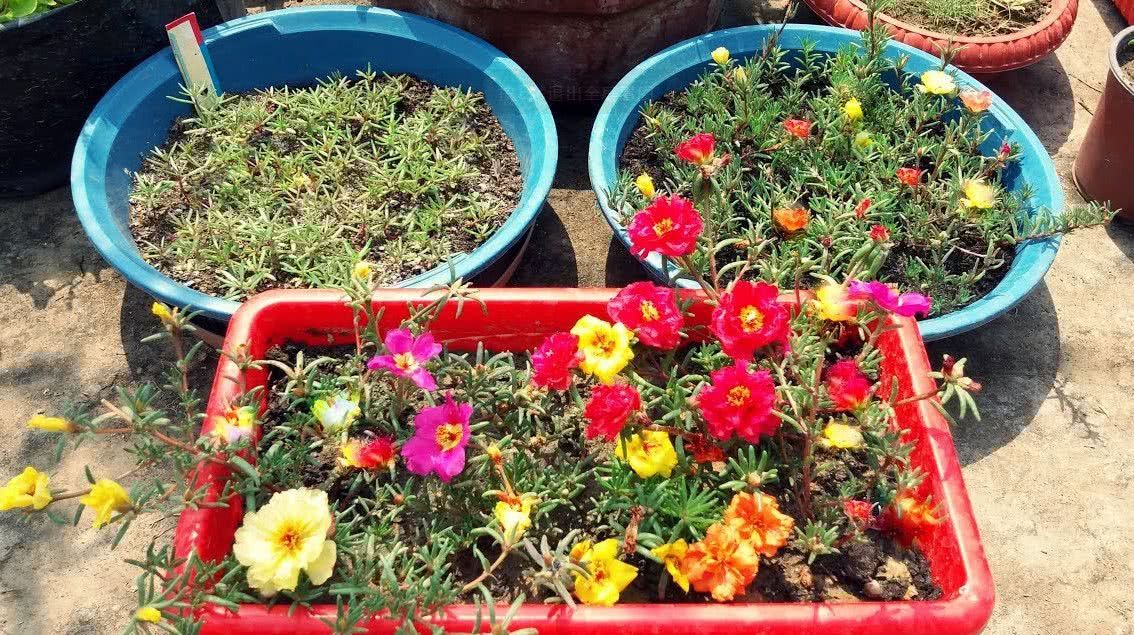
Today I'm going to show you how to propagate purslane by sowing seeds. These below are the purslanes I grew from seed; the flowers are blooming very vigorously. Purslane seeds have a relatively high germination rate, and the key to growing them easily is the way you water the seedlings.
When sowing, first prepare 1/2 compost soil, plus 1/3 or 1/2 river sand, and mix them evenly. Prepare a seedling tray that is loose and drains well; you can put some granular stones at the bottom of the tray to prevent water from pooling in the soil. Finally, put the mixed sandy soil inside, and water the soil thoroughly first.
Before sowing the seeds, level the soil first, then scatter the purslane seeds evenly. After scattering, sprinkle a thin layer of soil on top, about 1 or 2 cm, and smooth the soil slightly. After that, spray the soil until moist, and place it in a bright, ventilated room.
Purslane is very suitable for growing in warm seasons; a temperature of around 20°C is most ideal. During germination, keep the soil moist and avoid drought.
This is three days later, and small sprouts have already appeared. During care, keep the soil moist, but these seedlings are too fragile to be watered directly. Prepare a tray, add water, and let the pot soil slowly absorb the water. When all the water in the tray has been absorbed, this method is called bottom watering. In the early stage of seedling growth, always use bottom watering to replenish moisture in the soil.
These purslane seedlings are growing very densely. After about 12 days, these purslane seeds begin to grow tender leaves. Continue to replenish water and keep the soil moist. At this point, gradually increase the light and place them in a spot with scattered light, avoiding excessive direct sun.
This is a 25-day-old purslane seedling; it has already grown about four leaves, but it is still very tender. Now the stems and leaves have become sturdier, but to prevent the seedlings from lodging, remember to continue bottom watering. During the seedling stage, gradually increase light and avoid keeping them in shade, otherwise the seedlings will grow very weak.
After 27 days, the purslane seedlings have grown fairly sturdy. At this point you can water with a small amount of water; do not water heavily, otherwise the seedlings may easily lodge. This one has been growing for a month now, and they have grown fairly sturdy. Pull one up and take a look; it has already grown small roots.
Once the purslane seedlings have grown sturdy, gradually reduce watering. After more than a month, keep the soil watered only when it has dried out, and water thoroughly. It is easy to grow purslane from seed until it blooms. After one month, they can be transplanted.
Prepare a flower pot that is loose and drains well, put in sandy soil, and then you can transplant the purslane. These purslane seedlings can be carefully pulled up. Do not plant too many in one pot; usually two or three is enough. If the pot is relatively large, plant one about every 10 cm, keeping a certain spacing between plants.
After transplanting the purslane, bury the soil appropriately, and just pinch off the flowers directly. This preserves more nutrients and avoids excessive consumption. Pinch the tops appropriately and remove some flower buds; this promotes branching.
Water the soil thoroughly. After watering thoroughly, firm the plants in place and put them in a place with plenty of sunlight. Six days later, these purslanes have bloomed new flowers again. Right now the purslane plants still look rather small, so be sure to remove the first batch of flowers; remove all the flowers, and also remove some of the longer stems. Removing the flowers promotes continuous branching.
Fourteen days after flowering, they have now grown very vigorously, with many branches. If you want purslane to grow even more vigorously, you must keep encouraging branching. Just water when the pot soil has dried out, and water thoroughly. Purslane has a certain drought tolerance and does not need frequent watering.
Master these methods, and you too can fill your entire balcony with purslane. Afterward, you can use the cut purslane stems and stick them directly into the soil to propagate them.