Illustrated Tutorial on the Correct Way to Pot 4 Types of Bare-Root Succulents Bought Online
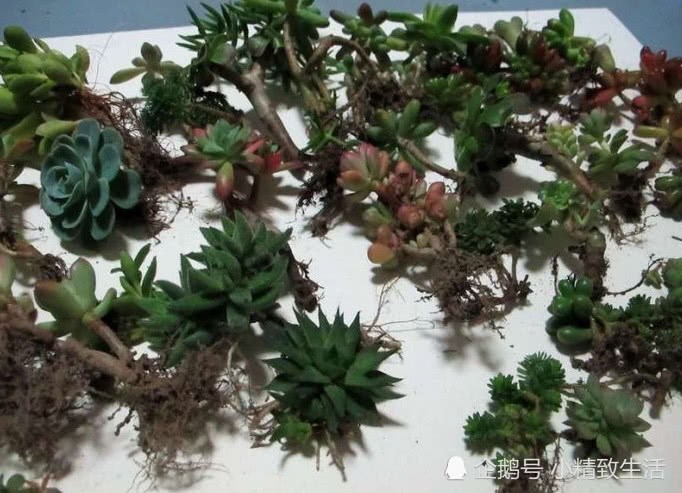
The internet is so developed nowadays, and online shopping is very convenient. Many friends buy succulents online and plant them at home. Indeed, online succulents come in complete varieties and are cheap, and Xiaojingzhi Life also often buys succulents online. However, some friends run into this problem while shopping online: the succulents they bought died just a few days after potting. Could there be something wrong with my succulents? Here Xiaojingzhi Life would like to tell you: there is nothing wrong with the succulents you bought, the problem is the potting. Below, Xiaojingzhi Life will learn together with you how succulents bought online should be potted:
Most succulents bought from local greenhouses or flower markets have already been potted in advance, and since the local environment is similar, you only need to let them adjust to the pot for a short while in a ventilated, shaded spot before normal care. Succulents bought online are different: they usually travel long distances across several provinces before reaching your hands. Not only is their original growing environment different from the current one, but during this long journey, because they cannot access soil or water, and because of the bumps and collisions along the way, many of their roots have already been damaged or dried out. If the potting method is wrong, it is very likely to cause the succulent to sleep and never wake up.
Xiaojingzhi Life has said in previous articles about potting and repotting that potting succulents always involves the process of trimming roots - washing roots - drying roots - potting - adjusting to the pot. Xiaojingzhi Life will not go into the detailed steps of this process here; those who want to know can follow Xiaojingzhi Life and look in my previous articles. Below we will focus on the different potting methods for several root types of succulents after they arrive from online shopping.
1. Fibrous-root succulents
Most Crassulaceae succulents have fibrous roots. Fibrous-root plants have no main root, the whole root system is roughly the same thickness, and it looks fluffy in shape. For this kind of succulent, many friends usually just dig a hole after receiving it and stuff all the roots in at once.
But in this way, because the roots become tangled with each other and have no room to spread out, many roots cannot contact the potting soil at all, so new roots cannot sprout, the old roots cannot breathe properly and rot, which then causes black rot, and your succulent dies.
The correct way is: first, according to the length of the succulent's root system, put part of the soil into the flower pot. After filling it, form a cone-shaped mound of soil in the middle of the potting soil, then spread these fibrous roots of the succulent evenly in all directions and straighten them out over the small mound, then continue adding soil until it reaches the required level, and then gently press the potting soil firm with your hands. This allows the succulent's root system to contact the potting soil without reservation, absorb the nutrients in the potting soil to the maximum, keep the roots ventilated all the time, and allow future new roots to sprout smoothly.
2. Nutritive-root succulents
As for root systems with thick, long nutritive roots like those of Haworthia cooperi, some of these white nutritive roots are even longer than the depth of the flower pot, so some friends may directly cut off the extra roots at the ends and then pot them. This practice causes the cut wounds to contact the potting soil and leads to root rot. At the same time, because these are nutritive roots that originally store a lot of nutrients, cutting them off only makes the nutrients stored in this part of the roots go to waste.
The correct potting method is to first spread a thin layer of potting soil, then spread out the succulent's root system and slowly coil it, adding a layer of soil with each layer of coiling, until the root system is completely covered, and then firm the soil. This has the same effect as the first method: it allows the roots to contact the potting soil as much as possible.
3. Beheaded cuttings
For succulents such as beheaded cuttings that have just grown a few roots or even have no roots at all, if you let them directly contact the potting soil, it is also very likely to cause infection by pathogens and kill them outright.
So how should this kind of beheaded cutting be potted? If you want to save trouble, you can directly dig a small hole in the middle of the potting soil. The width of the small hole should be larger than the wound of the beheaded cutting but smaller than the whole cutting. The depth of the small hole should be such that the beheaded cutting can sit on the surface of the potting soil without the wound touching the potting soil. This reduces the chance of the wound directly contacting the potting soil and becoming infected by pathogens, and the stem has space to breathe. After new roots sprout, they will actively grow down into the potting soil by themselves.
Of course, there is also a root-inducing method: first place the beheaded cutting on the mouth of a bottle half filled with water to induce the succulent to grow roots first, and then pot it. For details, see Xiaojingzhi Life's previous article.
4. Old stems
There is a saying in the succulent community that "repotting an old succulent stem means death." Although it is not that exaggerated, old stems bought online are indeed very easy to kill if the potting operation is improper.
The stem of an old stem plant itself is slender and long, top-heavy and light at the bottom, and it is hard to stand steadily if potted upright, so most friends choose to bury the stem deeply. Deeply burying the stem is feasible, but it must be divided into two situations.
The first is an old stem whose stem still has normal growth functions. For this kind of old stem, you can first put half a pot of soil in the flower pot, then stand the stem upright on the surface of the potting soil, and finally use large particles such as maifan stone to fix the stem. After the old stem grows roots, the new roots will actively grow down into the potting soil below, and the upper part of the stem will not die of black rot because it is buried in the potting soil.
There is also a kind whose stem has long been completely lignified and no longer has normal growth functions. At this time, you need to first cut off the part of the stem that has lost its growth functions directly, until you reach fleshy stem tissue, then dry the wound. If the stem is too short or there is no stem, pot it according to the third method; if the stem is still long enough, pot it according to the fourth method.
The above are four potting methods specifically for bare-root succulents bought online. So, what are the points to note in this whole process?
1. The potting process: trimming roots - washing roots - drying roots - potting - adjusting to the pot. Because you do not know whether the succulents bought online have pests or diseases from their place of origin, try not to skip the step of washing the roots.
2. While trimming the roots, also clean up the dead leaves.
3. Both the root-drying process and the process of adjusting to the pot require a ventilated and shaded environment.
4. Beheaded succulents must also have their wounds dried in a ventilated and shaded environment until they are dry, healed and shrunken.
5. It is recommended to water once with "root-setting water" 24 hours after potting, then keep them in a ventilated and shaded place until they have fully adjusted to the pot, and only then resume normal care and watering.
6. Top dressing depends on your own needs. The advantages are that it looks nice, isolates moisture and protects the potting soil from being washed away by water; the disadvantage is that you cannot see what is actually going on with the potting soil.
The above was compiled and published by Xiaojingzhi Life. I hope it is helpful to everyone.