Succulents dying easily in summer? 4 tips to help you solve it easily
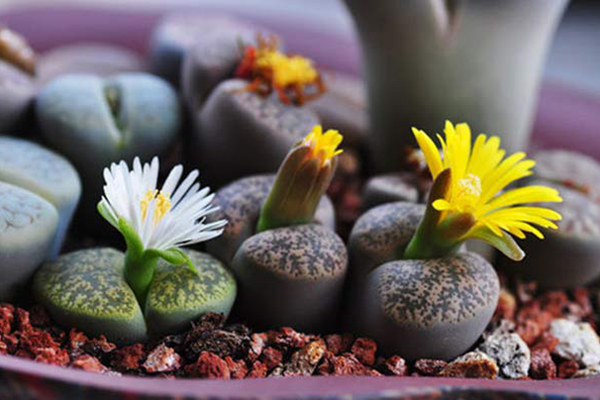
Key 1 to surviving summer: Soil
1. Growth habits
Lithops is native to southern Africa and likes a warm, dry, sunny environment, so the soil should be chosen for good breathability and drainage. That way, when heavy rain comes and water gets into the pot, it can drain quickly and keep the roots breathing normally.
2. Soil selection
You can use ordinary granular soil or humus-rich gravelly soil, leaf mold, mixed with 2~3mm granular material, such as honeycomb coal cinders, coarse sand, akadama, peat, etc.
3. Small trick for cooling down
During summer high temperatures, you can spread a layer of small pebbles on the soil surface to block sun and lower the temperature, which helps root growth.
Key 2 to surviving summer: Watering
Some flower lovers ask: since Lithops goes dormant in summer, does that mean no watering is needed? However, Lithops grown in ordinary homes does not go dormant at all. The key to getting through summer safely lies in how to water and how much to water.
1. Better dry than wet
Many people misunderstand watering and think that watering thoroughly after the soil dries out is enough. But in summer's high heat and humidity, watering thoroughly is easy while drying thoroughly is hard, and the result is either leggy growth or death. Watering too little at most slows growth a bit and will never have much impact.
Take a 2-year seedling about 1cm in size as an example: Huahua did not water it for over a month, yet it still remained plump and did not grow leggy, showing that Lithops has a very small demand for water.
2. Water in the evening
The stomata on the leaves close during the day and open at night, so try to choose evening or night for watering, and open the windows for ventilation promptly after watering. You can also choose to mist the plant surface at night to cool it down.
Key 3 to surviving summer: Light
1. Indoor care
In summer, indoor glass blocks a large part of ultraviolet rays, so no shading is needed, but you must ensure long periods of even light, and be sure to provide good ventilation.
2. Outdoor care
Lithops likes light and tolerates high temperatures, but stronger light is not always better. For outdoor care, you must avoid intense direct sun, and you can pull a black shade net with 75% shading rate.
3. Depends on the variety
Different varieties of Lithops have different light tolerance. Varieties such as Lithops aucampiae, Lithops julii, Lithops pseudotruncatella, Lithops fulviceps, and Lithops verruculosa are relatively strong in sun tolerance, while varieties such as Lithops marmorata, Lithops divergens, Lithops otzeniana, and Lithops gracilidelineata are weaker.
Key 4 to surviving summer: Pest and disease control
Lithops is often harmed by root mealybugs, with symptoms of milky white cotton-like material all around the roots. Summer is the peak breeding period for root mealybugs, and when the infestation is severe it can cause Lithops to slowly die.
Control methods
1. Eliminate pest sources: newly introduced plants must be thoroughly disinfected, and it is best not to use any external potting soil at all.
2. Physical control: when pests are found, promptly carry out thorough root trimming, repotting, and soil replacement for the whole pot of plants. When trimming roots, use clean water to wash off the white powder and adult insects on the roots.
3. Chemical control: bury some carbofuran granules in the soil around the roots to achieve a preventive effect; for treatment, you can use Guoguang Jie Bizhi, combining spraying and drenching, with obvious effects.
Have you learned the summer survival guide for Lithops?
Hurry up and put it to use!