Place these potted plants in your study to help you shake off restlessness and calm your mind
For many people, the study is not only a place for reading, practicing calligraphy, and doing research, but also a place to escape the noise of the world and return to one's inner self. It is both an extension of work and a part of life, and it holds special meaning for people. Because of the study's unique character, when it comes to choosing potted plants, people tend to favor those that are full of charm and can help them shake off restlessness and settle their minds. So here are some potted plants suitable for placing in the study, to help you shake off restlessness and calm your mind. Let's take a look!
1. Asparagus fern
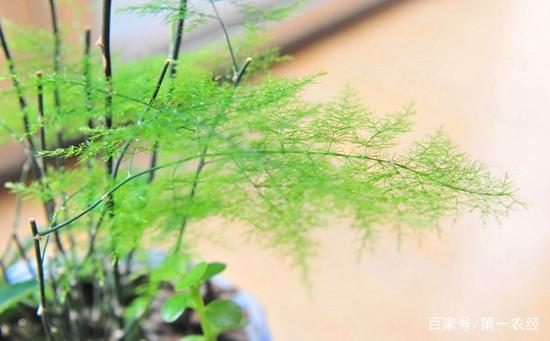
Asparagus fern, also called cloud pine, has lush, verdant branches and leaves that look like layered green clouds, calm and graceful, with a distinctly scholarly air, making it very suitable for placing in the study. When caring for asparagus fern, watering is the key point in its cultivation. Too much water and overly wet potting soil can easily cause root rot, while too little water will cause the leaf tips to scorch and turn yellow. Therefore, when watering, it should be based on the weather, the plant's growth, and how dry or wet the potting soil is, following the principle of not watering until dry, and watering thoroughly when you do. In hot, dry weather, you can spray the leaves with water to increase humidity and lower the temperature, while in winter you should water less.
2. Orchid
The orchid is a fragrant herb, one of the Four Gentlemen among flowers, growing in secluded valleys, pure in aspiration and virtuous in character. Placed in the study, it gives off a delicate fragrance that instantly helps people shed frivolity and curb agitation, calming the mind and cultivating virtue. When caring for orchids, watering should be based on the species, growth conditions, and local climate, aiming for moist but not soggy, dry but not parched. You must not water too much or too little, and should grasp the principle of not letting them dry out in autumn and not keeping them wet in winter. In winter, when temperatures are low, the plants enter a dormant state, so watering should be controlled, generally once every 5-7 days. However, the Cymbidium sinense that blooms in winter needs more water. In spring and autumn, water once every 2-3 days, and in summer, water an average of 1 to 2 times a day.
3. Bowl lotus
Bowl lotus, as the name suggests, is a small lotus grown in a bowl, delicate and exquisite, with outstanding grace. When it blooms in summer, arrange the miniature landscape with pebbles and rockery in a well-balanced way, and placing it in the study is full of elegant charm. When caring for bowl lotus, note that it is a light-loving plant and needs 7 to 8 hours of sunlight a day, so it must receive plenty of light and should not be kept indoors for long periods. Bowl lotus is an aquatic plant, and the amount of water needed varies at different growth stages. When first planted, it should not have too much water, as too much will hinder the growth of young roots and cause root rot. When the leaves grow larger, gradually add more clear water. In summer, water once in the morning and once in the evening. The water should be left to stand for 1-2 days so that its temperature is suitable, and attention should be paid to keeping the water clean; otherwise, it can easily lead to infection by pathogens and affect growth.