Besides evergreen, what other common varieties are there among everyday bonsai plants?
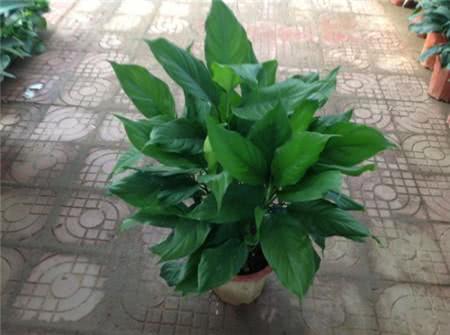
Evergreen can be said to be a very common plant in daily life. In fact, evergreen is just a general name for a large category of plants, and it can be finely divided into many kinds of plants, such as zebra evergreen, purple-backed evergreen, Chinese evergreen, and so on. Although these plants all have "evergreen" in their names, there are actually many differences among them. So what common types of evergreen are there? Below, let me introduce a few of the most common evergreens to everyone.
1. Purple-backed evergreen
Purple-backed evergreen is often also called oyster plant. The upper part of its leaves is green, with stripes of varying depth and size on it, while the underside is purplish red, also with stripes and spots of different sizes. Its flowers grow inside two dark red oyster-shaped bracts, and the form is extremely similar to an oyster shell spitting out a pearl, so it is also called "oyster flower." At the same time, the front and back of the leaves have different colors, the luster is bright and varied, and the plant's size is also relatively moderate.
Purple-backed evergreen likes to grow in a cool, semi-humid environment, and grows relatively well in more fertile and loose soil. It is relatively drought-tolerant and tolerant of cool shade, but it fears high temperatures and also fears cold. Generally, below 10°C it will immediately stop growing, so in winter it needs to be placed in a ventilated spot indoors, and ordinarily it is suitable to place it in the middle of a bright living room.
2. Zebra evergreen
Zebra evergreen also has a nice-sounding name: Dieffenbachia seguine. Its stem is nearly cylindrical, and most of the stem has white markings encircling it. Its leaves are oblong-elliptical, and on both sides of the main vein the leaves are covered with many irregular pale yellow or white markings, making it appear especially graceful and distinctive, relatively similar to the stripes on a zebra. As the name suggests, it is zebra-leaf evergreen.
Zebra evergreen likes a humid, relatively warm environment. Unlike purple-backed evergreen, it is not afraid of strong sun exposure, but it is afraid of cold. The ambient temperature for cultivating it should be controlled at 25°C to 28°C. If it is winter, then keeping it at 10-15°C is more suitable. Generally speaking, it is more suitable for indoor cultivation, and when grown, it is planted more in the southern regions of our country.
3. Star of Bethlehem
Compared with the above varieties of evergreen, one relatively special point about star of Bethlehem is that for every leaf it grows, several small bulbs grow on the outer skin of its leaf stem, resembling tiger eyes, hence the name star of Bethlehem. The entire star of Bethlehem plant is relatively smooth, and the leaves are mostly dark green with white markings in the middle. Generally speaking, its flowering period is from April to May, and the flower color is white or orange. By spring, the leaves become even more emerald green, elegant and plain, and it is often planted in gardens and flowerbeds and other places, and is also suitable for use as a potted ornamental. Star of Bethlehem likes light, is relatively shade-tolerant, and is also cold-tolerant. However, in summer, avoid overly intense direct sunlight, and the growing environment needs a certain amount of humidity.
4. Dumb cane
Dumb cane is also called Dieffenbachia. Its stem is relatively thick and sturdy, and a mature plant can grow to about 1 m. The leaves are broad and bright, oblong-elliptical or ovate-elliptical, tapering from the sides to the tip, with a length of 25-45 cm. The color is dark green, and irregular milky white, pale yellow and other spots and markings are distributed on it. It is commonly seen in gardens and can be used as a potted ornamental; if it is a small plant, it can be placed on a desk or windowsill for viewing; larger potted plants can be placed in the corner of a living room or on a balcony as decoration.
Dumb cane is relatively shade-tolerant. On one hand, it cannot accept strong sunlight; on the other hand, if the light is too dark, it will cause the leaf color to darken. It likes a humid environment, and during the growing period and when summer temperatures are relatively high, it needs more watering. The suitable ambient temperature for growth is 22-28°C, and in autumn and winter the temperature needs to be kept above 12°C.