What to do about orchid heart rot in summer? Learn 5 tricks for more and more beautiful blooms
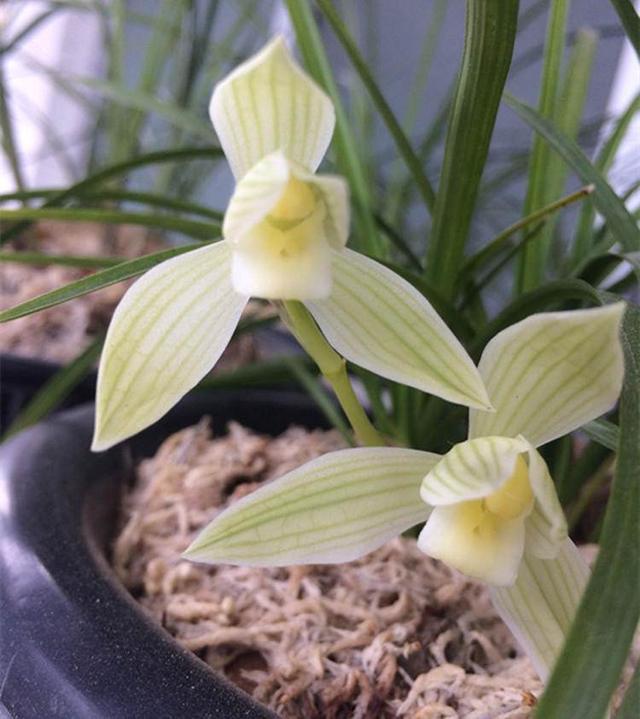
In summer, because most of the time it is hot and humid, growing orchids in such an environment can easily cause the orchid to have its "heart hollowed out," which means heart rot in the new orchid shoots. If an orchid has its "heart hollowed out," what should you do? Actually, orchid heart rot is mainly about prevention, and there are 5 main tricks.
1. Rain protection
When the new leaves of orchid shoots are damaged by acid rain, heavy rain, or prolonged rain soaking, it can lead to heart rot. After new buds grow leaves, improper watering methods can also cause heart rot. Therefore, pay attention to rain protection, and as much as possible use the immersion method or water from the side of the new shoots to prevent water from accumulating in the leaf hearts of the new shoots.
2. Pest control
Pests such as scale insects, red spiders, thrips, aphids, and snails like to suck the leaf sap of new orchid shoots. After biting and injuring the leaf hearts, the leaf hearts of the new shoots are highly susceptible to infection by Pythium rot, leading to heart rot. Gardeners can use omethoate, copper hydroxide, thiophanate-methyl, carbendazim, and other insecticides, and use sterilizing agents for regular preventive spraying.
3. Light fertilization
Excessive use of hormones and overdoses of chemical fertilizers, raw fertilizers, and other fertilizers can upset the ratio of nitrogen, phosphorus, and potassium needed for orchid growth and cause a lack of trace elements, making new shoots grow wildly and leaf stalks become soft and limp. In mild cases, the leaf base is scorched; in severe cases, tissue necrosis occurs in the leaf heart area of the new shoots, turning brown and black. Therefore, it is recommended that gardeners use organic nutrient solution specially made for orchids. In normal use, dilute with water 500 times to water the roots, and 1000 times for spraying the liquid, once every 7-10 days, so as to apply light fertilizer frequently.
4. Watering
The leaf hearts of new orchid shoots are very tender. If the temperature of the water used for watering orchids differs too much from the temperature of the orchid leaf surface, it can very easily "scald" the leaf hearts of the new shoots and trigger heart rot. Therefore, the water used for watering orchids should be left to stand for a period of time, so that when the water temperature is close to the orchid leaf temperature, it is then poured into a watering can with even outflow for watering; in hot seasons, water as much as possible in the morning and evening, and never use tap water to pour directly during the high temperatures in the afternoon.
5. Air permeability
In hot seasons with high temperatures and high humidity, poor ventilation and air permeability, and no airflow at the base of the new shoots, heart rot disease is very easily triggered. Therefore, when the temperature in the orchid garden exceeds 30°C, shading and cooling must be provided, air circulation inside and outside the garden must be maintained, and humidity should be controlled at around 75%. The growing medium should be loose and breathable, and the base of the new shoots must never be buried too deep.
Image from gardener: Puti Fanren Meng