Why does a bottom-filtered aquarium have better water quality than a top-filtered one?
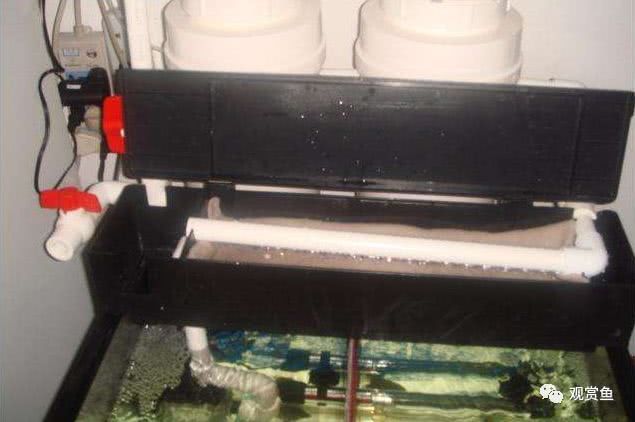
Those in the know are well aware that bottom-filtered aquariums filter water better than top-filtered aquariums, but many beginners probably do not know this. What? My 1.8 m top-filtered aquarium is no match for this 1 m bottom-filtered tank? My big tank is no match for your small tank? If it has not been modified or had any external filter added, it really is no match. Why is that?
One
About top filtration
As the saying goes, to keep fish you must first keep water. This is an unchanging principle of fish keeping, but this is also where beginners run into trouble. How do you keep water? It is actually very simple: you need an effective aquarium filtration system. Most beginners' aquariums are mostly ready-made tanks, and most common ready-made tanks still use top filtration, but the top filtration of ready-made tanks mostly has very limited space. In many beginners' top filters, you can barely fit a few glass rings, and what is more, just placing a bit of filter cotton already takes up most of the top filter space. Simply placing filter cotton cannot produce a very good filtering effect, and the filter cotton must be cleaned frequently, otherwise it will pollute the water quality. But cleaning the filter cotton often will also destroy and wash away the nitrifying bacteria along with it. If you hope that such a filter setup will achieve the effect of clear water and beautiful fish... that is really very difficult.
Two
About bottom filtration
Bottom filtration is made up of many mesh plates combined together. On the mesh plates, the inlet pipe of a water pump can be connected. When the water pump is working, water flows through the guide grooves at the bottom of the mesh plates into the filter compartment, and the filtered water then returns to the aquarium, carrying out a good water cycle. It is the best filtration for cultivating nitrifying bacteria, and it also has the strongest processing capacity. Because of its powerful filtration system, many people, when buying a top-filtered aquarium, will also specially customize it into bottom filtration.
Generally, bottom filtration has four compartments that can be used. The first compartment, the water inlet compartment, holds filter cotton and bio-cotton. The second and third compartments can optionally hold activated carbon / ceramic rings / coral sand / bio-balls / bacteria houses, etc. The last compartment, the water pumping compartment, holds the water pump, and can also hold a heater or a sterilization lamp.
The working principle of bottom filtration gives it a powerful filtering function. Besides the above, it also has other advantages, for example, a large filtration area. When the water pump is working, in the gap between the bottom filter mesh and the bottom of the aquarium, a strong water current will form, sucking the dirt on the mesh plates into the filter compartment.
Three
Aquarium filtration principles
The working principle of an aquarium filtration system is to use a water pump to draw water from the aquarium into the filter compartment, where the filter materials in the compartment filter it. The filter materials keep harmful substances or impurities in the water within the filter compartment, and the filtered water then returns to the aquarium. This is the simplest mechanical filtration process. However, if you do not understand the filtration principles, many problems will arise with the water quality for breeding. So if you want to keep the water quality in the aquarium at its best for a long time, relying only on mechanical filtration is not enough. The filtration system mainly has three functions:
1. Physical filtration, with filter cotton (coarse/fine) as the filter material
The fibers in the filter cotton block and retain insoluble impurities and waste in the water. Physical filtration is an indispensable part of the filtration system. Washing and replacing the filter cotton frequently can effectively reduce the content of organic matter in the tank, thereby reducing the burden on the nitrification system, and further reducing the output of mineral waste.
2. Chemical filtration, with coral sand, ceramic rings, and activated carbon as the filter materials
Using coral sand, ceramic rings, etc., through chemical methods, to remove water-soluble harmful substances, or to adjust the pH value (acidity and alkalinity); in addition, activated carbon used in filtration, although it plays a physical adsorption role, still targets water-soluble substances, so here it is considered easier to understand as being placed in the chemical filtration part.
3. Biological filtration, with glass rings, bio-balls, coral sand, bio-cotton, etc. as the filter materials
Using filter materials such as glass rings and bio-balls to provide a good growth space for nitrifying bacteria, and using the biological action of nitrifying bacteria to convert the toxic waste produced by the metabolism of fish and aquatic plants into non-toxic substances. This is the most important link in maintaining stable water quality in the aquarium, commonly known as the cultivation of nitrifying bacteria.
After analyzing the above filtration principles, I wonder whether everyone can now understand the difference between bottom filtration and top filtration?
First of all, a bottom-filtered aquarium has ample space and can make good use of filter materials for physical and biological filtration, cultivating nitrifying bacteria well and enabling the water quality to reach an optimal state for fish keeping. The top filtration of a ready-made tank has limited space, and the filter materials that can be placed are very few: one piece of cotton and a few stone filter materials can play a bit of a physical filtration role, but it is still relatively difficult to bring the water quality to an optimal state. Today's article is certainly not meant to belittle top-filtered aquariums. Top-filtered aquariums have the advantages of top-filtered aquariums. How can we use these advantages to keep fish well? Let's continue in the next update.
I hope today's article can help everyone. If there are any shortcomings, I hope all the seniors will offer guidance.