Plant a lavender in summer: beautiful flowers and refreshing, blooming for months
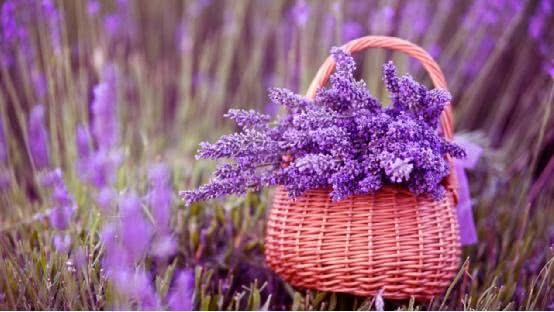
When people talk about summer, they always think of heat, irritability, and even a listless look, and these are exactly our biggest enemies at work. So how exactly should we deal with it? Many friends choose to keep one or two plants on their desk to adjust their mood a little. So which plant is most suitable? There are actually many choices, but if you are still struggling to decide, why not take a look at what we recommend for you today.
The plant we want to recommend today for growing on your desk is the famous "lavender." Lavender's flowers are a single purple color, which easily brings all kinds of romantic scenes to mind. Of course, this only shows its special advantage in terms of "looks." In fact, its calming fragrance can also let you enjoy a bit of spiritual comfort amid your busy work, thereby improving your work efficiency.
Lavender ornaments for the office are easy to find; we can just buy them on e-commerce websites. Of course, by comparison, we still hope you can grow one with your own hands. For one thing, you can experience an unprecedented sense of accomplishment, and for another, it really is very easy to grow.
If you want to grow lavender, you first need to sort out the two issues of "pot" and "soil." For the former, note that it is not suitable to use a large flower pot when it is in the new sprout stage, as this may cause the potting soil to be too wet and eventually lead to root rot. As for the latter, just mix it appropriately according to lavender's habits. Slightly alkaline or neutral sandy soil is most suitable. Of course, the medium needed must have good drainage. You can use 1/3 perlite, 1/3 vermiculite, and 1/3 peat moss mixed together. If cultivating in open ground, pay attention to soil drainage; you can pile the soil up into raised beds before planting.
After you plant lavender in a pot, watering becomes the next issue to pay attention to. Because lavender itself does not like water lingering at its roots, after one thorough watering, it is best to wait until the soil is completely dry before watering again. Watering should be done in the morning, avoiding direct sunlight, and when watering, be careful not to let water splash on the leaves and flowers, otherwise they easily rot and pests and diseases are encouraged.
Lavender itself is a semi-heat-tolerant plant, likes both [conditions], and prefers warm winters and cool summers. Suitable growing temperature: 15-25°C; it can grow at 5-30°C. Limiting temperature: above 35°C; if it stays above 38-40°C for a long time, the top stems and leaves turn yellow and wither. In northern winters, when it stays below 0°C for a long time, it begins dormancy. During dormancy, mature plants can withstand low temperatures of -20 to -25°C.
If you want to grow a lavender well, then please give it a little more sunlight. Lavender is a full-sun plant and needs sufficient sunlight and a suitably humid environment. An environment that can provide full sun is better; partial sun can also allow growth, but flowering will be sparser. In summer, at least 50% of the sunlight should be shaded off, and ventilation should be increased to lower the ambient temperature. In this way, although growth will be weaker, it will not die. In winter, lavender can grow well on flat ground and should be cultivated under full sun.
If you have done all the previous steps well, then I believe you have already gained a nice lavender. However, the long march still lacks the final step, and pruning, as the finishing work, naturally cannot be done carelessly. After flowering, pruning must be carried out. You can prune the plant to 2/3 of its original size; the plant shape will be more compact and it will be beneficial to growth. Pruning should be done in cool seasons such as spring and autumn. Generally, prune in spring; pruning in autumn will affect cold resistance. When pruning, be careful not to cut into the lignified parts, so as to avoid the plant weakening and dying.