Clever Ways to Cool Down Flowers in Summer, Helping Them Spend the Hot Season in Comfort
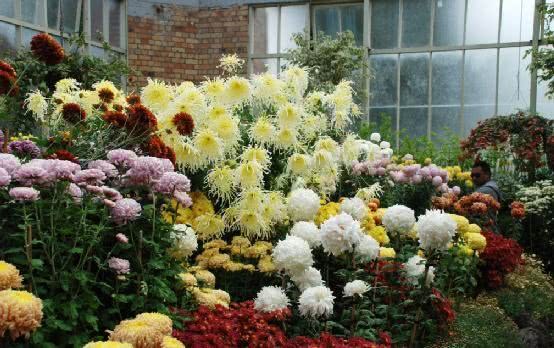
The summer sun blazes and the heat is hard to bear. People drenched in sweat can duck into a room and exclaim, "My life is given by the air conditioner." But by comparison, the flowers we grow are far more pitiful, able only to silently endure the unbearable high temperatures and the scorching sun. In past articles we have always urged gardening enthusiasts to pay attention to shading and cooling plants in summer, but what specific methods are there? Let's take a look together below.
Cooling secrets, let's take a look:
Summer temperatures are high, and the temperature of the plants themselves and their surrounding environment is relatively high as well, so cooling down is a major problem we must face. Since we cannot achieve rapid cooling through an air conditioner, we might as well use the principle of water "absorbing heat as it evaporates" to cool the flowers. A simple water-spraying cooling method can be used: spray the branches and leaves in the pot with a spray bottle 3-4 times a day to lower the leaf surface temperature.
Of course, besides direct spraying, we can also use the two methods of "humidifying to cool" and "insulating with a wet pad to cool." The former involves sprinkling water on the ground around the flower pot, which both cools the temperature and increases air humidity; the latter involves placing a piece of water-absorbing, moisture-retaining foam plastic or a layer of wet sand under the flower pot, which has the benefit of lowering the pot's temperature.
Heat dissipation, don't be careless either:
Cooling is one aspect, but how should flowers that are already too hot dissipate heat? It is actually quite simple. Place the potted flowers in a ventilated spot or next to an electric fan, and use the flowing air to dissipate heat. Of course, if what you grow at home are drought-tolerant but heat-intolerant flowers like clivia (Clivia miniata) and tulips (Tulipa), then in the face of such high temperatures you can remove the surface layer of potting soil to expose the top of the roots for heat dissipation; while for potted flowers with underdeveloped root systems such as begonias (Begonia), loosen the surface soil and the soil around the pot wall to let them breathe and dissipate heat.
Shade from the sun, say goodbye to the scorching sunlight:
Summer light is intense, especially at noon, and direct sunlight can easily cause leaf scorch, so some shading measures are a must. We can choose shade nets with different effects according to the intensity of visible light and the habits of the plants; generally 50% or 70% shade nets are used. When no shade net is available, curtains and window cloths can also be used to give the flowers appropriate shade from 12 noon to 5 pm.
Arrange in layers, give the flowers their seats:
According to the different light preferences of the flowers, arrange the balcony flowers in layers. Place strongly sun-loving flowers on the top layer, such as moss rose (Portulaca grandiflora); place semi-shade-loving flowers like spider plant (Chlorophytum comosum) in the middle; and place shade-loving and semi-dormant flowers on the bottom layer, such as calla lily (Zantedeschia aethiopica) and cyclamen (Cyclamen persicum). Use the habits of the flowers to create a small environment for plant growth, which is more suitable for enclosed balconies.