Tutorial on bending bonsai branches and trunks: thick and thin branches each have their own considerations
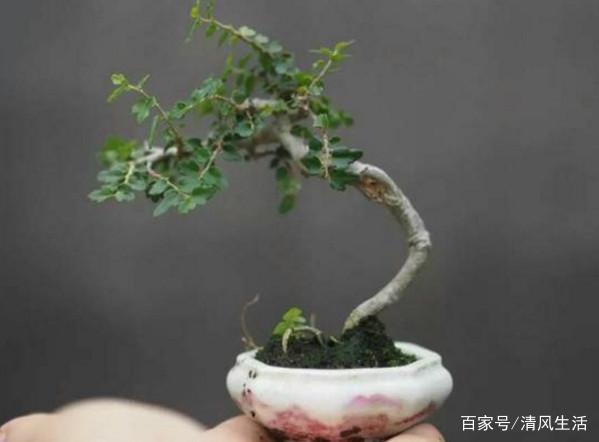
One. Pea-type potted plant
The pea-type potted plant is small in size and relatively easy to show the characteristics of a tree, but it can usually show the first bend at the root, and the impression of the tree will be very interesting, then some branches will be used, and the whole tree is durable unless it is. Cultivated straight or multiple. The turning point of the tree is a lesson in cultivating pea-type potted plants. Of course, bending also requires a certain amount of skill and sensitivity.
When the diameter of two branches is less than 1.5 cm
First, place the linen cloth on the outer edge of the curved surface, then wrap hemp tightly around the bent part to enhance toughness and prevent breakage.
This tree is too mediocre, with no change in thickness. We must work hard to achieve success. Because the bones on the trunk have been produced for more than 20 years, it is easy to break when bending. The following operation is as follows: the first step is to bend, wrapping around the trunk. The linen must be wrapped tightly and covered with a layer of groove.
After wrapping the hemp, fix four 5 mm aluminum wires on the outside. As described above, the wires are tied together with the linen thread. Tie 4 pieces of aluminum wire.
Use a small aluminum wire to tie four aluminum wires. Take the result after the bending is finished. When you bend down, lift the crown and close the trunk. Be careful and slow when bending. No cracking sound can be heard during the whole process. After bending, the trunk has already undergone some changes and development.
After the tree recovers, the branches and leaves need to be reshaped. The prerequisite for bending is to protect the branches that need to be bent as much as possible.
Three. Thicker trunks with a diameter greater than 1.6 cm
A trunk with a diameter greater than 1.6 cm needs a longitudinal groove cut on the outer edge of the arc, reaching 2/3 of the xylem. The thicker the branch, the larger the longitudinal groove, and the thicker the bark. Finally, the upper part of the trunk is joined together. The box contains nylon rope or brown rope and lead wire. If the trunk is rough and hard, when bending is difficult, a sharp knife can make a longitudinal cut of about 4-5 cm at the bend of the branch. The depth can penetrate the trunk, then combine with the skin, and then combine with thicker lead wire or brown wire, so that the trunk is not easy to break when bent. In addition, thick, straight branches can be cut deep to the sapwood section at the bending position, and 2 pieces of L can be removed to create a gap inside, twisting and turning the branch. Usually at the opposite part of the knife on each side, if the branch is very thick, it can be divided into three parts, and then add another knife. The brown wire wrapped around the skin can be slowly twisted to the predetermined angle and tied and fixed. This method should be considered in advance and cannot be decided arbitrarily. Grooving and lining is safer