This wild grass is one of the Four Huai Medicines; it was once a tribute item and now sells for 50 yuan per jin.
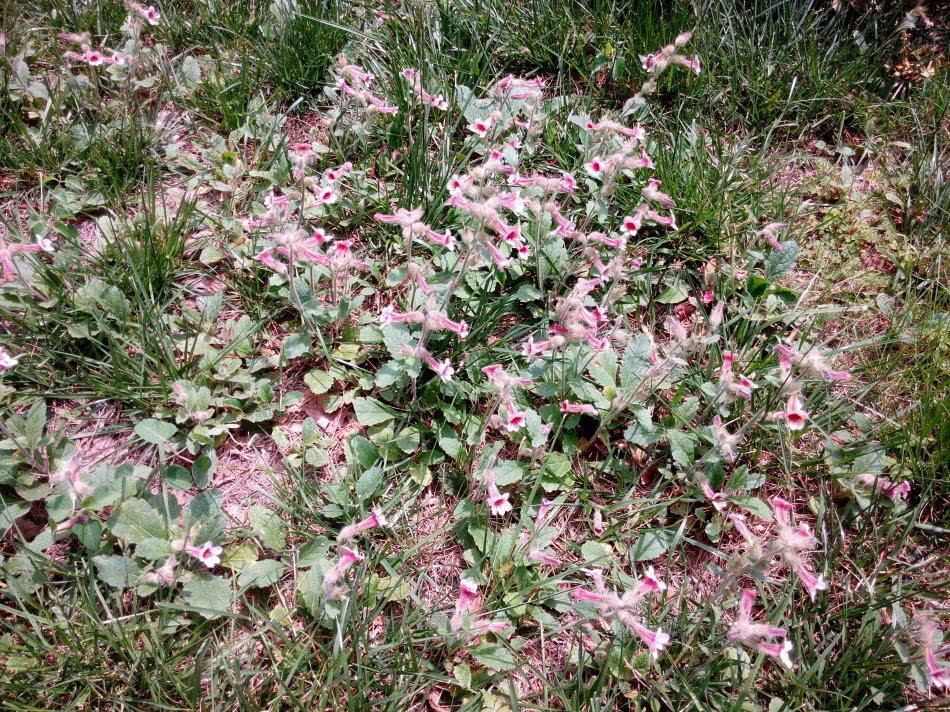
Our country is vast and rich in resources, and all kinds of wild resources are quite abundant. Take wild grasses, for example; our country has over a thousand species, and they are most commonly seen in rural fields. However, although many wild grasses are common, many people do not know their uses. Some wild grasses may look ordinary, but they are deeply loved by farmer friends. Below, the author will introduce one such wild grass. It looks ordinary, but it is truly a treasure among the people, and now it has also become a "money tree" for many farmer friends.
At noon, the author went back to the old village with family. Near the foot of the mountain near the old village, the author saw a peculiar piece of farmland. The reason this farmland was peculiar is that the crop planted by this farmer friend was not an ordinary crop, but a common wild grass in rural areas. This wild grass is "Rehmannia glutinosa."
Speaking of Rehmannia glutinosa, many farmer friends are probably fairly familiar with it. This wild grass is a relatively common wild grass in rural fields. Although it is very ordinary, it is deeply loved by farmer friends.
Rehmannia glutinosa is a Chinese herbal medicine with a long history in our country. Since the Zhou Dynasty, it has been listed as one of the "Four Huai Medicines," and the Four Huai Medicines were listed as royal tribute in successive dynasties. During the Tang and Song dynasties, Rehmannia glutinosa also spread to European countries through the Silk Road, and during the Ming Dynasty it spread to Southeast Asia and Africa through Zheng He's voyages to the Western Seas. Therefore, abroad, Rehmannia glutinosa also enjoys a very high reputation. Rehmannia glutinosa is also praised by overseas people as "Chinese medicine," which shows how popular Rehmannia glutinosa is.
So since Rehmannia glutinosa is loved by farmer friends in our country and also loved by overseas people, what uses does it have?
Rehmannia glutinosa has edible and medicinal value. Its edible value in our country also has a history of a thousand years. As early as more than a thousand years ago, ancient common people used Rehmannia glutinosa as food, pickling it into salted vegetables, soaking it in wine, brewing it as tea, and cooking it in porridge.
The medicinal value of Rehmannia glutinosa is even higher. Its root can be used as medicine. It is sweet in taste and cool in nature, and has the effects of nourishing yin and tonifying the kidney, nourishing and enriching the blood, and cooling the blood. It can be used to treat many symptoms such as yin deficiency of the liver and kidney, soreness and weakness of the waist and knees, steaming bone tidal fever, night sweats and seminal emission, internal heat and wasting thirst, blood deficiency and sallow complexion, palpitations, irregular menstruation, metrorrhagia and blood loss, dizziness, tinnitus, and premature graying of beard and hair.
The author remembers that in "Dream of the Red Chamber," there is a plot where Baoyu changes Qingwen's prescription by adding Rehmannia glutinosa, which shows that Rehmannia glutinosa was already a commonly used good medicine among the people in ancient times.
It is precisely because Rehmannia glutinosa has these effects that it is deeply welcomed at home and abroad. Moreover, according to information the author has reviewed, Rehmannia glutinosa has now become one of our country's important foreign exchange-earning products, with products exported to Hong Kong, China, Macao, China, Southeast Asia, Japan, and other countries. According to records, current Rehmannia glutinosa sells abroad for about 50 to 100 yuan per jin, which has also made Rehmannia glutinosa a money tree for many farmer friends.
Just like the farmer friend the author saw in the old village, this is exactly the case. He specifically planted several mu of Rehmannia glutinosa. According to this farmer friend, as long as conditions are a bit better, generally one mu can bring an annual income of tens of thousands. However, when disaster strikes, losses are also possible.
It seems that although Rehmannia glutinosa has become a money tree for farmer friends, there are still risks.
Dear friends, do you know about Rehmannia glutinosa? You are welcome to leave a message and exchange views!