Causes of and solutions for "submarine buds" in orchids
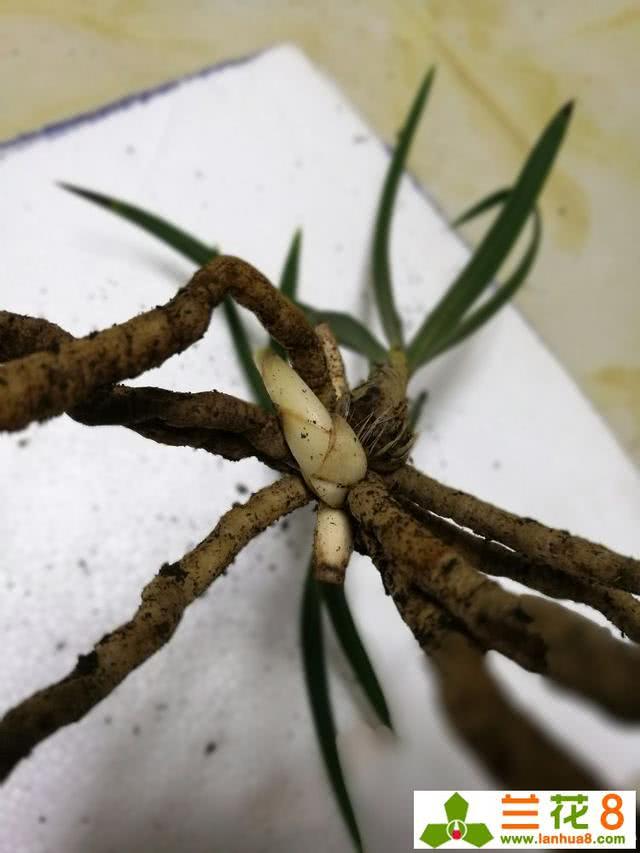
The so-called "submarine buds" of orchids refer to buds that emerge from the very bottom of the pseudobulb of the orchid plant, or buds that are trapped due to root obstruction or unreasonable structure. Submarine buds can be divided into leaf buds and flower buds; some flower buds are called "submarine flowers," and the most common are generally leaf buds. This article discusses only leaf buds. Submarine buds occur in both wild orchids and potted orchids. It can also be said that they occur whether the roots grow horizontally or vertically, except that the frequency of occurrence with vertical root growth is higher than with horizontal growth, and the frequency of occurrence is related to the variety and has nothing to do with how deep or shallow the planting is!
Many people have mixed feelings of love and hate toward submarine buds on orchids and do not know what to do. They love them because the orchid they worked hard to grow has sprouted; they hate them because submarine buds, due to abnormal growth, will rot and cause pathogen infection of the normal orchid plant, leading to rot of the plant, and with a little carelessness the whole plant is lost. Regarding the appearance of submarine buds, most people hate them more than they love them, and would rather have no sprouting than accept the risk of losing the plant. As for submarine buds that have already appeared, as long as we handle them properly, they can actually be safely dealt with or allowed to successfully emerge from the medium and become seedlings!
As for the causes of submarine buds in orchids, I personally think there are several aspects:
First, the normal sprouting points of the orchid are obstructed, inducing the sprouting point at the very bottom of the pseudobulb to sprout. Because the bud develops too deep and the orchid has too many lateral roots, its growth space is blocked;
Second, the cultivation site has low environmental humidity, strong light, and a relatively dry pot surface, causing leaf buds to be produced lower with each generation, ultimately resulting in submarine buds. When several pseudobulbs are on the same horizontal plane, submarine buds rarely appear;
Third, varietal characteristics. Varieties with well-developed root systems are prone to it. For example, Cymbidium faberi is more prone to submarine buds than other varieties because it has many roots and thick roots. Even among Cymbidium faberi there are slight differences; for example, Cymbidium faberi 'Zhengxiaohe' and Cymbidium faberi 'Lao Jipin' are more prone to submarine buds than other varieties, for reasons that are unclear!
Fourth, potted orchids are confined and restricted, and the root system all grows downward, blocking bud growth;
Fifth, long-term failure to divide the plants and pots that are too small mean there are too many pseudobulbs and roots, too dense and too crowded, seriously hindering the emergence of leaf buds;
As for the causes of submarine buds in orchids, I personally think there are several misunderstandings, or points worth scrutinizing:
1. The issue of planting depth;
2. The issue of the width or narrowness of the "road";
3. The issue of the type and coarseness of the growing medium;
4. The issue of whether the growing medium is filled firmly during planting, with overly large gaps appearing inside;
5. The issue of the orientation in which the orchid is planted;
Because the above reasons involve too many uncertainties, they are raised for everyone's reference and study
The effects of submarine buds on orchids:
First, when submarine buds appear on an orchid, they first create an opening on the pseudobulb, and because they are relatively deep, with high humidity, poor air permeability, and many miscellaneous microbes, they very easily cause wound infection and threaten the entire orchid plant;
Second, because submarine buds develop deep and emerge late, they generally cannot emerge from the medium normally. With long-term oxygen deficiency and high humidity, the submarine buds will directly rot and also easily cause infection, threatening the entire orchid plant, and with a little carelessness the whole plant is lost;
Third, submarine buds grow out in a very awkward way, with no visual appeal, crooked and twisted, and some grow horizontally, affecting the overall beauty of the orchid;
Prevention and solutions for submarine buds in orchids:
1. Divide the plants in time. When there are too many orchids in the pot, they should be divided in time, turning large clumps into small clumps. You can divide them according to your own actual situation. If too few single seedlings are separated out, it will affect survival and appearance; if too many single seedlings are separated out, it cannot effectively solve the problem, especially for varieties prone to submarine buds. Reasonable division of plants is the best and most direct way to prevent submarine buds, because dividing the plants can effectively solve the problem of tightly tangled roots and can make the sprouting points higher. Even if a bud sprouts at the bottom, the probability of its successfully emerging from the medium will be greatly increased;
2. Clean up the root system. While promptly cleaning out empty roots, rotten roots, and broken roots, a portion of the roots obstructing the growth of orchid buds should also be cut away;
3. Observe carefully. For orchids that have been growing healthily and in which no buds have been seen emerging for a long time, you should consider whether submarine buds exist, and you can turn over the pot to take a look;
4. Increase the environmental humidity of the orchid site, strengthen ventilation, and use granular growing media with good air permeability, such as Songliwang, Zhijinshi, snake wood, etc.;
5. For orchids in which submarine buds are found when the pot is turned over, the orchid can be planted tilted so that they can successfully emerge from the medium;
6. Resolutely cut them off. One approach is to cut off the old seedlings to ensure the smooth growth of the submarine buds; the other is to directly cut off the submarine buds. When operating, it should be decided according to the specific situation, and the knife should be used only after weighing the gains and losses. After cutting, the wound should be sterilized and sealed. Sterilizing drugs generally include carbendazim, chlorothalonil, potassium permanganate, and thiophanate-methyl; sealing agents generally include lime sulfur mixture; and those combining medicine and film include thiophanate-methyl. Author: Mei Fei, written on May 30, 2018; I publish orchid knowledge and pictures every day, taking you to understand orchids in depth and teaching you to grow orchids easily. If there is anything you do not understand about orchids, you can ask me at any time or leave a message below. If my knowledge has helped you, I hope you can give me a like or repost it to help more people!