Fig cutting propagation on the balcony: snap off a branch and you'll get fruit so big and sweet you can't eat it all
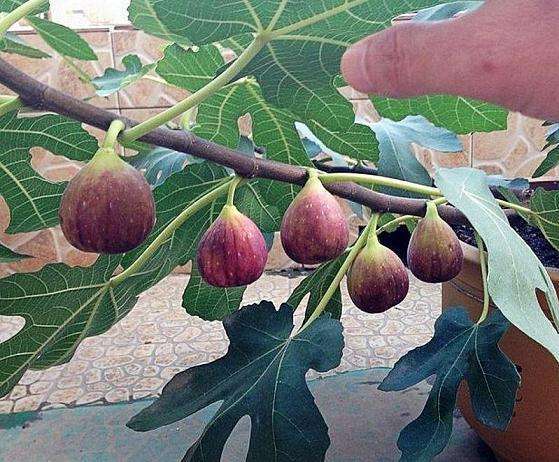
Figs are nutritious and delicious. Many friends love to eat them, and they're also a great health fruit. They're very easy to grow too - plant one in the yard and it will bear fruit on its own without any care. If you want to grow one indoors, just snap off a branch and root your own cutting. A gardening friend grew a fig on their balcony - it had lush foliage and grew especially vigorously. The only problem was it hadn't fruited yet, so they were quite anxious. What's the reason? Let's take a look
1. One reason is that all the nutrients are going to support growth, with no surplus nutrients left to produce flowers and fruit.
There's no need to worry about this. The plant grows taller first, and once the branches and trunk are thick and strong, you needn't worry about it not fruiting. My own fig bore a few fruits in the second year, and by the third year it was covered in fruit.
2. Another possibility is that it fruits later, and the time hasn't come yet. Because the seedling is small, growth takes time, and fruiting even more so. The plant grows taller first, and after some time, small fruits will emerge from the leaf axils near the tips of the branches.
Because the fruits form relatively late, most of them won't ripen. When autumn turns cool, they'll still just be emerald green, and won't swell and turn red - they're not edible.
3. Because the fig plant is relatively small, it's not advisable to let it fruit the same year, as this will actually affect its growth. Bearing fruit consumes part of the nutrients, so the plant grows more slowly, and most of the fruits won't ripen and can't be eaten - a waste of the nutrient supply. At this point, if fruits appear, it's best to pinch them off and let the plant grow its branches and trunk first. Once the branches and trunk are thick and strong, it will bear more fruit the following year.
4. For potted figs, water moderately, and be sure to pay attention to good drainage - no waterlogging, and certainly not long-term soggy soil, as the roots are prone to disease. So when mixing soil, pay attention - you can add some vermiculite and perlite, or river sand, all of which work. Don't let the soil become compacted and airless.
5. If it keeps growing vigorously, once it's grown a bit taller, you can pinch off a few of the old leaves at the bottom. This lets air circulate through the plant's shape and ensures light can fully reach the potting soil, so that after watering, the moisture in the pot evaporates faster and the roots can breathe freely.
Because it's potted, soil and space are limited, so you can prune and pinch the top according to your own preference to encourage branching. When the side branches grow bigger, pinch their tops too, to promote the ageing of the branches. Doing this will give you more and bigger fruits the following year.