White Lady's Dance blooms magnificently, a succulent plant with excellent ornamental value
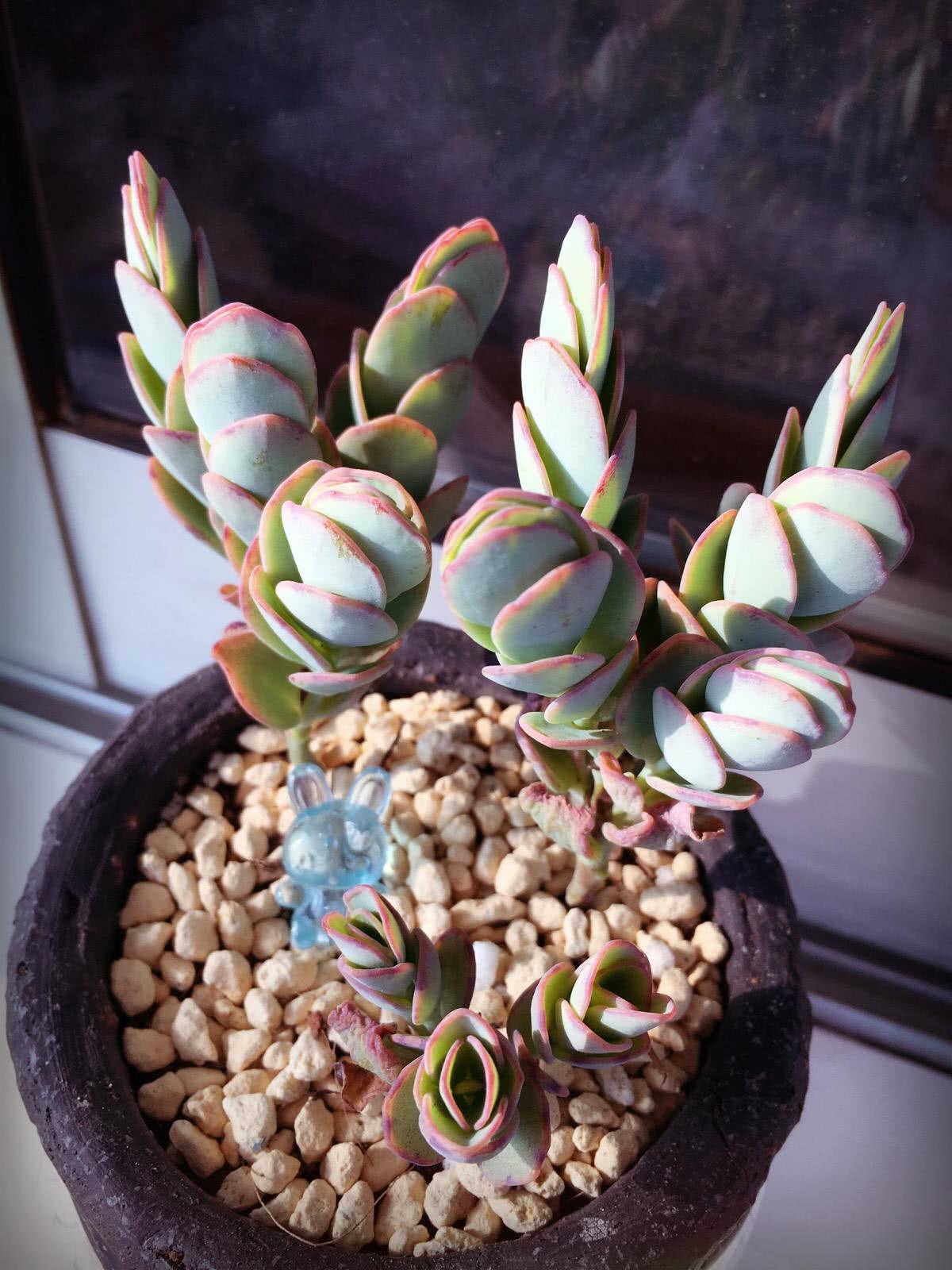
White Lady's Dance, a succulent plant in the Crassulaceae family, Kalanchoe genus, original species. In the wild, White Lady's Dance is distributed in southeastern Madagascar. The oval-shaped leaves, covered with a thin layer of frosty powder, present a fresh blue-green color, with rose-pink edges in a slightly wavy form, and mature plants can reach 30 cm in height.
In some Western countries, from winter to early spring, White Lady's Dance sends out flower stalks from the growing point, blooming with clusters of orange-red flowers shaped like lanterns. After blooming, the flower stems can be cut off to keep the plant compact.
White Lady's Dance
Growth habits and care methods of White Lady's Dance:
White Lady's Dance is a robust variety that is relatively easy to care for, and disease problems are relatively rare. The growing season is summer. The soil mix needs to use a well-draining medium; you can use 60% peat or coconut coir plus about 40% porous granules (cinder, vermiculite, volcanic rock, akadama, etc.). The optimal growth temperature is around 16°C. In summer, when grown outdoors with strong sunlight and high temperatures, shading is needed. Water thoroughly when the potting soil is completely dry.
In an environment with very ample sunlight and a certain temperature difference, the leaves of White Lady's Dance will present a beautiful light purple-pink color. If the sunlight is moderate, the temperature difference is insufficient, or watering is slightly too frequent, White Lady's Dance will present a blue-green color. If there is a long-term lack of sunlight, White Lady's Dance will become leggy. The leaves turn green and spread out, the frosty powder decreases, the spacing between leaves lengthens, and the ornamental value is greatly reduced. This phenomenon occurs mostly in indoor care environments because glass blocks ultraviolet rays; a grow light can be used to improve it.
White Lady's Dance
Propagation methods of White Lady's Dance:
White Lady's Dance is commonly propagated by stem cuttings. Cut a branch about 5 cm long from the top of the plant with an intact growing point and healthy condition, insert it into loose soil, and after rooting, appropriately increase soil moisture and it will survive. If you want it to quickly produce a clustering effect, you can behead it to encourage side shoots to sprout from the base.
In addition, if you randomly cut off several flowers when White Lady's Dance is blooming, adventitious buds like those in the picture below will also grow on the flower stalk, which can be cut off for propagation; the operation method can refer to the stem cutting method.
White Lady's Dance
Differences between White Lady's Dance and Kalanchoe fedtschenkoi:
White Lady's Dance and Kalanchoe fedtschenkoi (also called Butterfly's Dance) are both succulents in the Crassulaceae family, Kalanchoe genus, Bryophyllum section, so their leaf forms are very similar. However, distinguishing them is not difficult. Kalanchoe fedtschenkoi has leaf edges that show obvious serrations, the leaf tip is noticeably narrower than the middle, and the base color is grayish-green. Its variegated cultivars are commonly seen on the market. In contrast, the leaves of White Lady's Dance are almost round (especially the new leaves near the growing point), and the serrated edges are not obvious. The base color is somewhat brighter than that of Kalanchoe fedtschenkoi.