Frailea is the most recently discovered cactus
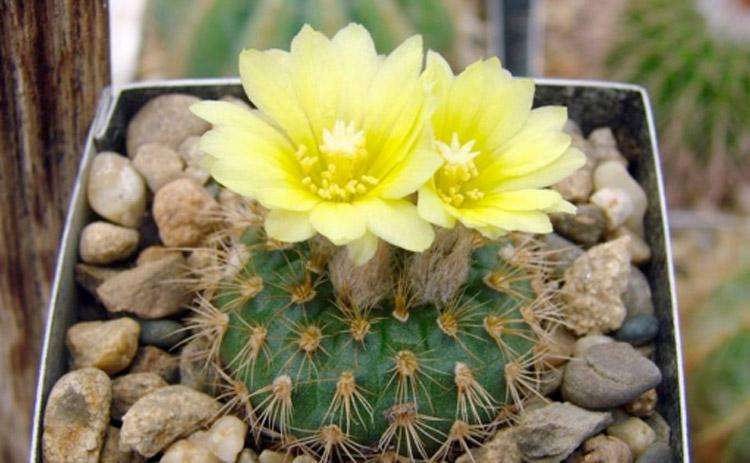
Frailea, of the cactus family Frailea genus, the genus name commemorates Manuel Reyley, who was in charge of collecting cactus plants at the United States Department of Agriculture; native to southern Brazil and northern Uruguay. Plants of the Frailea genus have small, delicate forms; under sunlight, the plants turn purplish-red, exceptionally beautiful. Frailea's growing period is June to September, a small taprooted species, the plant is flat-spherical, like a small species of the Astrophytum genus, the body soft and juicy, greenish-brown, with 10-15 ribs, the rib crests low and flat, spines usually 8, initially red, later turning black, flowers yellow, flower tube short, covered with brown simple hairs, cleistogamous, fruit juicy, fruit wall thick.
Frailea
Frailea introduction:
Plants of the Frailea genus are a kind of cactus, with small, delicate forms; under sunlight, the plants turn purplish-red, exceptionally beautiful. First classified in 1923, in the wild they are mainly distributed in Argentina, Bolivia, Brazil, Paraguay and Uruguay. For cultivation use loose sandy soil, the winter temperature should be around 5°C, propagation mostly by sowing. There are relatively many species in the Frailea genus, the plants flat-spherical or columnar, with varied forms, turning purplish-red under sunlight; daily care requires somewhat stronger diffused light, appropriately increasing air humidity; if you want them to flower, you should appropriately increase direct sunlight from bud formation to flowering; during the growing period water once every 4-5 days.
Frailea
The discovery of Frailea:
Of the cactus family Frailea genus, the genus name comes from commemorating the cactus plant collector M. fraile.
At the end of the 19th century, in the eastern regions of South America such as Paraguay, Uruguay and Brazil, immigrant settlement and land clearing began. This region has a dry subtropical monsoon grassland climate, with rainy summers and dry winters; the terrain is mostly hills of limestone and sandstone and alluvial plains, and the grassland is dotted with tall stems.
Frailea
Succulent plants - the bottle tree and columnar cacti; during clearing, some spherical cacti and small rock-dwelling succulents were found, growing in thorny dry woodland and among the grass. In 1914, two American scholars, Britton and Rose, went on an expedition to South America; during the expedition they found many small cactus-family plants not recorded by Schumann, and they recorded them one by one. Among them some species are small taprooted species, the plant flat-spherical, like a small species of the Astrophytum genus, the body soft and juicy, greenish-brown, with 10-15 ribs, the rib crests low and flat, spines usually 8, initially red, later turning black, flowers yellow, flower tube short, covered with brown simple hairs, cleistogamous, fruit juicy, fruit wall thick. These precious materials were organized after their expedition ended the following year. In 1919 they completed and published the book "The Cactaceae", naming the spherical cacti recorded above the "Frailea genus". At the same time they also recorded another 8 new genera. ... South America is also a region rich in plants, native to many unknown cacti; now, the Frailea genus has about 35 recorded species, and new species are still constantly being discovered. It was not until the late 1960s (between 1960 and 1970) that people again discovered cacti of the Uebelmannia genus, one of the most recently discovered plants of the cactus family.