Seed Propagation Methods and Technical Key Points for Millettia speciosa Champ. Seedlings
How are Millettia speciosa Champ. seedlings propagated by seed?
Millettia speciosa Champ. belongs to the genus Millettia of the Fabaceae (Papilionaceae) family, also known as beautiful millettia, Dali potato, and Dali cow. It is a medicinal and edible plant commonly used among the people, distributed in Guangdong, Guangxi, Hainan and other places in China. In recent years, wild Millettia speciosa resources have been on the verge of exhaustion, planting scale has been continuously expanding, and demand for seedlings has been increasing, urgently requiring relatively mature high-quality seedling cultivation techniques. At present, the main propagation methods for Millettia speciosa are tissue culture and seed propagation. Although tissue culture propagation technology can achieve mass propagation of seedlings, its production operations are complicated and costly, and it is still uncertain whether high yield can be achieved. Therefore, seed propagation is a seedling-raising method commonly adopted by current seedling enterprises and farmers. Since seeds mature from December to February of the following year, under natural conditions seeds take a long time to germinate, have a low germination rate, and seedlings grow slowly, which is not conducive to the standardized and large-scale production of high-quality Millettia speciosa seedlings, nor to the production of high-quality medicinal materials.
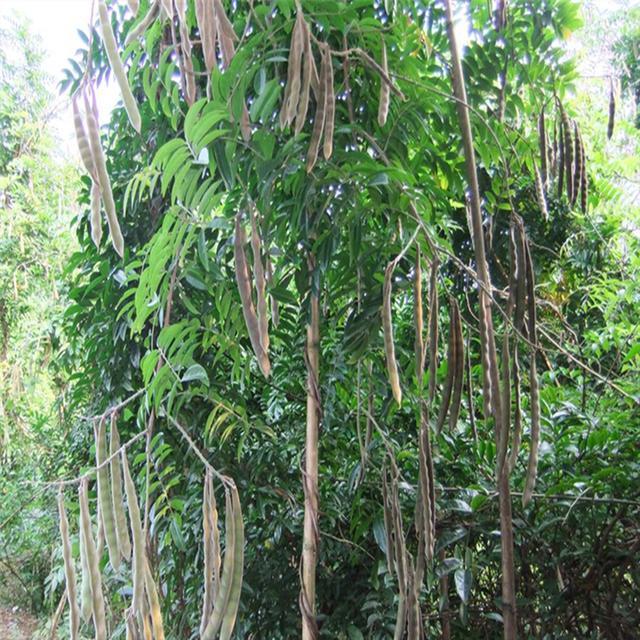
1. Collect fully mature pods, dry them, and promptly pick out cracked pods and shelled seeds. For uncracked pods, gently clamp them open with pliers and take out the seeds.
2. Select plump, mature seeds free of mechanical damage and pests and diseases.
3. Soak fresh seeds in warm water at 45°C for 4 hours.
4. Take a tray of appropriate size and wash it clean with water; place a piece of gauze of the same size as the tray in boiling water and boil for 5 min, then take it out and let it cool; lay 4 layers of wet gauze on the bottom of the tray, evenly spread the Millettia speciosa seeds in a single layer on the gauze, covering the entire tray, and cover the seeds on top with 4 layers of wet gauze.
5. Place the tray with the seeds laid out in an incubator or artificial climate chamber. Culture conditions: temperature 40°C, humidity 85%.
6. Every day, rinse the upper and lower gauze clean with water; every 3 days, wash the cultured seeds once and pick out rotten seeds. Rinse the intact seeds 3 times with clean water until the seed surface is no longer slippery, then continue culturing according to steps (4) and (5), and collect the germinated seeds [Jishan Huayao].
7. Dry crushed coconut coir under strong light, mix it evenly with crushed cultivated soil at a volume ratio of 1:2, add 80 kg of national-standard organic fertilizer per cubic meter of the mixture, mix thoroughly to make a seedling-raising substrate; put the seedling-raising substrate into seedling containers 10 cm high and 15 cm in diameter, and arrange the seedling containers neatly in the nursery.
8. Make small holes 2 cm deep in the seedling-raising substrate, place the seeds in the holes with the sprouts facing down, cover the top with substrate to a thickness of 1 cm, and water thoroughly.
9. Set up a plastic low tunnel 50 cm high over the seedbed and compact the edges; when the maximum ambient temperature is ≤20°C, place the sown seedling containers inside the plastic low tunnel; when the maximum ambient temperature is >25°C, remove the plastic low tunnel; control humidity at 80% throughout the seedling-raising process.
10. When seedlings are 11 cm tall, spray a 0.1% compound fertilizer aqueous solution once every 12 days; when seedlings are 35 cm tall, prune the main stem to a height of 12 cm and cut off side branches; prune twice during the seedling stage; after 6 months of cultivation, they are ready to leave the nursery.