What are the green pest control techniques for orchards? A detailed explanation of common methods
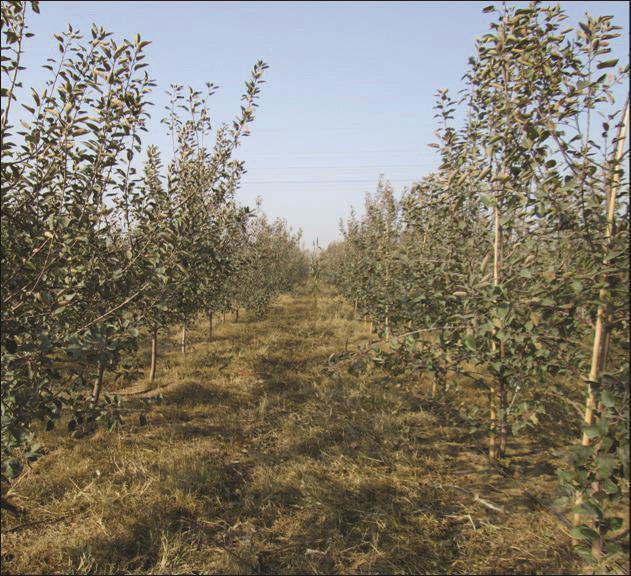
What are the green pest control techniques for orchards?
With the rapid development of ecological agriculture, ecological pest control technology centered on new green control methods has become one of the key links in producing green fruit and organic fruit. Green control not only saves labor, is less strenuous, low in cost and simple to operate, but can also avoid or reduce pesticide residues in fruit caused by chemical pesticides, ensuring the food safety of fruit. Through years of exploration and practice in orchard ecological pest control technology, and on the basis of summarizing experience and learning from lessons, the author proposes three key points of integrated green control technology for orchards, for reference.
1 Using biological measures for control
1.1 Controlling pests with insects
Planting grass between orchard rows (zinnia, okra, etc.) (Figure 1) [Jishan Huayao] attracts various natural enemy insects to inhabit, achieving the goal of controlling pests with insects. According to the types of pests occurring in the orchard, releasing natural enemy insects in a targeted way to control pests can greatly reduce the amount of pesticide used, lower pesticide residues in fruit and protect the ecological environment. For example, releasing Sclerodermus and Dastarcus helophoroides can parasitize trunk-boring larvae such as Aromia bungii; Chouioia cunea parasitizes fall webworm larvae; Trichogramma parasitizes various fruit tree pests; Encarsia formosa controls whiteflies; the seven-spot ladybird preys on aphids; green lacewings prey on aphids, red spiders, whiteflies, etc.; long-whiskered mites prey on red spiders and other spider mites; Heterostigma mites prey on aphids, two-spotted spider mites and other pests; and persimmon tree snout moths prey on longhorn beetle eggs, etc.
Figure 1 Planting grass between orchard rows attracts natural enemy insects to inhabit
1.2 Controlling pests with birds (poultry)
According to surveys, among the birds dwelling in our country, most such as the azure-winged magpie and woodpecker are beneficial birds that prey on pests, and they play a huge role in controlling damage from fruit tree pests. In or around the orchard, artificial bird nests can be hung to protect and attract beneficial birds for pest control. The habit of chickens and ducks pecking at caterpillars, hairy caterpillars, scarab beetles and other insects can also be used to raise them free-range in the orchard to control pest outbreaks.
1.3 Controlling pests with fungi
Pathogenic microorganisms have the advantages of rapid reproduction, low dosage, no residue, no public hazard and no pollution, and are one of the green control measures for producing pollution-free fruit. For example, microbial pesticides such as Bacillus thuringiensis, Beauveria bassiana and Metarhizium anisopliae have been widely used for orchard pest control, while kasugamycin, validamycin, qingfengmycin and polyoxin are used for orchard sterilization. The nuclear polyhedrosis virus of the spring cankerworm can control larvae of the spring cankerworm and gypsy moth.
1.4 Controlling pests with plants
(1) Intercropping plants for pest control. The special odors and certain pungent components contained in plants of the Asteraceae, Fabaceae, Rosaceae and Solanaceae families intercropped in orchards are used to control pests. Plants with relatively good comprehensive insect-repellent effects include: pyrethrum, marigold, mint, mugwort, sweet wormwood, Lantana camara, Venus flytrap, Sichuan pepper, garlic, lavender, castor bean, astragalus and ageratum, etc. For example, Sichuan pepper leaves can repel beetles, mugwort and sweet wormwood can repel red spiders; castor bean can trap and kill scarab beetles, and marigold can kill root-knot nematodes. Controlling pests with plants can reduce pesticide use by nearly 50%.
(2) Using plant extracts to prevent disease and control pests. Botanical pesticides produced from extracts of plants such as pyrethrum, tobacco and chinaberry have been widely used for orchard pest control. Examples include nicotine, matrine, camptothecin, sophora alopecuroides alkaloid, Tripterygium wilfordii alkaloid, azadirachtin, toosendanin, tea saponin, celangulin and pyrethrin, etc. In addition, you can also do it yourself by using extracts of chili pepper, scallion, garlic, onion and other plants to spray and control aphids and other orchard pests.
(3) Controlling pests with plant fragrant enzymes. Plants generally can produce fragrant enzymes. After leaves are bitten by pests, they exude green sap (which can give off a special fragrance) containing some volatile infochemicals, which can attract the natural enemies of the pests to come and clear them away.
2 Using physical measures for control
2.1 Using phototaxis to control pests
According to the phototaxis of insects, during the adult stage black light lamps (such as solar insect-killing lamps) are hung in the orchard (Figure 2) to trap and kill pests of the Lepidoptera and Coleoptera orders in the orchard; frequency-vibration insect-killing lamps can also trap and kill adults of Orthoptera pests. One 20-watt black light lamp can cover 20 mu of orchard, and it not only has high insect-killing efficiency and is convenient to use, but also causes no pollution, enabling the production of green, pollution-free fruit.
2.2 Using sticky insect boards to control pests
Using the color taxis of insects, colored sticky insect boards (yellow boards, blue boards, green boards, etc.) (Figures 3 and 4) are hung to control small pests; sticky insect glue is used to stick and kill large pests such as longhorn beetles and mole crickets.
(1) Trapping and killing small insects. Using colored sticky boards (yellow boards, blue boards, etc.) to trap and kill pests, hang 25-30 boards per mu, which can effectively reduce the density of small pests such as winged aphids, whiteflies, leafhoppers and thrips. The hanging height should preferably be at the middle-upper part of the tree canopy between rows. After the insect-attracting board is covered with insects, scrub it with a cleaning ball dipped in clean water and continue using it. Generally 10 boards are equivalent to the control effect of 1 bottle of pesticide.
Figure 2 Solar insect-killing lamp trapping and killing pests
Figure 3 Blue sticky insect board trapping and killing pests
(2) Sticking and killing longhorn beetles. According to the habit of adult longhorn beetles, before laying eggs, repeatedly crawling back and forth on the fruit tree trunk and branches to find a suitable egg-laying site (such as a smooth, slanted upward part) and changing location after laying 1 egg, use insect-catching glue at the junction of the trunk and branch forks, applying a sticky insect glue ring 3-5 cm wide, to catch and kill adults such as Aromia bungii. Sticky insect glue can also be used to set up isolation belts to catch and kill adult mole crickets, nymphs of plant bugs and other pests.
2.3 Using odor taxis to control pests
According to the taxis of insects to odors such as sour and sweet, sugar-vinegar liquid is set up to trap and kill adults of moths such as the apple small leafroller, pear fruit moth, codling moth and black cutworm, as well as scarab beetles, and kill them in a concentrated way. The general ratio of sugar-vinegar liquid is: V brown sugar (or white granulated sugar) : V edible vinegar : V liquor : V water = 2:3:1:11. In addition, 0.5% laundry detergent solution can also trap and kill pests such as the pear fruit moth.
2.4 Using sex pheromones to control pests
Controlling pests with sex pheromones is a method that uses artificially synthesized sex attractants to trap and kill specific male adults (Figure 5), and by disrupting the sex ratio of that pest population, controls the occurrence of the next generation, ultimately achieving the goal of pest control. Generally, place 1 along the orchard diagonal every 50-100 m, at a height preferably slightly higher than the fruit trees. The setting season should start when overwintering-generation adults emerge in spring, so as to continuously suppress the growth of the pest population. Replace the lure core once every 25-40 days. It has the advantages of trapping and killing adults, interfering with mating, protecting natural enemies, reducing pollution (reducing pesticide amount by more than 30%), low cost (saving more than 30 yuan per mu), good control effect (average control effect 50%-80%), simple operation, and being non-toxic and harmless. It is especially suitable for controlling moth pests such as the tobacco cutworm, pear fruit moth, peach fruit moth, peach leaf miner and jujube leaf roller.
Figure 4 Yellow sticky insect board trapping and killing pests
Figure 5 Solar sex pheromone trap trapping and killing male adults
3 Using agricultural measures for control
Comprehensive agricultural measures are used to create the most suitable growing environment for fruit trees and enhance their pest resistance. Agricultural measures are economical, simple, protect natural enemies, cause no pollution to the environment and are eco-friendly, and have generally received attention and application in orchard pest control work.
3.1 Selecting pest-resistant fruit tree varieties
Planting pest-resistant fruit tree varieties reduces pest occurrence from internal causes.
3.2 Rational close planting and pruning (Figure 6)
Figure 6 Rational close planting and pruning in orchards
According to factors such as the tree and shrub type of the fruit trees and the strength of their growth (short-branch type, long-branch type), rationally determine the planting density, ensure the canopy is ventilated and lets in light, and create environmental conditions unfavorable to the occurrence and reproduction of pests, so as to reduce pest occurrence. Flexibly apply winter pruning and summer pruning, keep the canopy properly shaped, ventilated and light-transmitting, and purposefully change certain environmental factors to destroy environmental conditions suitable for pest breeding.
3.3 Scientific management of soil, fertilizer and water
In the later stage of fruit tree growth, apply less nitrogen fertilizer and reduce irrigation amount, to avoid the fruit trees suffering freezing damage due to excessive vegetative growth, which leads to weakened tree vigor and reduced pest resistance; apply more phosphorus and potassium fertilizer and organic fertilizer to strengthen tree vigor and improve the pest resistance of fruit trees. In addition, fertilizer can also be used to control pests: when pests occur, spraying a 2% urea solution on the leaves can control pests such as red spiders, spider mites and thrips; using 10 kg of plant ash mixed with 50 kg of water, after soaking for 24 hours, the filtrate can effectively control aphids and also supplement potassium fertilizer.
3.4 Clearing the orchard after leaf fall
After the fruit trees lose their leaves, clear the orchard in time to destroy the overwintering sites and transmission routes of pests and reduce the overwintering population base. Prune off pest-infested branches, collect dead branches, fallen leaves and infested fruit, scrape off old bark on the trunk and branches, and burn or deeply bury them in a centralized way to prevent pests from lurking and overwintering; spray the tree body and ground with an eradication agent (3-5 degrees Baumé lime-sulfur mixture), then apply a protective agent to the trunk, and plow and turn the tree to kill insects, eliminating overwintering pest sources.