Detailed Explanation of Cutting Propagation Techniques for Rhododendron decorum
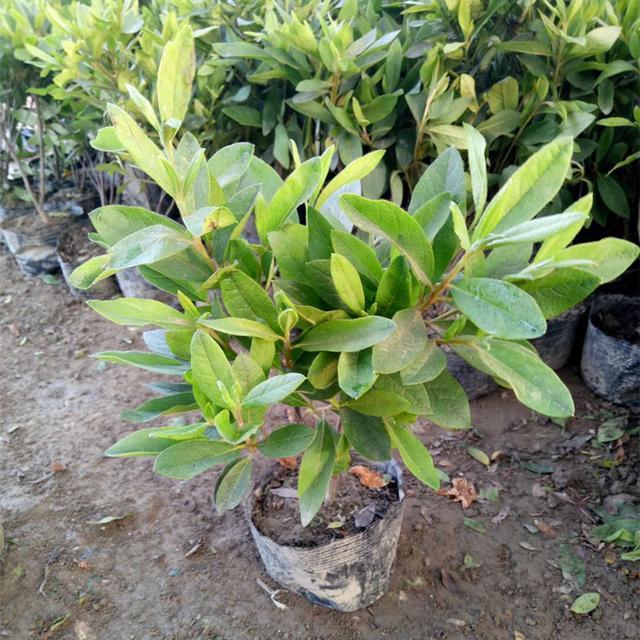
Cutting Propagation Techniques for Rhododendron decorum
Cutting is an important method for the asexual reproduction of ornamental plants, with the advantages of simple technique, easily available materials, and the ability to maintain the excellent traits of the mother plant. Rhododendron decorum is a wild germplasm resource with great development potential in the genus Rhododendron, and is a species endemic to China, mainly distributed in Sichuan, Yunnan, Guizhou and Tibet, China, and other places. Rhododendron decorum has great ornamental value: its flowers are relatively large, numerous, fragrant, and have a long flowering period; the flower colors are white, pink or rose; the leaves are glossy and beautiful, and the new leaves are tender red; it has strong drought resistance, and its corolla is edible. At present, research on Rhododendron decorum is mainly focused on drought resistance physiology, seed propagation, cutting, tissue culture and ecological surveys, etc., but there are few reports on cutting propagation, and the cutting propagation technique is not yet mature. Therefore, it is necessary to develop a method for cutting propagation of Rhododendron decorum [Jishan Huayao].
1) Selection of cutting substrate
Sphagnum moss is used as the cutting substrate, and before use it is first sterilized at 95°C for 25 min;
2) Seedbed preparation
The seedbed is set up inside a plastic greenhouse, then a shade net is installed inside the plastic greenhouse, the light transmittance of the shade net is 30%, the seedbed is 6 cm lower than the road surface, the seedbed width is 0.8 m, a layer of horticultural ground cloth is laid on the seedbed, and the cutting substrate prepared in step 1) is spread flat on the horticultural ground cloth to a laying thickness of 6 cm;
3) Preparation of cuttings
In October, from healthy mother plants with good tree vigor and no pests or diseases, current-year semi-lignified branches are collected and cut into cuttings with a length of 8 cm and 2 buds each, each cutting retaining 1 leaf, with excess leaves removed, and the basal cut being a slant cut;
4) Treatment of cuttings
The lower cut end of the cuttings prepared in step 3) is immersed in an aqueous solution of indolebutyric acid at a concentration of 500 mg/L, with a dipping time of 8 s and an immersion depth of 2 cm, to promote rooting;
5) Cutting
The cuttings from step 4) are inserted vertically into the cutting substrate from step 2), with an insertion depth of 4 cm, a plant spacing of 5 cm, and a row spacing of 6 cm. After cutting is completed, the cutting substrate is watered thoroughly but without water accumulation;
6) Post-cutting management: On the seedbed in step 2), a 50 cm high arch frame is set up, the arch frame is covered with plastic film, and the surroundings are sealed. During the rooting period of the cuttings, the relative air humidity inside the arched shed is maintained at 80%, the cutting substrate is kept moist without water accumulation, and the temperature inside the arched shed is controlled at 23°C from 8 a.m. to 8 p.m. and at 12°C from 8 p.m. to 8 a.m. the next day. When the relative humidity is too high or the temperature is too high, the plastic film is appropriately opened for ventilation to reduce humidity and temperature. After the cuttings root, the water content of the cutting substrate is reduced, and the plastic film is gradually opened for ventilation.