How to Ensure the Survival Rate of Grafted Golden Hinoki Cypress Seedlings
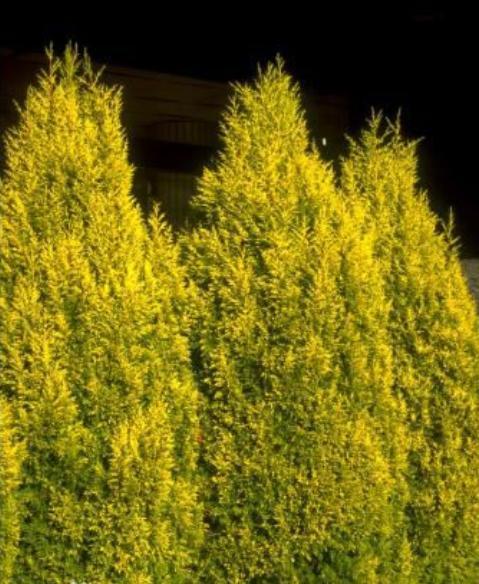
How to ensure the survival rate of grafted Golden Hinoki Cypress seedlings?
Golden Hinoki Cypress prefers moist, fertile, well-drained calcareous soil; it is cold-resistant, drought-resistant, and resistant to salinity and alkalinity, and can grow on flat ground or on cliff faces; on dry, barren mountain land, it grows slowly and the plants are thin and weak. It has a shallow root system, but well-developed lateral roots, strong sprouting ability, tolerance to pruning, and a long lifespan; it is resistant to smoke and dust and to harmful gases such as sulfur dioxide and hydrogen chloride. It is widely distributed and is one of the most commonly used ornamental trees in China. It is light-loving, slightly shade-tolerant when young, highly adaptable, and not demanding about soil; it can grow in acidic, neutral, calcareous, and mildly saline-alkaline soils. It is drought- and barren-tolerant, has strong sprouting ability, and moderate cold resistance. In Shandong it is distributed only below 900 m elevation, and grows well below 400 m elevation; its wind resistance is relatively weak.
Golden Hinoki Cypress can be propagated by sowing, cuttings, grafting, and other methods. In the prior art, cuttings are generally used to propagate Golden Hinoki Cypress, but this method is not only troublesome, but Golden Hinoki Cypress also encounters diseases and insect pests during cultivation, which reduces the yield and survival rate of Golden Hinoki Cypress and lowers its ornamental value.
1. Pretreatment of the rootstock: Select Golden Hinoki Cypress with good growth status and no diseases or pests as the rootstock. 15 days before grafting, first apply base fertilizer to the rootstock, and 1 day before grafting cut off the top shoot of the rootstock and immediately wrap the cut part with plastic.
2. Pretreatment of the scion: Select Golden Hinoki Cypress with good growth status and no diseases or pests, and on the top choose a branch with a diameter of 5 cm as the scion; remove the apical dominance of the scion branch. When the buds sprouting from the decapitated branch grow to 5 cm, they can be used as scions for later use [Jishan Huayao].
3. Grafting: Cut a downward-slanting incision on the grafting site of the Golden Hinoki Cypress rootstock deep enough to reach the xylem; cut the other two sides of the scion, opposite the growing bud, into two slanted surfaces, one long and one short, with the long slanted surface facing inward and aligned with the cambium of the Golden Hinoki Cypress rootstock. At each layer position, graft 1 scion respectively at the front, back, left, and right; the front and back scions differ in height from the left and right scions by 9 cm. After grafting, wrap and seal with plastic film so that the rootstock and scion are tightly joined and water loss from the scion is avoided.
4. Later management of grafted seedlings: regular fertilizer and water management and pest and disease control.
Wherein, the base fertilizer is made by mixing the following raw materials in parts by weight: 5 parts potassium polyacrylate, 15 parts poultry manure, 20 parts pond sludge, 10 parts peanut cake, 3 parts lysine, 3 parts methionine, 3 parts borax, 3 parts lime powder.
The grafting method adopts one or both of single-layer ball grafting and double-layer ball grafting; before the scion is grafted onto the rootstock, it is soaked in plant auxin for 5 min.
Fertilizer and water management is as follows: 5 days after grafting, water thoroughly once, then water once every half month, and apply farmyard manure once every month; pest and disease control is as follows: every 1 month, spray with 800-fold diluted 50% carbendazim solution.