The revival path of Kaohsiung's coarse grains, told by Through the South Wind Seasonal Flavors
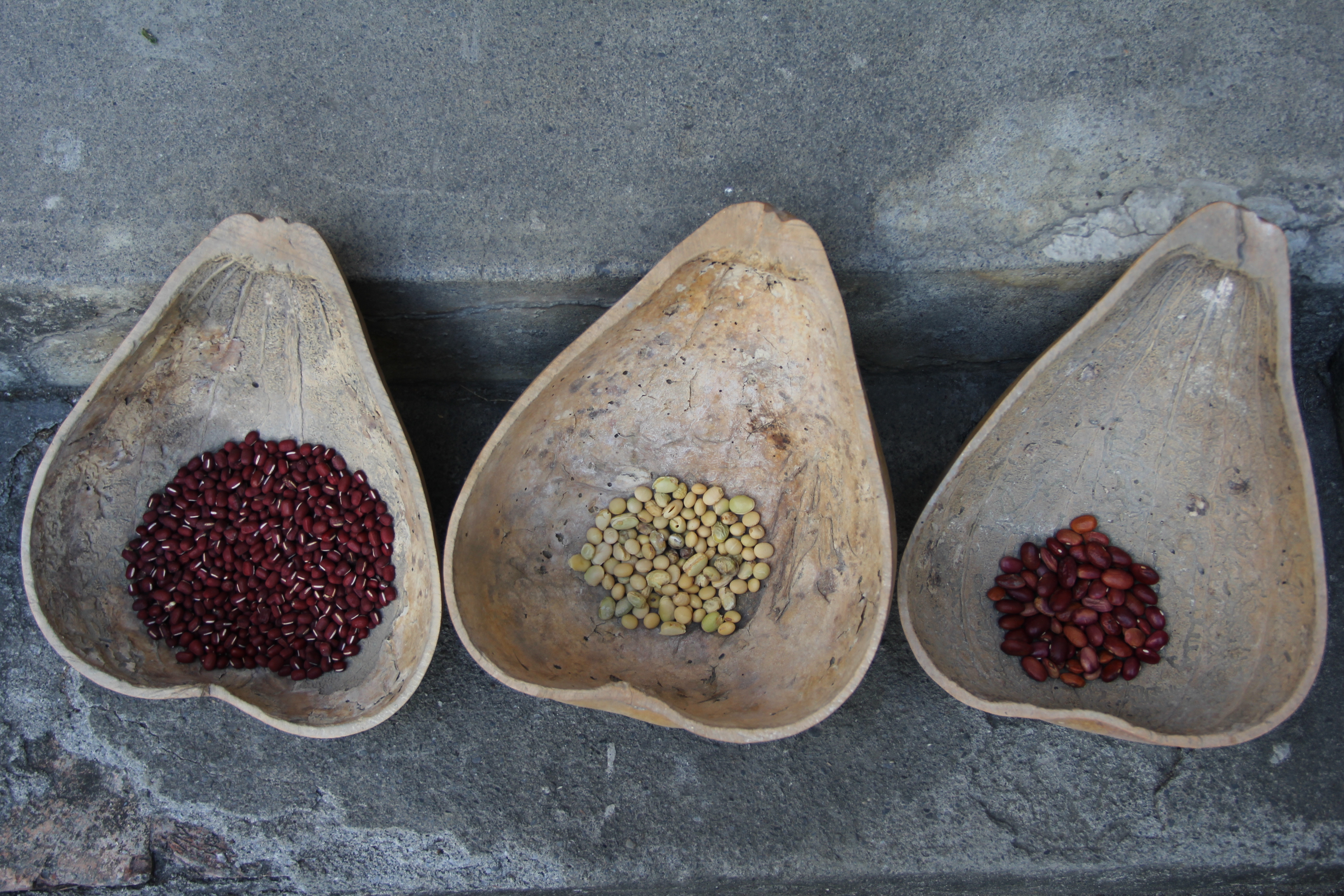
At the beginning of the year, it is the natural leaf-falling period for red beans in Meinong and Daliao. After the red bean pods dry and mature, the busy harvest season begins immediately. At this time, on courtyard grounds or along both sides of industrial roads, one can often see little red beans turned red by the sun. The Kaohsiung coarse grain revival movement has added many colors of the earth to the Kaohsiung Plain and the Meinong Basin.
In Taiwan's early days, farmland irrigation was not easy. When the soil could not supply enough nutrients, coarse grains that could adapt to poor land were common crops. Most were grown by farmers for their own consumption, so local specialty coarse grains developed according to local conditions, but changes also came because of the international market and agricultural development. Kaohsiung's terrain is varied and sunshine is abundant. Odd plots in plains and mountain areas are all suitable for coarse grain cultivation. In addition, with diverse ethnic groups, the variety of coarse grains is more diverse than in other regions.
The red quinoa, millet, and taro of Indigenous tribes in the mountain areas of Namaxia, Maolin, and Taoyuan; the edamame, soybeans, red beans, and corn of the plains; and a few coarse grain crops being brought back into cultivation, such as sesame. Although yields are not as high as in past years, traces of these coarse grains can still occasionally be seen.
Kuo Hua-jen, emeritus professor of the Department of Agronomy at National Taiwan University, said in 2015 at the "New Coarse Grain Revival Movement: Symposium on the Development of Taiwan's Domestic Soybean Industry" that Taiwan's soybean production had nearly 60,000 hectares of production area in the 1960s, and by the 2010s it was less than 100 hectares. Although the statistical figure for domestic soybean planting area slowly climbed to 2,176 hectares in 2016, there is still a long road ahead for promoting the revival of coarse grain cultivation.
Further reading:
<旬味,高雄> vol.26 Coarse Grains online reading http://agri.kcg.gov.tw/?pn=ebook_more
<旬味,高雄>Free copy pickup points https://goo.gl/Z66YsX