How to care for indoor potted plants in summer? Master these few tips
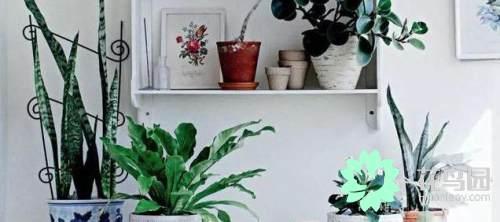
Spring and summer are the growing seasons for most plants, but do not assume that indoor plants need more water in summer. Many people keep their plants in air-conditioned rooms, where the temperature stays relatively low, so the plants' demand for water is very small.
However, plants kept in air-conditioned rooms can be misted with water occasionally to increase air humidity and avoid excessive dryness. Check the moisture level of the potting soil regularly. I check once every 3~4 days. If the leaves are wrinkled or curled, you must replenish water in time. Water thoroughly once the potting soil has dried out, and you will easily master the watering technique for indoor plants.
Indoor plants are generally watered thoroughly only after the potting soil has dried out. This can prevent fungal infections. Too much water easily causes root rot, while too little water will not kill them right away. At first, I always used my finger to test the moisture of the soil. If the soil 3~5 cm below the surface of the potting soil is dry, I would water the potting soil thoroughly once.
Some particularly drought-tolerant or moisture-loving plants can also be grown this way. When caring for plants indoors, as long as you master watering thoroughly only after the potting soil has dried out, you basically will not kill the plants and flowers.
Check the moisture of the potting soil regularly and develop good plant-care habits, and you basically will not kill your plants. Before watering, you must always check whether the soil has dried out.
Another key to caring for potted plants indoors is the location. Avoid placing them at air-conditioning vents or next to heaters. Try not to place plants next to large appliances. If it is a place that is completely dark for long periods, do not place potted plants there either; there should be bright light for at least a while every day, to avoid excessive darkness.
Some plants that can bloom can be placed in a spot with appropriate scattered light, while light-loving plants can be placed on a south-facing windowsill or balcony, such as the common bougainvillea, crown of thorns and moss rose.
For foliage plants cared for indoors, try to avoid direct sunlight, especially for those plants that have long been kept in environments without light. The hot summer sun will scorch the leaves.
For potted plants cared for indoors, also pay attention to cleaning the leaves regularly. Do not let too much dust accumulate on the leaves, otherwise it will affect photosynthesis and the leaves will easily turn yellow. After washing the leaves, place the plant in a ventilated spot to avoid water pooling on the leaves and fungal infections, otherwise they will easily rot.
In the hot summer, even placing an indoor potted plant in a spot with strong sunlight for a few minutes will burn the plant. The leaves easily develop small spots from sunburn, and sunburned plants will show scars and will not be able to recover to health.
Plants cared for on a windowsill should not be placed directly against the glass. The glass window will magnify the heat, and leaves placed directly against the window will easily burn. The same is true in winter; being directly against the window easily causes frostbite.
If indoor potted plants are in a room without air conditioning, then increase the watering frequency. Moisture-loving plants can have their soil kept moist, and maintain good ventilation. Avoid keeping them in a stuffy or sealed space, which helps promote plant growth.
Plants cared for in an air-conditioned room, however, should be watered less. In a low-temperature air-conditioned room, they consume water very slowly, so avoid too much water.