Enjoying nature's gifts in a living cathedral
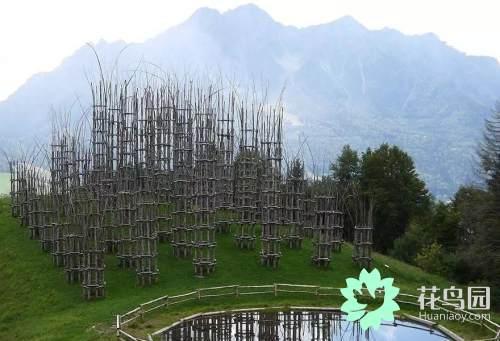
In 2001, Italian artist Giuliano Mauri began construction work at the foot of Mount Arera. Standing on sacred ground, this structure is called the Cattedrale Vegetale, or the Tree Cathedral.
Until his death in 2009, he devoted himself to this astonishing engineering project throughout that time. The following year, those commemorating the late artist finally completed his creation.
He spent years perfecting the structure of this cathedral. Less than a year after his death, the overall framework of the "Tree Cathedral" was completed. This new cathedral was one of the outcomes of the United Nations' celebration of the "International Year of Biodiversity." This combination of nature and spirituality allows everyone lucky enough to visit in person to immerse themselves in its beauty.
The preciousness of this wonderful work of art lies not only in its exquisite architectural structure, but also in the varied beauty it displays at different times. Like other great cathedrals in human history, this cathedral will likewise take decades to complete. The difference is that it is not humans who continue building it, but nature. Humanity's only task is to stand aside and watch how nature works its magic.
The "Tree Cathedral" has a total of 5 aisles and 42 columns built from trees covered in ivy. Each column is woven from 600 chestnut and hazel branches intertwined with 1,800 fir branches. Inside each column, a beech tree has been planted. Beech trees can grow to 160 feet tall and live for more than 300 years. In the future, as the man-made structure gradually rots and falls apart, the beech trees will gradually grow and hold up this cathedral.
Inside the columns are eighty hornbeam saplings, all gradually losing their color as the seasons change.
Although the columns will rot, the trees inside will keep growing, making this cathedral immortal.
As for the location of the cathedrals, Mauri believed they could only be built in the wild, in contact with nature. His third work is located in Lodi, Italy, deliberately placed beyond the city's boundary.
Andrea Ferrari is the city's cultural advisor. In an interview, he said, "I talked with Mauri, but he would not consider other locations. The cathedral had to be built there, in the middle of nature, where there is no pollution from the city, and only that could make his work fully resonate with people."