Grafting and seedling-raising technique for alpine rhododendron using Rhododendron decorum as rootstock
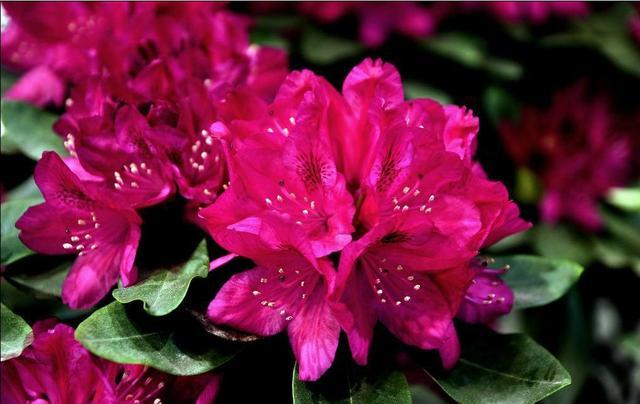
Grafting and seedling-raising technique for alpine rhododendron using Rhododendron decorum as rootstock
Alpine rhododendron: an evergreen small shrub, up to 1 m tall, densely branched, prostrate or upright. Leaves usually scattered at the top of the branches, leathery, grayish to dark grayish green above, pale yellowish brown to reddish brown below, petioles scaly. Inflorescence terminal, umbellate, with several flowers, flower bud scales deciduous, calyx small, reddish or purple, corolla broadly funnel-shaped, pale purplish rose to purple, rarely white, filament bases woolly, capsule oblong-ovoid, flowering in May-July, fruiting in September-October. Grows in alpine areas, tundra, rocky places or swamps. Produced in the Greater Khingan Mountains, Changbai Mountains and Inner Mongolia of China. Also found in Canada and Alaska, USA. The flowers of this species can be planted in garden flower beds and can also be used as cut flowers in vases, with high horticultural value. Alpine rhododendron is mostly used for potted ornamental display; it prefers a cool, humid environment, and because its crown is large, its water requirement is also large. It has a well-developed root system and is a shallow-rooted tree species, so the growing medium should be loose, rich in humus, with good soil aggregate structure, and a pH value between 5.5 and 6.5; planting in clay tile pots is best. Alpine rhododendron is not tolerant of high temperatures and grows poorly above 35°C, but it can withstand severe cold of -10°C [Jishan Huayao].
In the introduction and domestication of alpine rhododendron, the problem of low germination rate in seed propagation has been solved, but seedlings from seed propagation grow extremely slowly, which has affected the promotion and application of alpine rhododendron. Grafting propagation requires only 1 year to flower, and studying their grafting propagation rules will play a positive role in their introduction and domestication and the development and utilization of resources.
(1) In March-April, select 4-year-old robust Rhododendron decorum plants as rootstock, use positions on the tree where branches are evenly distributed as grafting points, and on a sunny day select 1-year-old robust branches of pure alpine rhododendron that have just sprouted, cut them into scions with 2-3 buds, with a scion length of 6-8 cm; after cutting the scion, coat the cut surface with a starch solution in which ferrous chloride is dissolved, seal the opening with plastic wrap and tie it, and wrap the entire scion with a wet towel at a temperature of 23°C and a humidity of 93%. In the starch solution in which ferrous chloride is dissolved, the mass fraction of ferric chloride is 0.24%, the mass fraction of starch is 5.0%, and the remainder is water.
(2) Before grafting, dip the base of the scion in a 110 ppm naphthalene acetic acid solution for 12 seconds, use cleft grafting and cut grafting methods, cut the lower end of the scion into a wedge shape, make a vertical cut at the center of the rootstock grafting point, with the cut matching the size of the scion wedge, insert the scion into the rootstock cut, align the phloem of the rootstock and scion, then press the scion with the rootstock bark, and then tie and wrap the entire scion with a black film band; after grafting, prevent direct sunlight and rain wetting. The branch at the rootstock grafting point is retained to a length of 16 cm, and old branches and new shoots on the pruned rootstock are removed according to tree shape, with remaining old branches accounting for 13% and remaining new shoots accounting for 8%.
(3) 8 days after grafting, spray nutrient solution at the grafting point in the morning and evening, with an amount of 9 ml/plant, continuously for 4 days; 33 days after grafting, the scion grows new shoots, remove the tied black film band; 48 days after grafting, normal cultivation management can be carried out, spraying liquid fertilizer once every 16 days within a 55 cm range around the rootstock base, with an amount of 75 kg/mu. The nutrient solution is prepared from the following components by mass percentage: ferrous sulfate 0.19%, ethylenediaminetetraacetic acid 0.33%, potassium dihydrogen phosphate 0.11%, ammonium nitrate 0.14%, magnesium sulfate 0.09%, potassium iodide 0.13%, zinc sulfate 0.07%, copper sulfate 0.17%, sodium molybdate 0.06%, and the remainder is water. The fertilizer liquid is made from the following components by mass percentage: urea 3.3%, potassium sulfate 2.2%, calcium chloride 1.9%, ammonium nitrate 1.6%, organic fertilizer 1.3%, fermented cake fertilizer 0.9%, manganese sulfate 0.6%, and the remainder is water.