What Are the Symptoms of Vegetable Continuous Cropping Obstacles and What Control Measures Exist
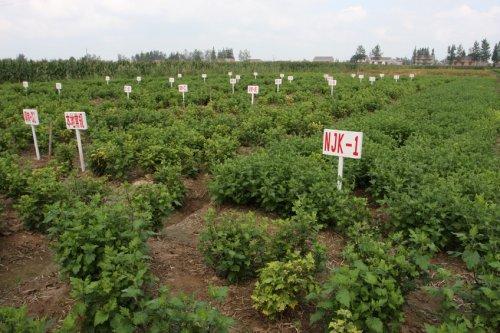
Symptoms of Vegetable Continuous Cropping Obstacles and Control Measures
1 Definition of Continuous Cropping Obstacles
Continuous cropping obstacles refer to the phenomenon in which the same crop or closely related crops (such as peppers, eggplants, tomatoes and other Solanaceae crops) are planted year after year and, even under normal management, still show poor growth and development, reduced yield, deteriorating quality, and severe pests and diseases.
2 Symptoms of Continuous Cropping Obstacles
2.1 Weakened vegetable growth vigor and declining yield
Wei Hui et al. found that as the number of continuous cropping years increased, the plant height of garlic, the thickness and length of the pseudostem, and the leaf area showed a trend of first increasing and then decreasing, while the number of bulbs decreased [1].
2.2 Severe pests and diseases and declining quality
Research has found that as the number of continuous cropping years increased, the VC content, crude fiber content, soluble sugar content and chlorophyll content of Chinese chives in each cutting showed a declining trend [1]; potato plant height, leaf area and daily net photosynthetic rate all decreased year by year [2]; and the severity of major pests and diseases in cucumber increased year by year [3].
3 Causes of Continuous Cropping Obstacles
3.1 Allelopathy
The release of certain chemical substances by a crop (the donor) into the environment that affect the growth and development of other organisms (the recipients) is called allelopathy, and it includes both promoting and inhibiting effects [4]. Yang Yuhua et al. found through pot experiments that aqueous extracts of different vegetables had different effects on the seed germination, seedling growth and root development of 4 vegetables, and that the degree of allelopathy differed among different vegetable crops, in order from strong to weak: Chinese cabbage > cucumber > pepper > tomato [5].
Toxins secreted by roots and released from the decomposition of stems and leaves are important factors affecting continuous cropping obstacles in vegetables. Crops release chemical substances into the environment through leaching, residue decomposition and root secretion, and these chemical substances can cause direct or indirect harm to the crops themselves; this phenomenon is called autotoxicity [6]. Autotoxicity is a special type of allelopathy in which the recipient and the donor belong to the same plant species.
Among root exudates, the substances toxic to crops are mainly phenolic acids, such as cinnamic acid and p-hydroxybenzoic acid. Root exudates can inhibit the soil nitrification process and affect the transformation of nitrogen forms; inhibit the roots' absorption of soil nutrients; inhibit the activity of catalase and peroxidase and destroy cell integrity; and reduce photosynthetic products and lower chlorophyll content. Lu Weiguang et al. found that cinnamic acid is highly toxic, and 50mg/kg cinnamic acid can significantly reduce cucumber root dehydrogenase activity and ATPase activity and markedly inhibit soil microbial activity, thereby affecting cucumber growth and the roots' absorption of nutrients [7].
3.2 Soil nutrient imbalance
The root distribution range and depth of the same vegetable are consistent, and the proportion of various soil nutrients absorbed is also consistent, so continuous cropping can easily cause a deficiency of a certain nutrient in the soil while some nutrient elements are in excess, resulting in soil nutrient imbalance. For example, excessive nitrogen easily causes magnesium deficiency; after magnesium deficiency in cucumber, the mesophyll becomes chlorotic, and after magnesium deficiency in pepper, the leaf tips turn yellow; excessive phosphorus induces boron deficiency, with the mesophyll becoming dark and the veins turning yellow; potassium deficiency causes chlorosis between the veins and affects photosynthesis; potassium deficiency in tomato causes uneven fruit coloring.
Feng Shenghai et al. found that peanuts can fix nitrogen on their own, but continuous cropping breaks the original soil nutrient balance and significantly reduces the content of nutrients needed by peanuts, such as phosphorus, potassium, copper, zinc and iron, causing poor root and stem development and fewer flowers and pods, thereby affecting yield [8].
3.3 Soil salinization and acidification
In recent years, cultivation under various protected facilities (plastic film, large, medium and small sheds, intelligent greenhouses, etc.) has increased, and the soil salt content is generally 2 to 13 times that of open-field soil, and salinization tends to increase as the age of the shed increases. The soil inside the shed cannot be leached by rainwater, the temperature is relatively high, and soil moisture evaporation is large, so fertilizer and other salts in the lower soil rise along soil capillaries and form a thin white layer of salt on the soil surface, which is the phenomenon of secondary soil salinization.
The amount of fertilizer applied to vegetables is greater than that applied to other bulk crops, and in particular the large-scale application of chemical fertilizers itself intensifies soil salinization [9]. Salt accumulation in the soil increases the concentration of the soil solution and raises the osmotic potential, causing the vegetable roots' ability to absorb water and fertilizer to weaken. An increase in soil solution concentration also makes the antagonism among nutrient elements prominent, thereby affecting the crop's absorption of certain elements and leading to deficiency symptoms, which impedes growth and lowers yield and quality.
3.4 Changes in root microorganisms
Japanese scholar Takishima believed that changes in soil microorganisms are most closely related to continuous cropping obstacles. All biochemical reaction processes carried out in soil can only be completed through the action of microorganisms and enzymes. Continuous cropping of the same crop can enrich certain specific microbial groups in the soil, especially plant pathogenic fungi, which promote the occurrence of root diseases and cause yield to decrease year by year [10]. Liu Suhui et al. found that after 10 years of continuous garlic cropping, the numbers of ammonifying bacteria, nitrifying bacteria and aromatic compound-degrading bacteria in the soil declined sharply year by year, while the number of fungi increased year by year [11].
4 Methods for Preventing Continuous Cropping Obstacles
4.1 Reasonable selection of cultivated soil
Soil texture includes clayey soil, loamy soil and sandy soil. Under the same water and fertilizer management conditions, clayey soil has poor aeration and permeability, and the accumulation of allelochemicals in the soil has a stronger inhibitory effect on crop growth. Toxic substances in sandy soil are easily lost, but its fertilizer retention capacity is low. Therefore, for vegetable cultivation it is more advisable to choose sandy loam soil with relatively high fertility and good drainage.
4.2 Soil improvement
For soil improvement in protected cultivation, the soil replacement method can be chosen, that is, replacing the 30 to 40cm soil layer inside the shed with high-quality fertile field soil; a suitable substrate can also be used for soilless cultivation, which, while improving crop yield and quality, can effectively avoid continuous cropping obstacles and soil-borne diseases, reduce pesticide use, and save water, fertilizer and labor costs; at the same time, this method can also be used for vegetable production on non-arable land.
During the slack agricultural period when crops are rotated, some areas also adopt the method of irrigating with water to wash out salt to improve soil salinization and acidification. Irrigate and maintain a water layer of 5 to 10cm for more than 5d, changing the water once or twice during this period, and after drainage wait until the soil moisture is suitable before plowing and preparing the land. Some areas also remove the shed film during the empty cropping period and use natural rainfall leaching to wash out salt. However, irrigating with water to wash out salt easily causes the loss of soil nutrients, and salts mainly composed of nitrate nitrogen easily enter groundwater with the water, causing pollution.
The pH value relatively suitable for vegetable growth is neutral or slightly acidic. For soil with a pH value less than 5.5, use quicklime to neutralize the acidity and reduce the nitrate nitrogen content in the soil; for soil with a pH value of 5.5 to 6.0, applying alkaline fertilizers such as plant ash is sufficient; for soil with a pH value greater than 7.5, apply an appropriate amount of acidic fertilizer.
To achieve the purpose of soil disinfection, methods such as chemical disinfection, high-temperature shed sealing and winter freezing of the shed can be used in production to prevent soil-borne diseases and underground pests.
4.3 Selecting resistant varieties or applying grafting technology
Breeding varieties resistant (tolerant) to continuous cropping is an important way to solve continuous cropping obstacles, and seed quality should comply with the provisions of GB/16725.3-2010. In northern Jiangsu, watermelon varieties resistant to continuous cropping such as Sumi No. 5 and Xinong No. 8 were introduced and promoted, with yield increases reaching 15% to 20% [13].
Grafting can improve the root absorption characteristics of the plant, change endogenous hormone content, enhance the plant's photosynthetic capacity, and increase protective enzyme activity, thereby achieving the purpose of disease resistance and yield increase. Disease-resistant rootstocks for melons and solanaceous vegetables are being used more and more in production. In Japan, all cucumber cultivation uses grafting technology, and the proportion of grafted tomato cultivation also reaches about 50%. In the application of grafting technology in northern Jiangsu, Japanese red spike eggplant was selected as the rootstock for purple eggplant, with a yield increase of 10% to 15% [Jishan Huayao].
4.4 Reasonable crop rotation
Crop rotation is not simply a change of varieties. Following certain rotation rules during protected vegetable cultivation helps accelerate the restoration of soil fertility, reduce pests and diseases, increase yield and improve quality.
Leafy vegetables require more nitrogen fertilizer, solanaceous vegetables require more phosphorus fertilizer, and root and stem vegetables require more potassium fertilizer; solanaceous vegetables and melons have deeper root systems, while leafy vegetables have shallower root systems. Rotating these different varieties can make full use of various nutrients in different soil layers.
After some vegetables are planted, the soil pH value will change. For example, planting cabbage increases soil acidity, while planting pumpkin can neutralize acidity. Using onion (sensitive to acid) as the following crop after pumpkin increases yield, while using it as the following crop after cabbage reduces yield.
4.5 Reasonable fertilization
Long-term application of chemical fertilizers alone will make the soil compact, and its aeration, permeability and fertilizer supply capacity will deteriorate. In particular, an excessively high amount of nitrogen fertilizer will increase the content of soluble salts and nitrates in the soil and promote the occurrence of pests and diseases. Zhang Aijun et al. concluded that reasonable fertilization has a clear effect in alleviating continuous cropping obstacles [13].
Many bio-organic fertilizers currently promoted in production have the characteristics of low cost, safety and effectiveness. They can reduce and prevent the surface accumulation of soil salts, improve soil physical structure, enhance the activity of soil microorganisms, maintain soil fertility, and to a certain extent reduce pesticide residues and heavy metal pollution, while increasing vegetable yield and improving vegetable quality.