Azalea Care Guide: How to Monitor Ammonia
"Monitoring Ammonia" Azalea Care Guide
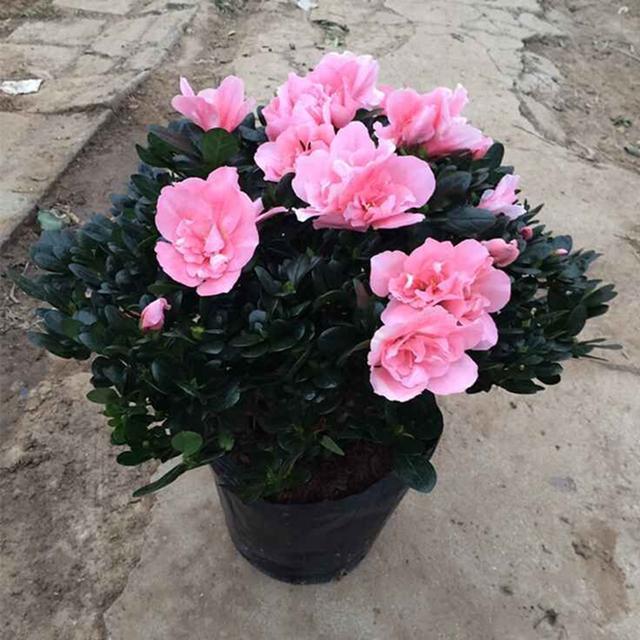
Azalea is also known as Yingshanhong, Shanjuan, etc. Azalea is one of China's top ten famous flowers. Among ornamental flowers, the azalea can be called beautiful in flower and beautiful in leaf, suitable for both soil cultivation and pot culture, and is the most widely used ornamental flower. The picture shows an azalea bonsai.
1. Monitoring Function
Azalea has strong resistance to harmful gases such as ozone and sulfur dioxide, and can also absorb these harmful toxic gases, playing a role in purifying the air. It is also very sensitive to ammonia and can serve as a monitoring plant for it.
2. Care Guide
(1) Light. Azalea is a long-day flower. Even in midsummer, it should not be placed in too shady a place, but rather in a ventilated and fairly cool spot, that is, a shaded spot outdoors. At the end of September and the beginning of October, when sunlight intensity weakens and the weather becomes cool, the shading time should be gradually shortened, and it is best placed on a southeast-facing balcony in front of the house.
(2) Temperature. In mid-to-late April, move it out of the greenhouse, first placing it in a wind-sheltered, sunny spot. In summer, provide shade, or place it in dappled shade under a tree, avoiding direct strong sunlight. The suitable growing temperature is 15-25°C, with a maximum temperature of 32°C. From mid-October, begin moving it indoors. In winter, place it in a spot with ample sunlight, keep the room temperature at 5-10°C, and the minimum temperature must not be lower than 5°C, otherwise growth will stop.
(3) Watering. In summer, water more and water frequently, because summer temperatures are high, sunlight is intense, and water evaporates quickly. In the morning, water thoroughly; in the evening, water as circumstances require, and spray water on the leaves to keep the leaf surface clean and the environment moist.
(4) Fertilizing. At the end of winter and the beginning of spring each year, it is best to apply some organic fertilizer to the azalea as a base fertilizer. After the azalea blooms in April-May, because the plant consumes a large amount of nutrients during the flowering period, as the leaf buds sprout and new shoots extend, a supplementary fertilizing can be done about every 15 days. After the beginning of the dog days, most branch tips have stopped growing. This is the high-temperature season, physiological activity weakens, and fertilizing can be stopped. After autumn, the climate gradually becomes cooler, and there are often continuous autumn rains. The temperature and humidity are suitable for azalea growth, so a final supplementary fertilizing can be done at this time. After the beginning of winter, fertilizing is generally not advisable.
(5) Pruning. Pruning and shaping branches is an important measure in routine maintenance and management work. It can regulate growth and development, thereby making the plant thrive. Routine pruning requires cutting off a small number of diseased branches and weak old branches, and, according to the shape of the crown, cutting away some overly dense branches to increase ventilation and light penetration, which is beneficial to plant growth.
(6) Pinching. During the bud stage, buds should be removed in a timely manner so that nutrients are supplied in a concentrated way and the flowers become larger and more vividly colored [Jishan Huayao].
(7) Placement. Potted plants should not be placed on the ground. They should preferably be placed on a flower stand or an inverted empty flower pot, with a shading net or curtain hung above, and it should be kept;