How to Care for a Weeping Fig? A Care Guide for the Green Air Purifier
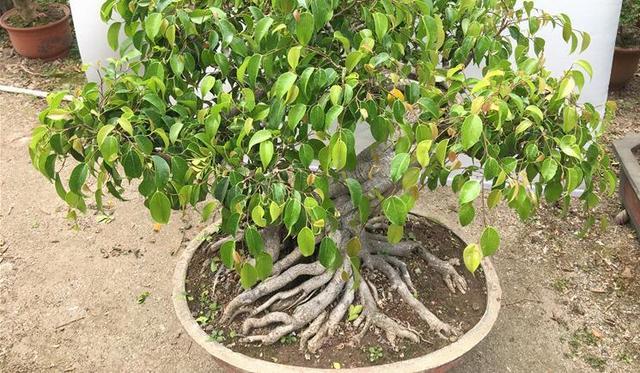
A care guide for the weeping fig, the "green air purifier"
The weeping fig is also known as the small-leaf fig or fine-leaf fig. Common cultivars include the variegated weeping fig and the golden weeping fig. The weeping fig has a smooth, upright trunk with many branches and gray bark; its leaves are alternate, elliptical and drooping, with a rounded or blunt base; the leaves are deep green and glossy. The photo shows a potted weeping fig.
1. Environmental benefits
The weeping fig is a very effective air purifier: it can absorb harmful gases such as formaldehyde and benzene from the air, and can also absorb indoor smoke, while releasing a large amount of oxygen, increasing the negative ion content of indoor air and raising the air humidity, making it highly effective at improving indoor air quality.
2. Care guide
(1) Soil selection. For potted weeping figs, choose fertile, well-drained soil. Mix compost with an equal amount of peat soil for the potting mix, and work in some base fertilizer as a bottom dressing. The potting soil should be replaced once a year in spring [Jishan Huayao].
(2) Light. The weeping fig can be placed in a bright spot, but avoid direct sunlight.
(3) Temperature. A room temperature of 15-30°C is most suitable for the growth of the weeping fig, and the wintering temperature should not be lower than 5°C.
(4) Watering. During the vigorous growth period, water the weeping fig frequently to keep the potting soil moist, and frequently spray water on the leaves and around the plant to enhance leaf gloss. After winter begins, water only when the soil is dry.
(5) Fertilizing. During the growing period, apply a dilute liquid fertilizer once every half month, mainly nitrogen fertilizer, appropriately combined with some potassium fertilizer.
(6) Propagation
① Cuttings. Generally done from April to June. First select sturdy, mature branches, cut 10 cm-long young shoots, remove the lower leaves, keep 2-3 leaves at the top, and insert them into a sand bed; they will root in about 1 month.
② Air layering. Generally done from April to August. Select a semi-lignified terminal branch of the mother plant, keep 3-4 leaves at the top, make a ring cut or tongue cut below them, then wrap with moss etc. and tie with plastic film; roots will form in about 30 days.
(7) Placement and arrangement. The weeping fig has small leaves, deep green foliage, drooping and dense branches, and a graceful tree form. It can be grown as a tree-form potted plant and used for beautifying and decorating places such as lobbies, meeting rooms, entrance halls, courtyards and streets.