Peace lilies can absorb ammonia; here's how to care for them properly
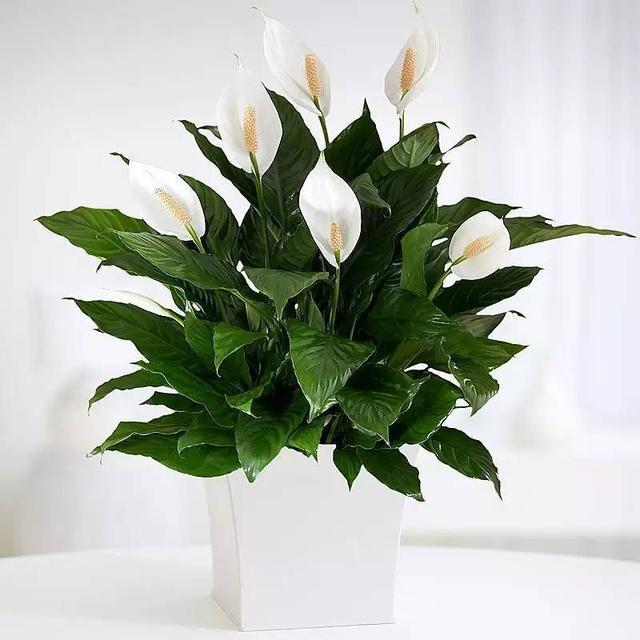
A care guide for the "ammonia-absorbing" peace lily
The peace lily (Spathiphyllum) is also known as the white sail, bract-leaf taro and silver-bract taro. Common cultivars include Ada Jo, Adito, Alpha, Domino, Gigante, Fiorinda, Petit, Prelude, White Princess, Stephanie and others. The peace lily plant grows 30-40 cm tall, with long oval or broadly lance-shaped leaves, deep green leaf color and prominent veins; the berries are spherical. The picture shows a potted peace lily.
1. Environmental benefits
Peace lilies can purify harmful substances in the air such as alcohol, acetone, trichloroethylene, benzene, toluene and ozone. According to estimates, each square meter of peace lily leaves can absorb 1.09 mg of formaldehyde and 3.53 mg of ammonia within 24 h. In addition, peace lilies have a high purifying effect on ozone and are suitable for placing beside a kitchen gas stove, where they can effectively remove cooking fumes and the distinctive smell of volatile substances.
2. Care guide
(1) Soil selection For potted peace lilies, choose loose soil with good drainage and aeration; it can be made by mixing leaf mold and peat soil with a small amount of perlite. Avoid heavy clay soil, and replace the potting soil once every early spring.
(2) Light Peace lilies are fairly shade-tolerant; as long as there is light, their growth needs can be met, so they can be grown year-round indoors in a spot with bright indirect light. In summer, 709% of the light can be blocked out; avoid direct strong light, otherwise the leaves will turn yellow and, in severe cases, sunscald will occur. In winter in northern greenhouses, no shading or only slight shading is needed. If the light is too dim for a long time, they will not easily bloom.
(3) Temperature For potted peace lilies, a room temperature of 22-28°C is most suitable for growth, and the overwintering temperature should be above 14°C.
(4) Watering In daily care, keep the potting soil moist. In spring, summer and autumn, water frequently and often spray the leaves with a fine-nozzle sprayer to keep the air humid; in winter, control watering.
(5) Fertilizing During the peak growing season, apply a dilute compound fertilizer or decomposed cake fertilizer water once every half month; in winter and autumn, apply as little fertilizer as possible or stop fertilizing.
(6) Propagation Peace lilies are commonly propagated by division. This is generally done in early spring when changing the soil; cut apart the rhizomes at the base of the clump, keeping at least 3 stems and buds in each small clump, and retain as many roots as possible to help the new plants survive [Jishan Huayao].
(7) Pruning When the roots of a peace lily are too long or too dense, promptly cut off the old roots and shorten the long roots. After the flowering period, prune the branches together with the flowers to prevent the plant from drooping and affecting its appearance.
(8) Placement and display The flower stems of the peace lily are upright and elegant; as a potted plant it is especially suitable for accenting the living room and study, refined and distinctive. In addition, its flowers are also excellent decorative material for flower baskets and flower arrangements.