How to prune bonsai? Master the three-cut and three-no-cut techniques
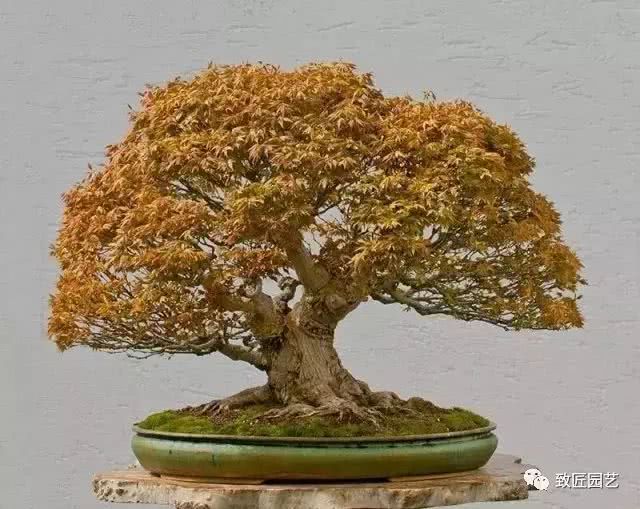
Pruning branches is an important means of creating bonsai and is directly related to the speed at which a bonsai takes shape and the level of its quality. To maintain the posture of a small bonsai, the bonsai must be pruned. Especially in summer, because temperature, water and nutrients are abundant, plants grow relatively fast, and if they are not pruned, the plant's form is often affected. For varieties with particularly strong sprouting ability, prune 5-6 times a year, but for some varieties, pinching is needed to encourage more buds to sprout, so that the branches become short and numerous and their graceful form can be maintained. For varieties kept after flowering to view the fruit, more short flowering branches should be retained, and long branches should generally be kept at 1-2 nodes. Cypress and pine plants are not suitable for pruning with scissors, otherwise the wounds will leave rust spots, and they should be removed by hand. For deciduous varieties, after the tree stump has shed its leaves, drooping branches, overly long branches, diseased branches, overlapping branches, broken branches and crossing branches should all be pruned away so that the layers are distinct and the density is appropriate.
Common methods of bonsai pruning:
The first is pinching, to inhibit the growth of tree bonsai and promote the flat development of side branches, the tender tips of the branches can be pinched off.
The second is bud removal. When many adventitious buds grow at the base of the trunk or on the trunk of a tree bonsai, the buds should be removed at any time to avoid the sprouting of forked branches, which affects the beauty of the tree shape.
The third is leaf removal. For foliage-viewing tree bonsai, the ornamental period is often the period when new leaves sprout. For example, the new leaves of Acer and pomegranate are red. Through leaf removal treatment, the tree can produce new leaves several times a year, bright and pleasing to the eye, improving the ornamental effect.
The fourth is branch pruning. Tree bonsai often grows many new branches. To maintain its beautiful shape, attention must always be paid to pruning branches, and the pruning method should be decided according to the tree shape. Generally, dead branches, parallel branches, crossing branches and others that hinder beauty should all be cut off in time.
The fifth is root pruning. When repotting, combine it with root pruning. Roots that are too dense or too long should be pruned. This can be considered according to the following situations. If the tree's new roots are poorly developed and the root system has not densely covered the bottom surface of the soil ball, then when repotting, the original pot can still be used and the root system does not need pruning. For tree species with well-developed root systems, if the fibrous roots densely cover the bottom surface of the soil ball, then a slightly larger pot should be used, the dense root system should be thinned out, old roots removed, and a small number of new roots retained for repotting.
The three cuts and three no-cuts of bonsai pruning
1. Cut late, not early. It is generally believed that when trees stop growing in winter, it is the best time to prune branches, and it is emphasized that "winter pruning" should be done. This view is not comprehensive enough. To be precise, some tree species can be pruned in winter. For example, after short pruning of crape myrtle in winter, the branches may look dry, but as soon as spring arrives, new buds will grow on the short branches. However, there are two situations that can cause winter pruning to fail. First, the tree species is unsuitable. For example, elm branches easily lose water once there is a wound, so after winter pruning of elm, the shortened branches will dry out during the long, dry winter due to water loss. Second, the branches are too thin and unsuitable. Regardless of the tree species, winter pruning of overly thin branches will inevitably cause the branches to die. In fact, "spring pruning" is better than "winter pruning." Pruning branches in early spring before the trees sprout, when the air humidity is somewhat higher, and because new buds will sprout within a relatively short time, there is no risk of branches drying out. Compared with "winter pruning," "spring pruning" has no other disadvantages. For trees that bloom in spring, such as azaleas and plum blossoms, pruning must be even later, waiting until after flowering before pruning; otherwise, cutting off the flowering branches will defeat the purpose.
2. Cut thick, not thin. Some people pursue rapid shaping of bonsai and impatiently short-prune new branches that have not yet become woody, hoping to grow side branches again that same year, then prune again, pruning two or three times in a year, so that the bonsai quickly forms several levels of branch pads. The author did this before, and the result was contrary to expectations. First, for some tree species, pruning before the branches have become woody does not produce side branches, but instead sprouts from the cut and continues growing forward, failing to form an angle, such as Chinese holly. Second, forcibly pruning branches into pads will cause the work to lose momentum. For tree species such as glossy privet and water willow, tender branches can produce side branches after pruning. But this should not be done either. Short-pruning branches into pads necessarily presupposes the length of the branch pads, assuming that after the work takes shape, the length of the branch pads will not change greatly. However, if the branches forming the pads are thin and tender, they will continue to grow relatively quickly. In this way, the length of several levels of branch pads will greatly exceed the predetermined length, appearing out of proportion. The entire tree's momentum becomes slender and thin, and it cannot be remedied. Practice has proved that the correct approach is to wait until the branches have become woody and have roughly grown to the predetermined thickness before pruning. In this way, when side branches grow, they will inevitably form a better angle. Impatience must be overcome. Branches intended as branch pads must be allowed to grow to the predetermined thickness, generally at least one year of growth, and if not thick enough, even another year.
3. Cut fat, not thin. After short-pruning a branch, if the branch pad does not sprout new buds for a long time, and even if it sprouts, the side branches do not grow vigorously, this is due to lack of fertilizer. To promote the rapid production of strong buds on the branch pad and the fast growth of new branches, the amount of fertilizer used, on the premise of not causing "fertilizer damage," the more the better. In the peak growing season, you can alternate watering once and fertilizing once. But be careful not to make it too concentrated. In this way, during the growing season with suitable temperatures, the side branches should grow continuously.
Finally, it must be explained that the "three cuts and three no-cuts" are aimed at unformed bonsai. If it is an already formed bonsai work, pruning branches is to maintain the tree shape, to avoid the bonsai growing larger and wilder, which is another matter.
Wonderful content