Succulent propagation techniques: These factors determine the survival rate
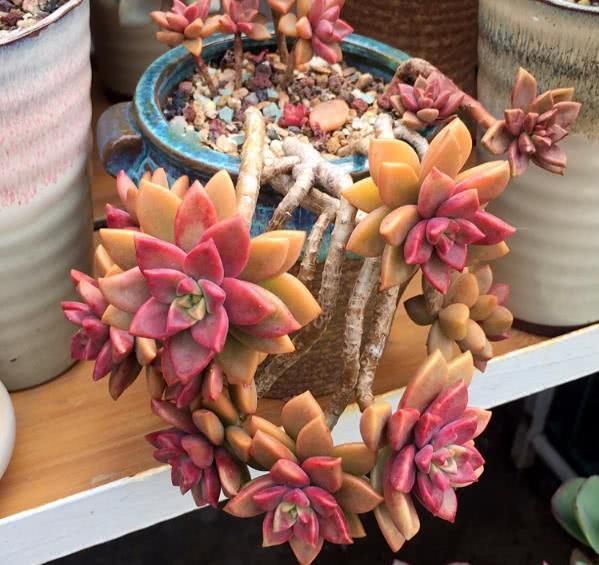
Leaf propagation is one of the main ways to propagate succulents, and many succulents can be propagated by leaf. Most people do leaf propagation in spring and autumn, but in fact many flower lovers also propagate succulents by leaf in winter. One succulent lover recently used plastic bottles to propagate succulents by leaf, saying that roots form faster this way, but the flower lover said some leaves still developed black rot.
Succulents propagated by leaf need a lot of humidity to take root and sprout. The southern region is relatively humid, so leaves take root and sprout fairly easily, but the north is relatively dry, and many people spray water around the leaves. When spraying, be careful not to spray onto the leaves, to avoid the leaves turning to water and developing black rot. Many things can happen during succulent leaf propagation. If a leaf does not take root or sprout, first think about which step went wrong. If nothing seems wrong, then you can only wait. Basically, as long as the growth point is still there, it will take root and sprout; it is only a matter of how long it takes.
When taking succulent cuttings, avoid choosing perennial plants or overly old stems, because these tissues contain very little rooting hormone, while the auxin in the apical buds, embryonic buds and root tip meristems of new succulents is relatively abundant, so be sure to choose one- or two-year-old plants. Growth hormones are an important material basis for promoting the success rate of succulent cuttings, and they determine whether the succulent's cells can promote root growth and whether they can accelerate the speed of division.
In fact, succulent leaf propagation is fairly simple. The most common method is soil culture: just place the leaf on the soil and wait for it to slowly take root. At this point there are two methods. One is to use a smaller flower pot with one leaf propagation piece, so that after it grows up it does not need to be repotted and can be planted directly. You can also use a larger flower pot with multiple leaf propagation pieces, so you can propagate more. After they take root and sprout, you can move a few out as appropriate and directly care for the rest. When they grow up, you can see the succulents filling the entire flower pot, which is very spectacular.
In the early stage of succulent leaf propagation, they must not be placed in direct sunlight to bake, nor "soaked" in water. This is a transition period. During this period the leaves do not change much, but after about 10~15 days the roots and buds will gradually grow. If the leaves show signs of blackening, it is recommended to loosen the soil with a small toothpick and point the leaf toward a bright place. If there is blackening and wrinkling, it is very likely a precursor to turning to water. If the end of the leaf has already turned black, we can cut off the blackened end of the leaf, apply fungicide, leave it in a ventilated place to dry for 2~3 days, then put it back to re-root.
For succulent cuttings, an appropriate amount of liquid nitrogen fertilizer is needed, which is very helpful for rooting cuttings, but you must still follow the principle of rather lacking than excessive, with the right amount being best. Carbohydrates and nitrogen compounds are two very important nutrients, and they determine whether root cells can successfully synthesize nucleic acids and proteins.
This is a gathering place for succulent lovers, sharing succulent care tips. You are welcome to follow and exchange ideas.